In the Hamptons, Tennis Is a Summer Sport with Permanent Roots
Few markets we cover hold as many private courts. The reason is older than most of the houses.
The Hamptons Tennis Paradox
The Hamptons play a short season. Tennis here runs from roughly Memorial Day to Labor Day: three months when courts fill in the mornings, followed by a long stretch when many sit quiet under their covers. You might expect a place on that kind of calendar to treat tennis as an afterthought. The opposite is true.
Across the markets we study, the Hamptons have one of the densest concentrations of serious private tennis homes we have found: more courts, more intentional placement, and more owners who understand that a court can shape the life of a house. For a region that uses its courts for such a concentrated part of the year, that is a strange and telling fact.
Why This Matters
If you are buying, selling, or renting a tennis home in the Hamptons, the court cannot be treated like a standard amenity. It belongs to a culture that predates the modern Hamptons entirely, and that history still shapes what gets built, where the court sits, and how much it matters to the property.
This is what the Hamptons understand about tennis that many luxury markets do not.
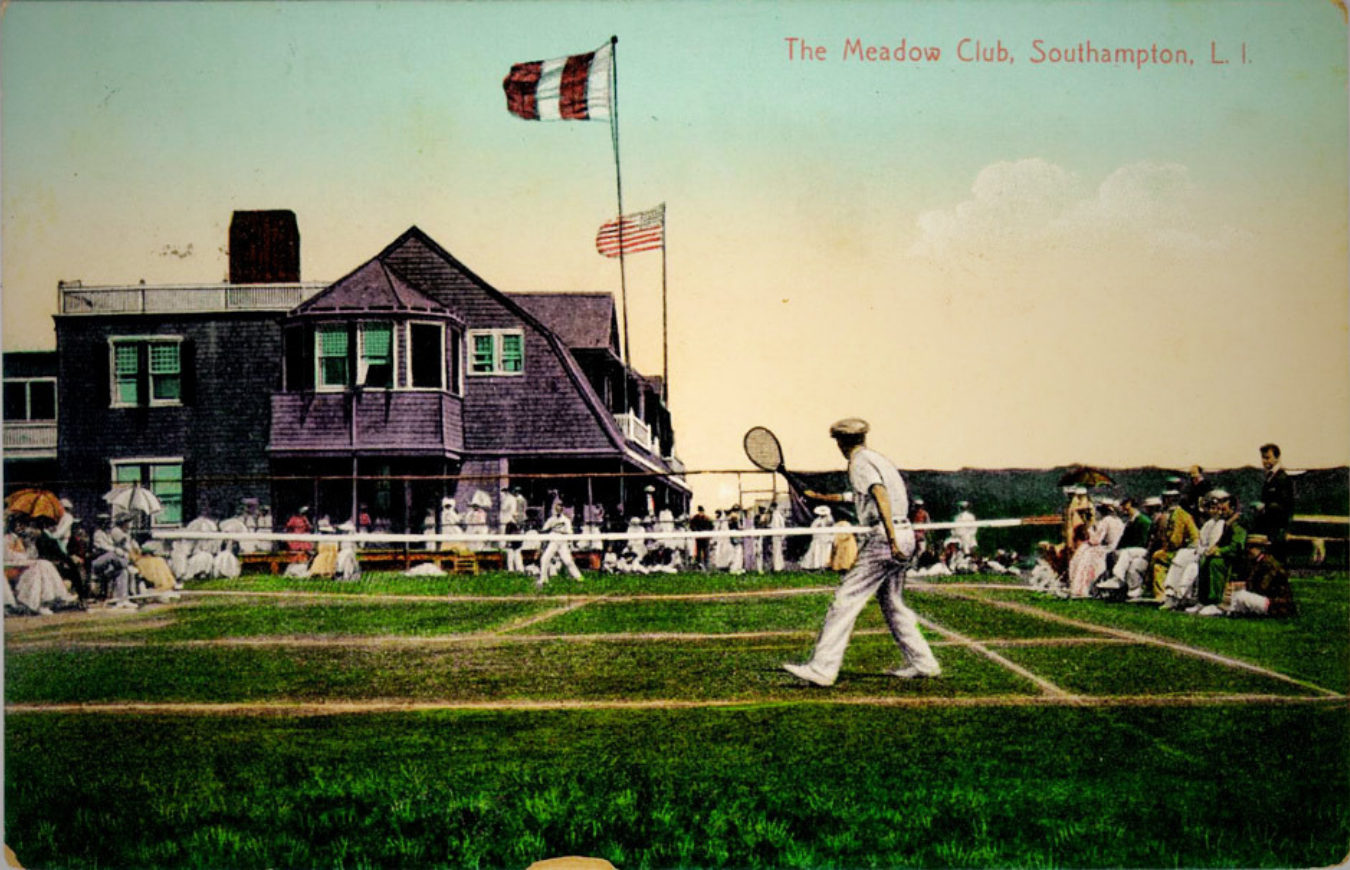
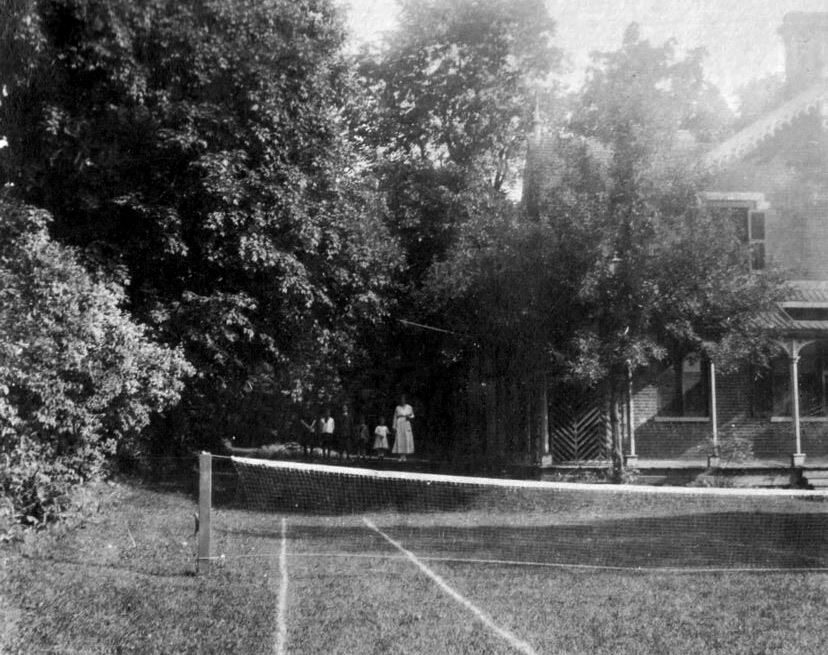
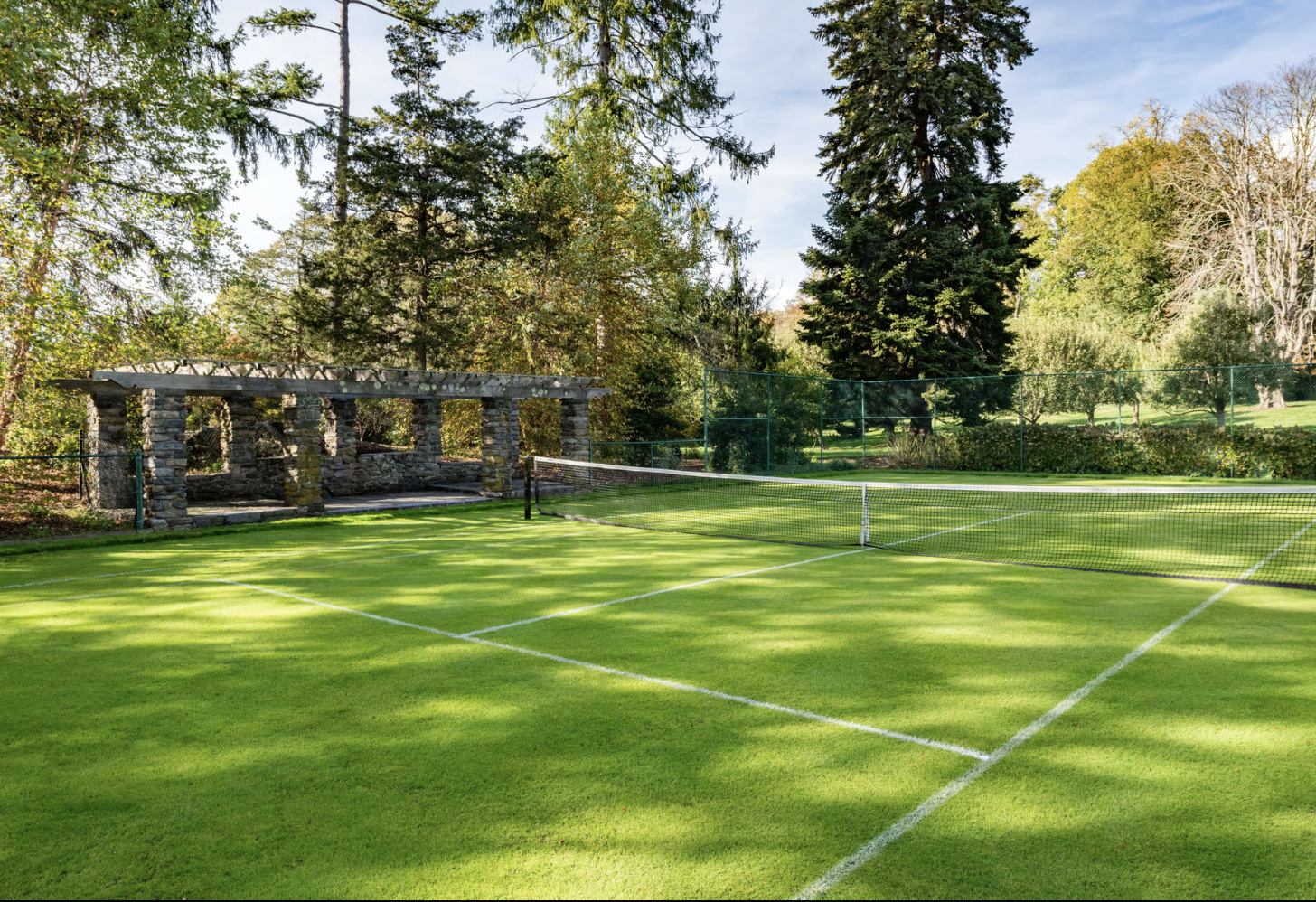
The Meadow Club, Southampton. Image via Tennis Time / Habitual Chic.
A Tradition That Started on Grass
The story does not begin with a private court. It begins with a club.
The Meadow Club of Southampton was founded in 1887, on flat South Fork land with sandy soil and steady ocean air, conditions that happen to be unusually well suited to grass courts. A year later, the club launched the Southampton Invitation, a grass-court tournament that ran for eighty-five editions between 1888 and 1973. For decades it was a serious stop on the American grass circuit, alongside the Newport Casino, and served as a warm-up for the US National Championships in the years when those were still played on grass. Bill Tilden won it three times. Bobby Riggs won it four.
That history matters because tennis was woven into the social fabric of the Hamptons long before the region became shorthand for summer real estate. The club did not arrive to serve the houses. In many ways, the houses followed the club.
A tennis culture this old does not sit lightly on a place. It sets expectations. Those expectations get passed down through generations of owners who grew up watching the game played well, and who came to see the court as part of the property’s identity.
We happen to be writing this in grass season. Wimbledon is underway, and the surface that made the Meadow Club possible is the same one the sport returns to every summer. The Hamptons have been keeping that tradition quietly for nearly a hundred and forty years, which is useful to remember the next time someone calls Hamptons tennis seasonal. The season is short. The roots are not.
Why a Three-Month Sport Built So Many Courts
The paradox is the point. A short season did not limit Hamptons tennis. It concentrated it.
Summer on the South Fork has its own rhythm. Houses fill. Guests rotate through. The day starts early, before the beach, before lunch, before dinner runs long. The court fits that rhythm better than almost any other feature an estate can offer. It gives a house a reason to gather people in the morning. It gives three generations something to do together without leaving the property. In a place built around the social summer, a court earns its keep quickly.
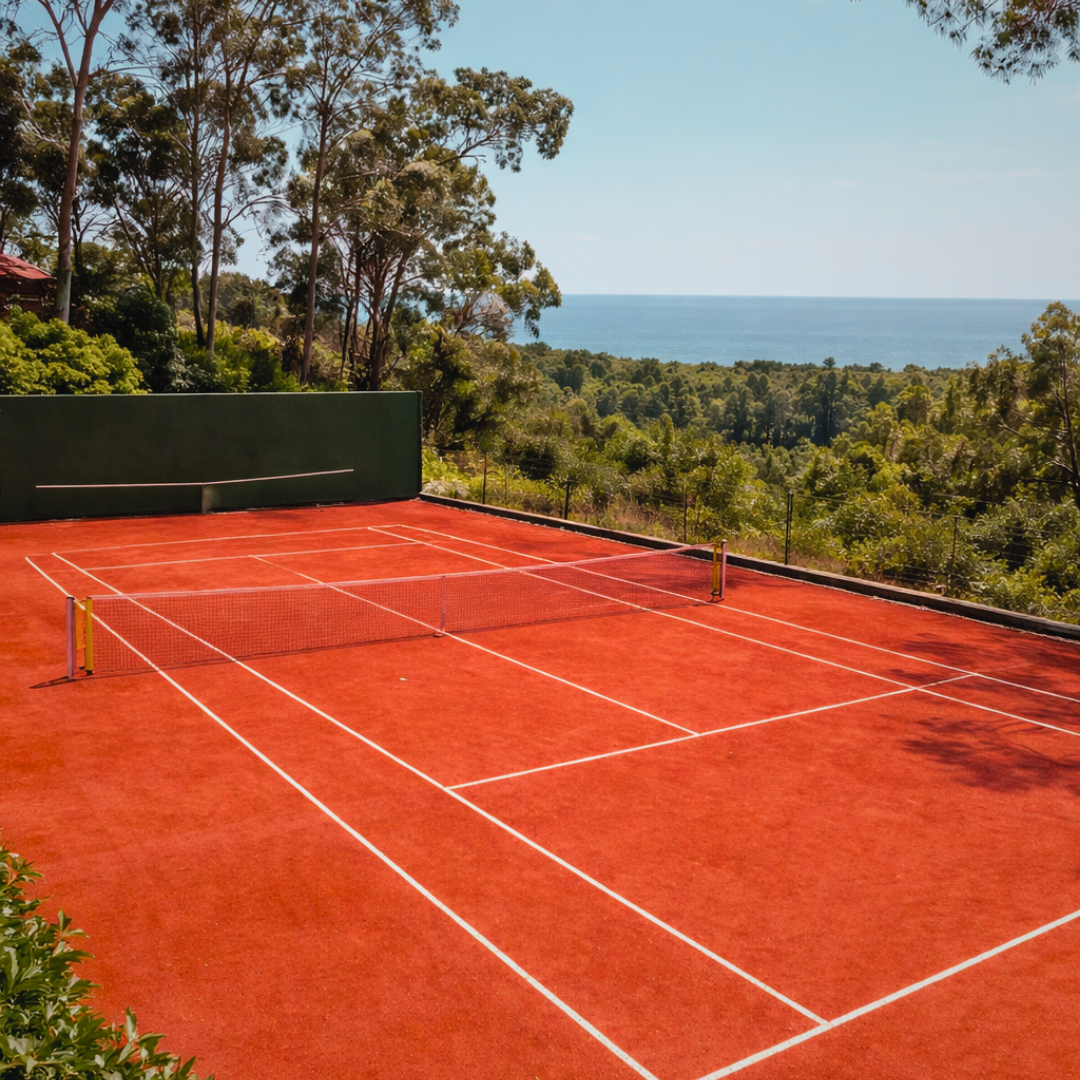
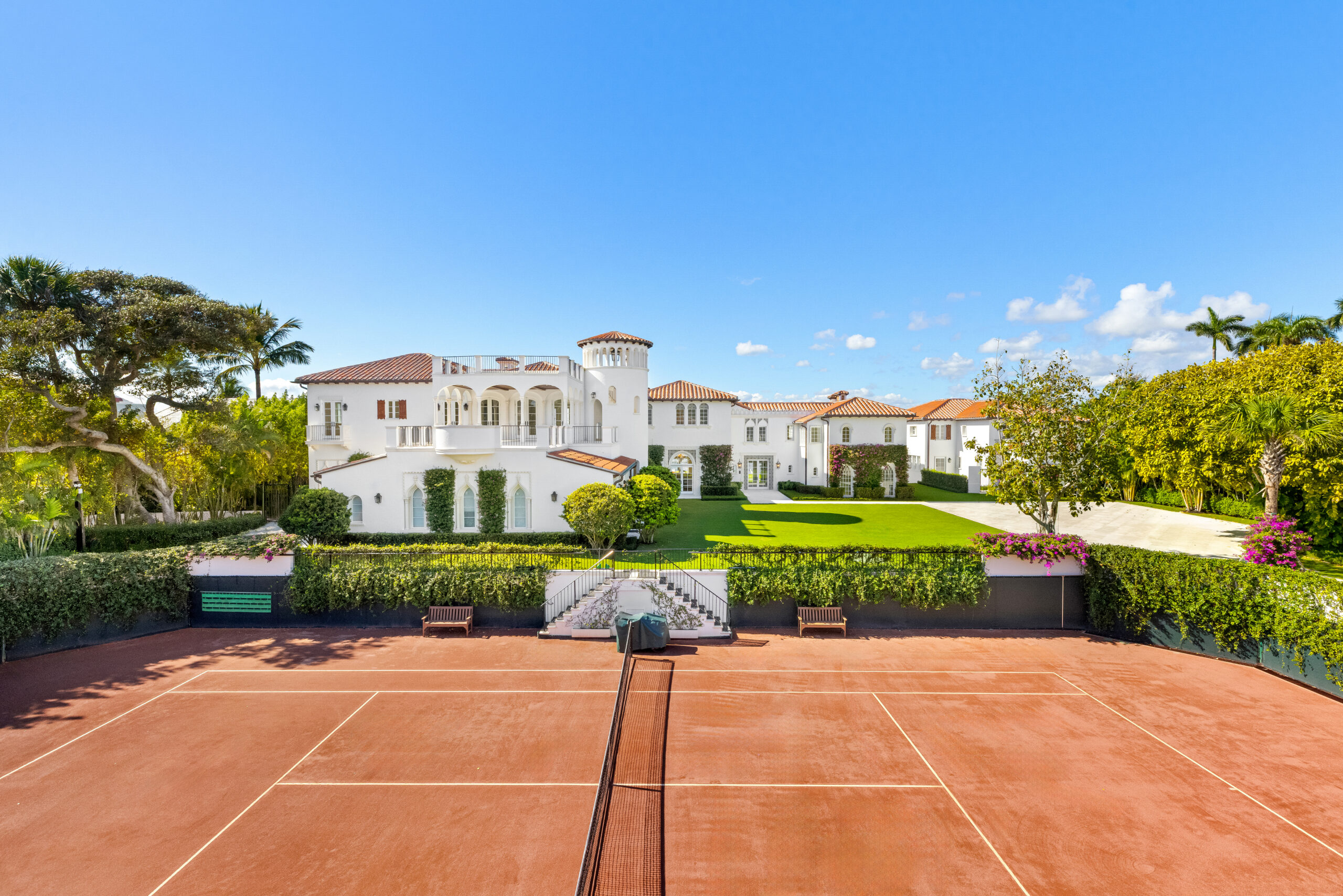
That is also why the surfaces here vary so much. Many private courts are hard courts, the practical choice: durable, low fuss, and ready the moment someone walks out with a racquet. A meaningful number of owners choose Har-Tru, the cushioned green clay that plays softer on the body and feels better suited to long summer use. Grass, the surface that started it all at the Meadow Club, remains the rare heritage option, kept by the few who want to play the game the way the Hamptons first played it.
Each surface says something about how the house is lived in. In the Hamptons, that decision is rarely accidental.

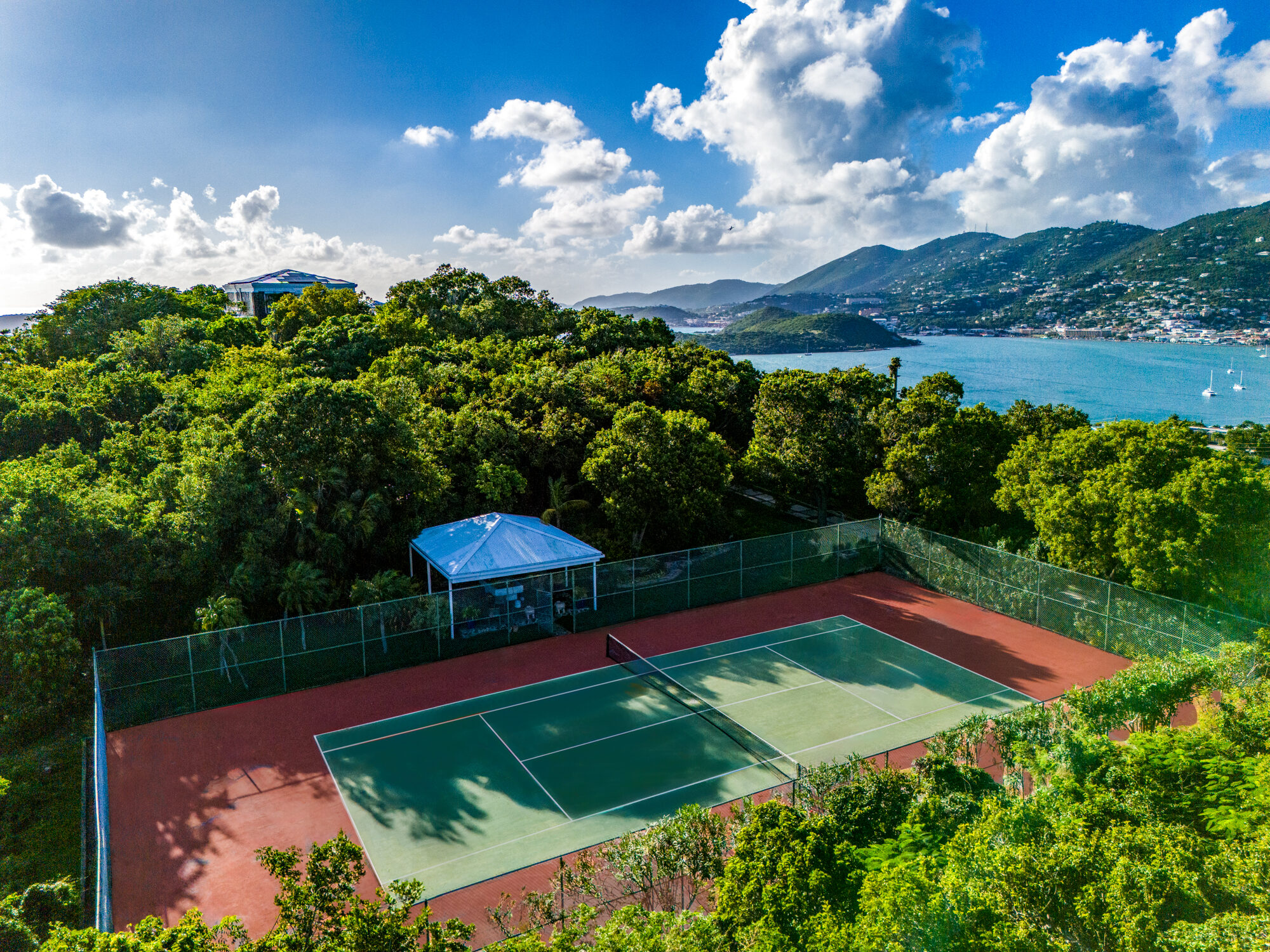
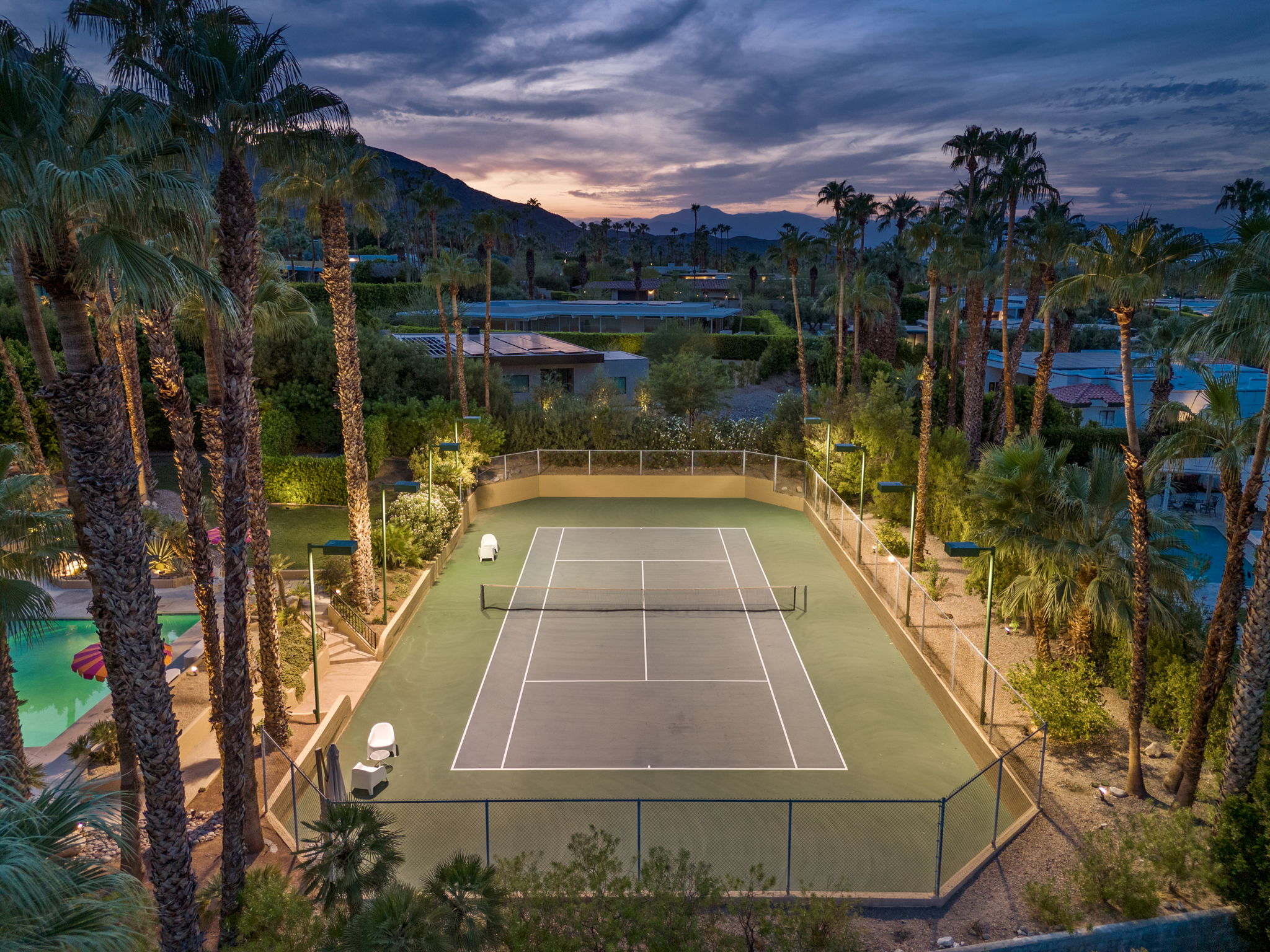
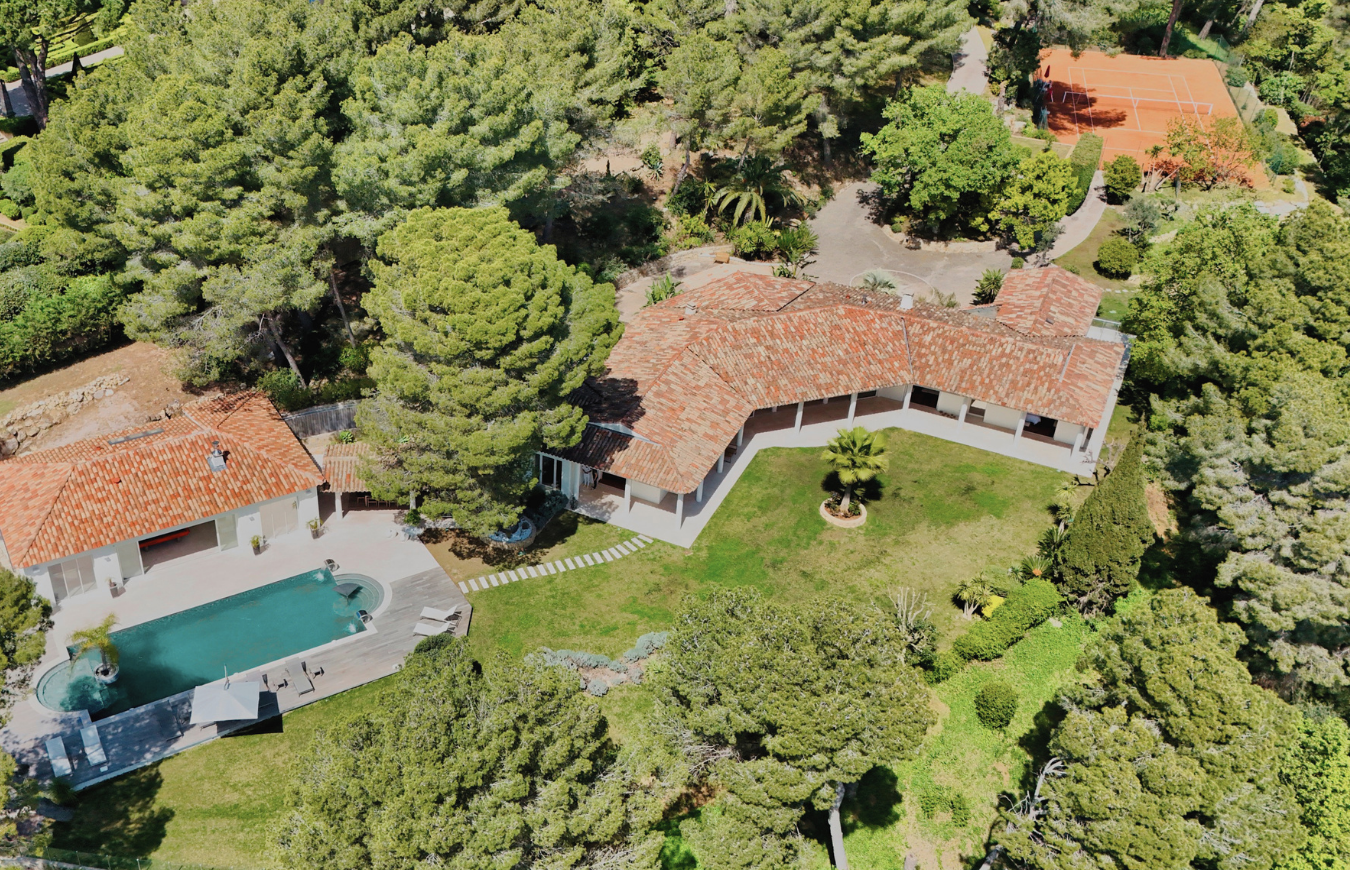
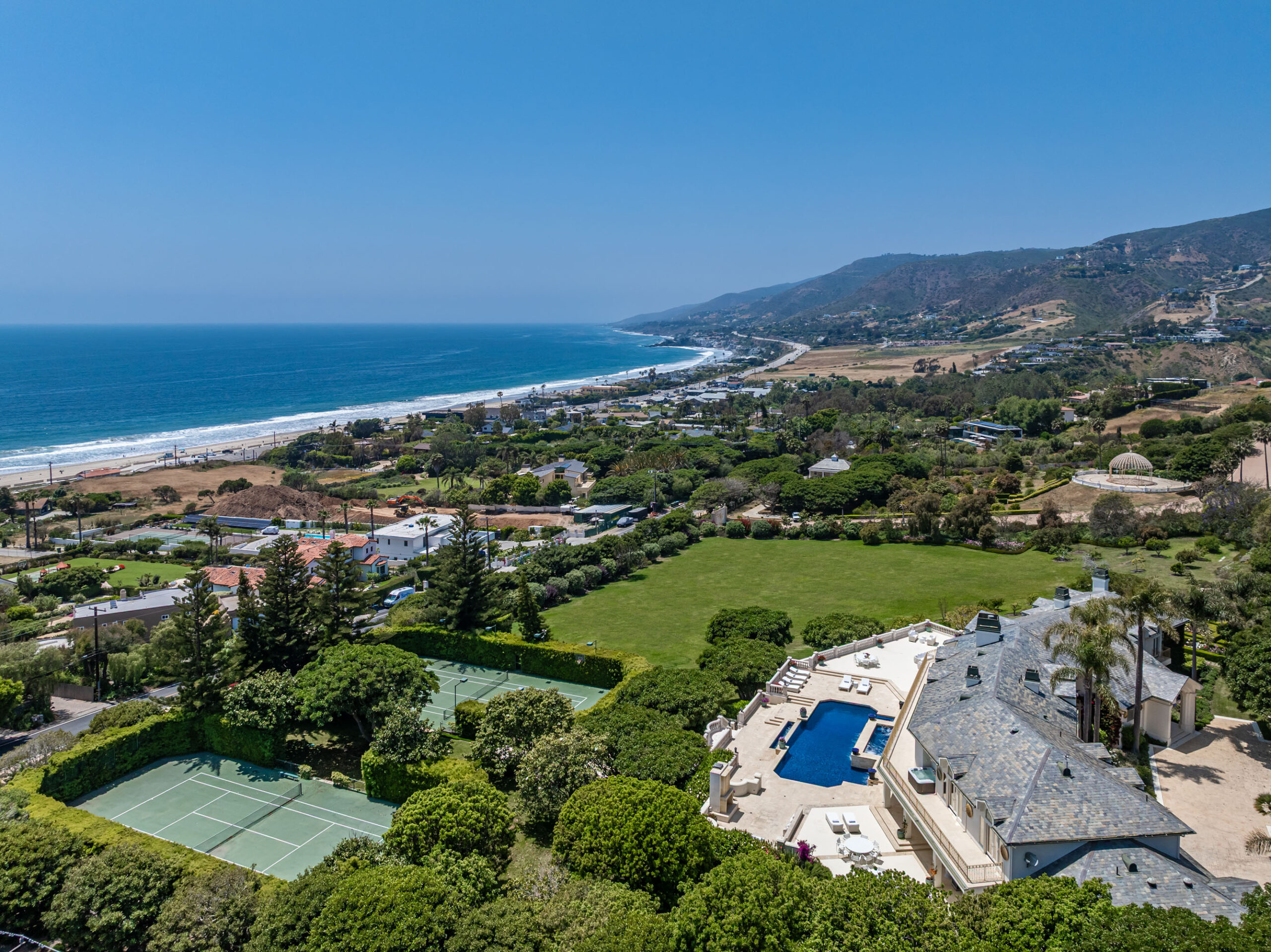
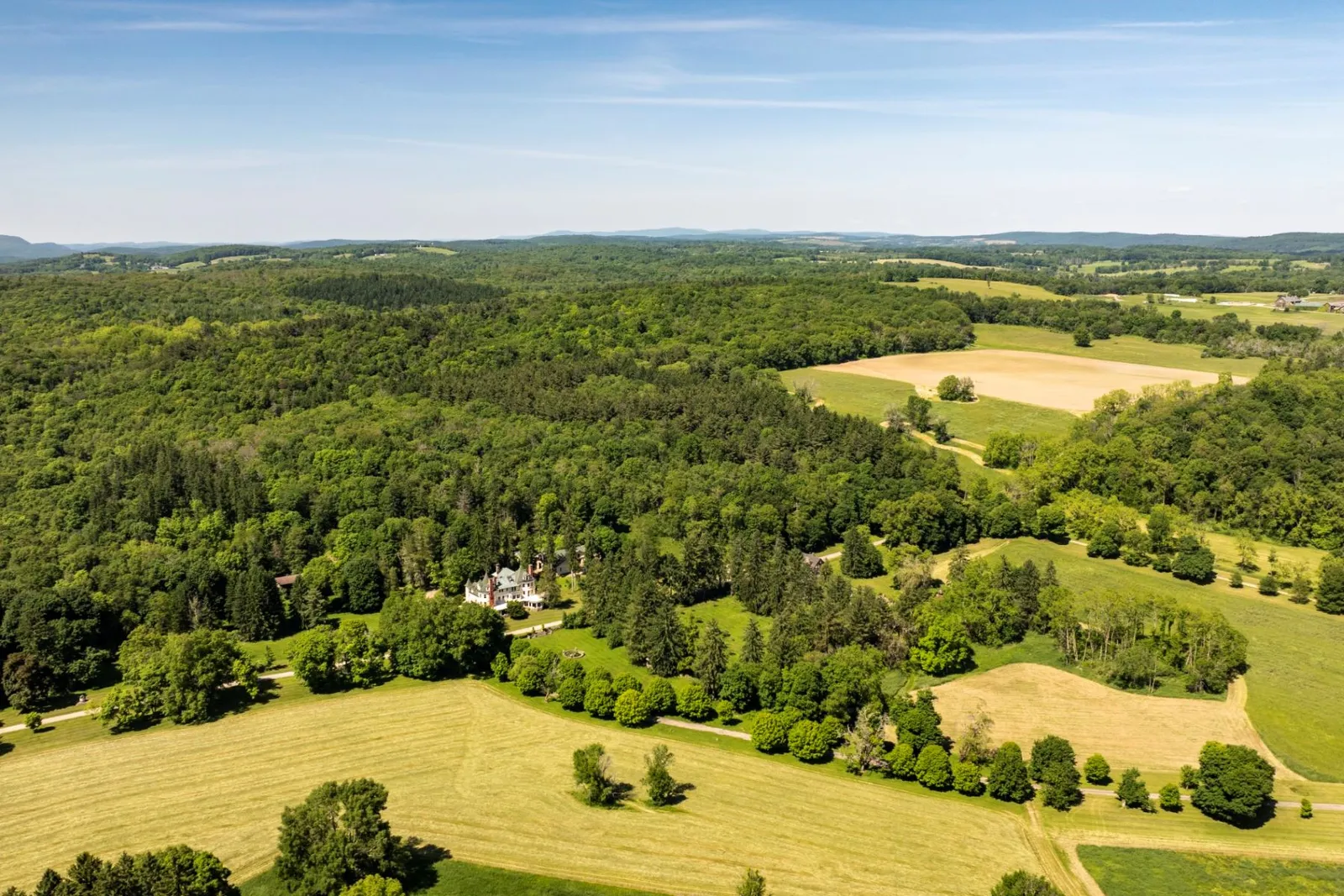
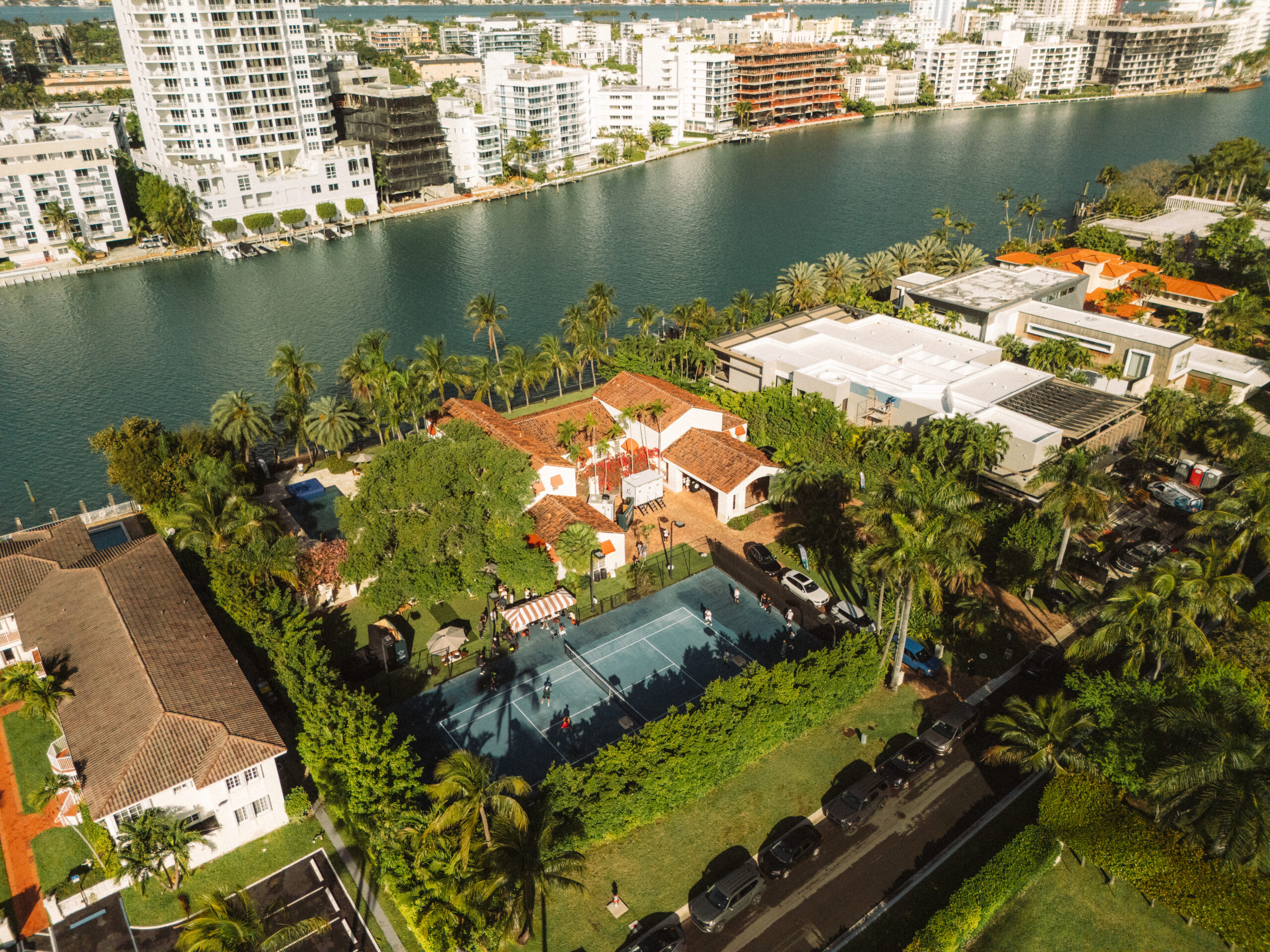
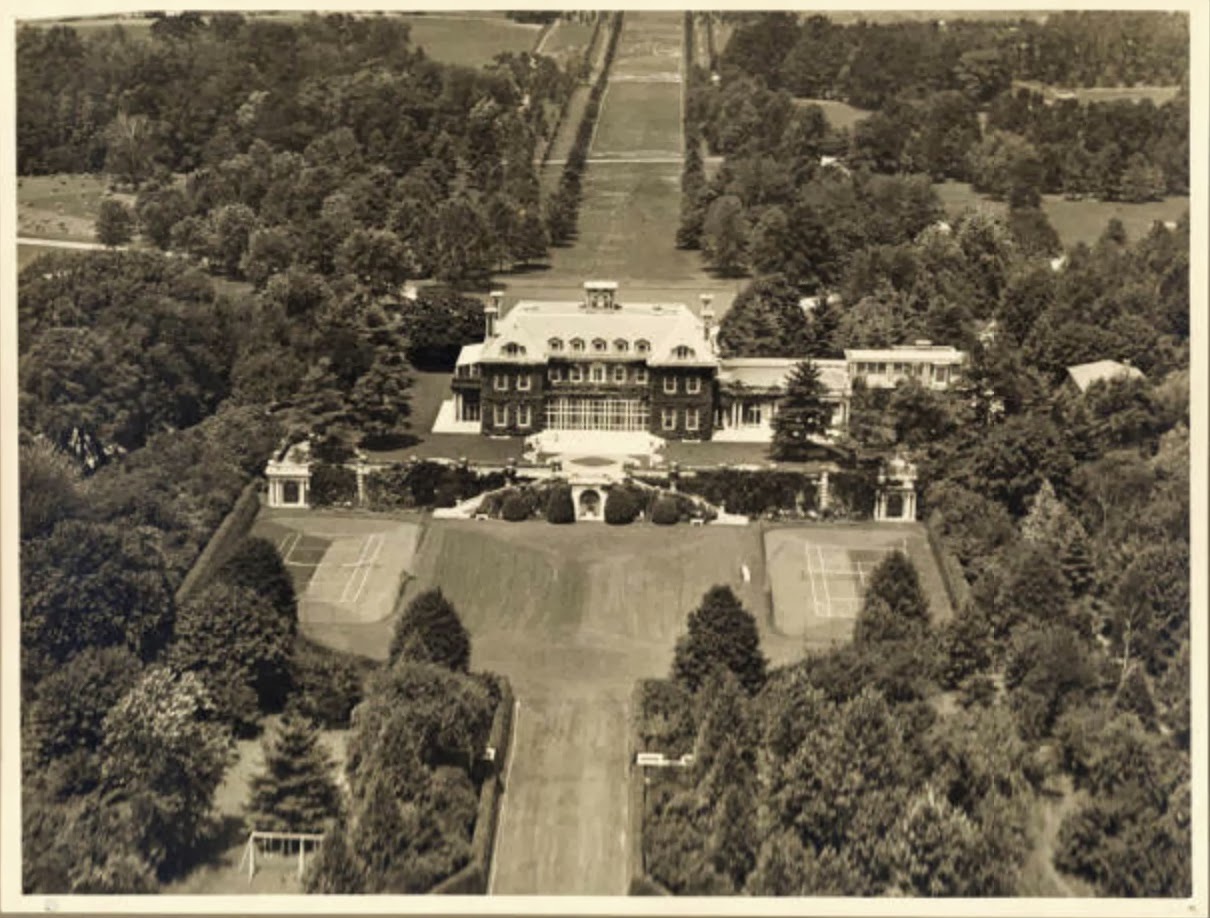
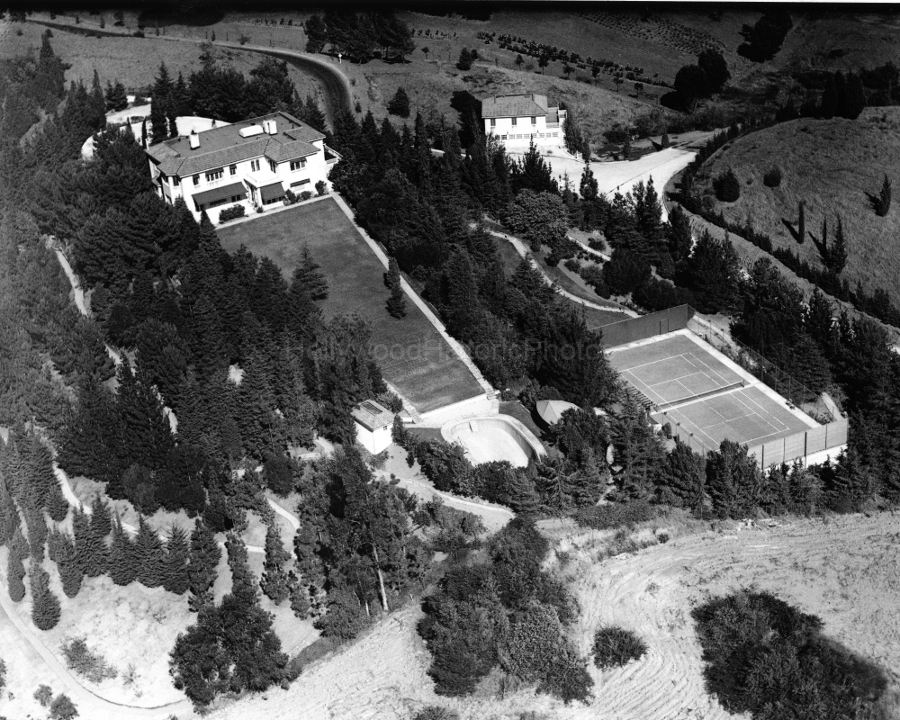
From above, the density of private tennis courts in the Hamptons becomes clear.
What the Court Says About the Home
We have written before about reading an estate through its court, and the Hamptons may be one of the clearest places to see it.
When a court is properly oriented, well drained, generously bordered, and quietly screened from the house, it tells you the property was planned by someone who understood the game. When it is pushed to the edge of the lot as an afterthought, that shows too.
The strongest Hamptons properties treat the court the way they treat the pool, the gardens, and the approach to the house: as part of a single composition. Hedgerows do real work here, turning a court into a private outdoor room. The flat land that drew the Meadow Club founders in 1887 still does the same favor for today’s owners, making a true, level court possible without fighting the site.
That is where the court begins to affect value. Two homes can have similar square footage, bedroom counts, and locations, yet sit in different categories once you understand how the court was handled. In the Hamptons, where buyers tend to know the difference, that gap can be significant.
A Place That Documents Its Own Living
The Hamptons take their own way of life seriously enough to write it down. The region produces a steady stream of editorial around its design, seasons, sport, and culture, and that self-documentation helps keep the place coherent from one summer to the next.
We were glad to be included in one of those pages recently. The Hedgerow Gazette, a biannual publication on Hamptons living, featured Tennis Homes in its Summer 2026 edition, among stories spanning real estate, architecture, travel, and culture across the region.
What struck us was how naturally Tennis Homes sat within that world. The thing we care about, the court as a real part of how a home is lived in, is something the Hamptons has understood for generations.
That is the larger point. The Hamptons do not treat tennis as a trend to be added or dropped. They treat the court as part of the place, the same way they treat the hedges, the light, and the long summer evenings. A short season has never made the tradition feel small.
See the Courts for Yourself
The Hamptons hold more tennis homes than almost any market we cover, and the best of them are the ones where the court was considered as carefully as everything else.
Know someone weighing a tennis home in the Hamptons, or anywhere the court matters? Send this their way.
Until the next match,
Tennis Homes