March 11, 2026
From Victorian lawns to trophy estates
How a patch of grass became the world's most enduring status symbol
The private tennis court has been many things across 150 years: a garden social tool, a Hollywood status symbol, a diplomatic stage, and now one of the most consistently valued amenities in luxury real estate. It was desirable in 1874. It is still desirable now. What changed is where it went.
Era One
The English Country House (1859–1900)
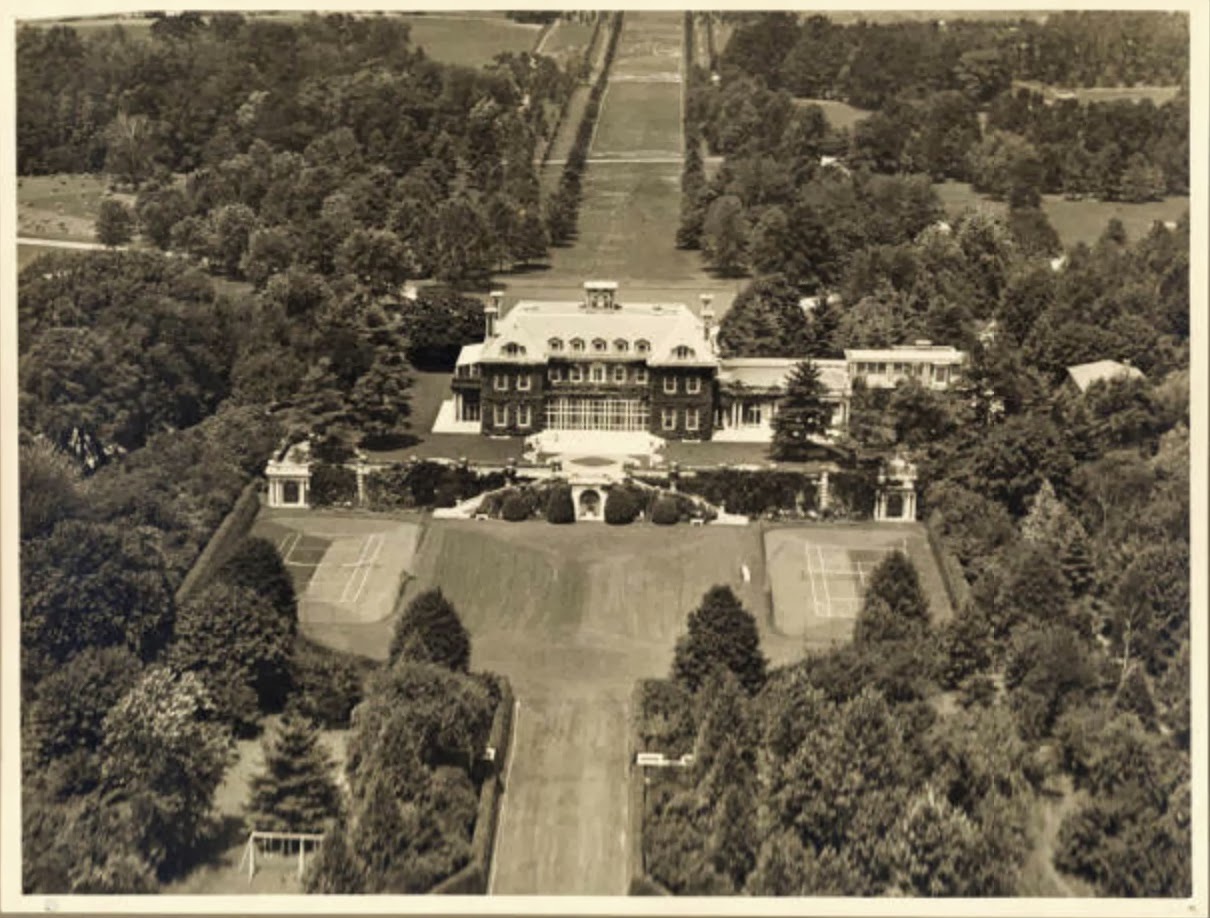
The private tennis court begins not with the invention of the game, but with the invention of the lawn. The lawnmower, patented in 1830, turned the English garden into a usable outdoor room — and once you had a level surface, someone was going to put a court on it.
The first documented instance happened well before the sport was codified. In 1859, Major Harry Gem and Augurio Perera — a Catalan merchant who had settled in Birmingham as an importer — began playing a game they called ‘pelota’ on the croquet lawn of Perera’s home at 8 Ampton Road in Edgbaston. The plaque on that house today reads ‘Home of Lawn Tennis.’ Formal history dates to 1874, when Major Walter Clopton Wingfield received a patent for a portable court and began selling boxed kits for five guineas. By July that year, the kits had reached Yorkshire hall-houses; by the following summer, the sport had spread ‘to the utmost recesses of the British Isles.’ The rectangular court was standardised at Wimbledon in 1877; the modern net height of 3ft at the centre confirmed in 1882.
By the late 1880s, a private court was a standard feature of the Victorian country house — a necessary prop for the house party, the three-to-four-day social event built around political discussion, courtship, and the display of wealth. Courts were oriented north-south to prevent afternoon sun from blinding players at peak hours. In 1881, Charles Darwin’s home, Down House in Bromley, had a concrete court laid out — thought to be the oldest surviving concrete lawn tennis court in the world. By 1894, at Jesmond Dene in Newcastle, the architect F.W. Rich designed a court complex with a two-storey apartment for a resident professional player. The amenity had already outgrown the hobby.
Era Two
The American Expansion (1920s–1980s)
Tennis crossed the Atlantic and changed character. The East Coast came first: the Newport Casino in Rhode Island, opened in 1880 and designed by McKim, Mead & White, set the template for the American sporting estate — a shingle-style structure where lawn tennis anchored the social calendar of the Gilded Age summer circuit and shaped the residential expectations of the families who built nearby.
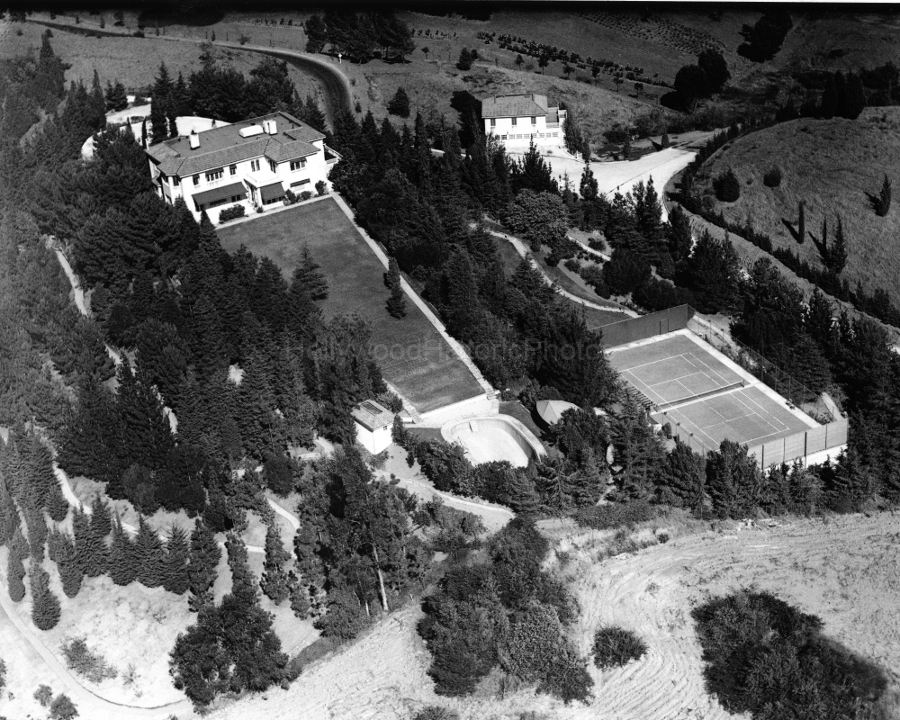
In Florida, the private court arrived with the first wave of Gilded Age development. Mar-a-Lago in Palm Beach, built by Marjorie Merriweather Post between 1924 and 1927, integrated athletic facilities across 17 acres as core components of estate life. The Kennedy compound at 1096 North Ocean Boulevard, purchased in 1933, included courts that remained in continuous use through the presidency. In California, Pickfair in Beverly Hills — 18 acres owned by Douglas Fairbanks and Mary Pickford, described at the time as the most famous private home in America after the White House — set the standard for what a serious Hollywood estate required. Charlie Chaplin maintained his own court next door at 1085 Summit Drive; aerial surveys from 1937 show a dedicated path from the main house directly to it.
Inland, the Coachella Valley developed its own relationship with the court. In 1937, Pearl McCallum McManus — the area’s largest private landowner — built the Palm Springs Tennis Club on land below her home in the foothills of the San Jacinto Mountains. The clubhouse opened in 1938, designed by Paul Williams, the first Black member of the American Institute of Architects. The surrounding neighbourhood took the club’s name. Today the Historic Tennis Club is the oldest neighbourhood in Palm Springs, and private courts remain standard across Palm Desert, Indian Wells, and Rancho Mirage — communities that owe their residential character in part to a sport that arrived there nearly 90 years ago.
Two developments in this era locked the private court into the residential landscape permanently. In 1926, Laykold introduced cold-pour asphalt — weather-resistant, low-maintenance, usable year-round in any climate. By the 1950s, acrylic resurfacing had refined it further. The professional-grade hard court, which now defines most private residential installations globally, is an American invention from this period.
Across the Atlantic, the Côte d’Azur was running in parallel. The Windsors maintained Chateau de la Croë on the Riviera, and the Aga Khan III owned a villa at Cap d’Antibes — estates that reflected the same appetite for private sporting infrastructure that defined the English country house, now transplanted to a warmer coast. The Mouratoglou Academy, which would eventually establish 41 courts near Sophia Antipolis, is a later chapter — but the Riviera’s residential relationship with tennis has roots that predate it by decades.
Era Three
The Global Private Court (1990s to Today)
The third era is defined by geography expanding. What had been confined to English estates, American compounds, and Riviera villas spread into a measurable global market across three continents.
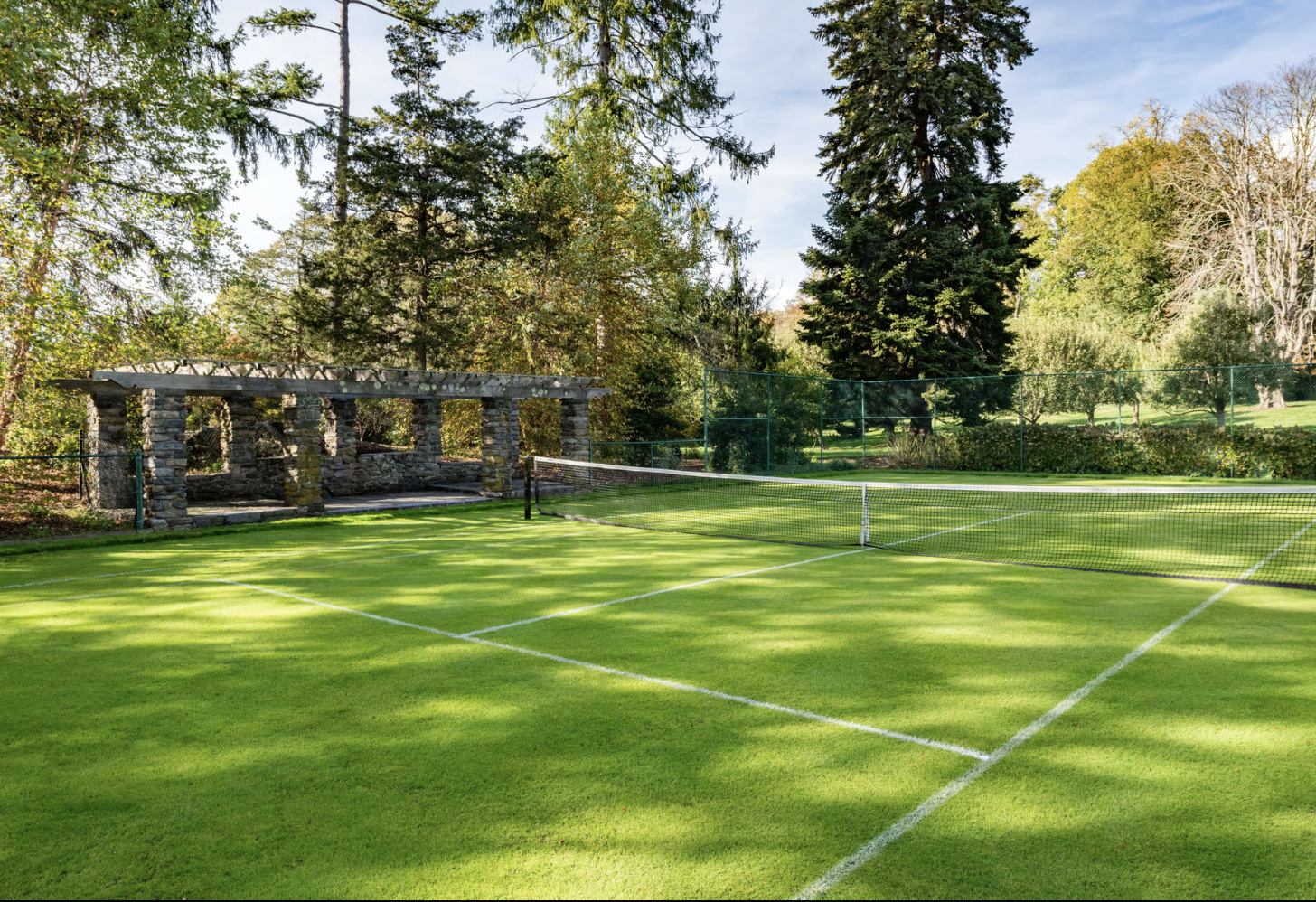
In the United States, the market deepened. Greenwich’s Gold Coast estate tradition — English-style manor houses on rolling acreage — has treated the court as a permanent landscape feature the way English country houses always did. Copper Beech Farm, built in 1898 and home to its grass court ever since, sold for $120 million in 2014 and $138.8 million in 2023, the most expensive residential transaction in Connecticut history — the court listed as a feature in every sale. In the Hamptons, a Water Mill estate on Little Noyac Path draws professional players in the weeks before the US Open each year; its DecoTurf surface was installed by the same team responsible for Arthur Ashe Stadium. In South Florida, Miami’s private court market is concentrated across the waterfront islands of Miami Beach and the sprawling estate lots of Pinecrest to the south — two distinct residential typologies where the private court has become a standard feature of serious luxury property. The Coachella Valley carries the same logic: from Palm Springs through Rancho Mirage, Palm Desert, and Indian Wells, private courts are a standard feature of the valley’s trophy estate communities — a residential expectation rooted in the desert’s tennis culture going back nearly 90 years.
In Europe, the 1990s marked the shift from exception to expectation. In Marbella, the Puente Romano Tennis Club — founded in 1979 by Björn Borg, managed from 1983 to 1998 by Manolo Santana — established the area’s tennis identity at the residential level. By 1994, developments like La Zagaleta were integrating private courts as fundamental site infrastructure. In the Algarve, the Roger Taylor Tennis Centre at Vale do Lobo, completed in May 1980, provided the infrastructure that private villa owners then replicated. In Mallorca, the 2021 inaugural ATP Mallorca Championships embedded tennis into the island’s residential identity. In Barbados, Sandy Lane — opened in 1961 by Sir Ronald Tree with courts in place by 1967 — established the standard that the island’s West Coast residential market gradually reflected as private villa development expanded in the years that followed. In Turks & Caicos, the 1993 opening of Grace Bay Club marked the island’s transition into luxury residential territory. On Providenciales, the main island, private court installations became an increasingly visible feature of high-end estate development.
From a croquet lawn in Edgbaston in 1859 to three continents of gated communities and trophy estates: the private tennis court has outlasted every trend in residential amenity design. The sport changes. The surface changes. The instinct does not.
Browse Properties with Private Courts
Tennis Homes tracks luxury properties with private tennis, padel, and pickleball courts across more than 18 countries — including the Hamptons, Palm Beach, Miami, the Coachella Valley, Greenwich, Marbella, Mallorca, and Turks & Caicos.
Until the next match,
Tennis Homes