November 27, 2025
How Much Space You Really Need for Tennis, Padel, and Pickleball Courts
Building a private court is one of the most rewarding upgrades you can make to a property. It elevates lifestyle, increases value, and creates a true wellness ecosystem at home. But the first question every homeowner asks is always the same:
How much space do I actually need?
We’ve created a clear and easy guide to help you understand the real footprint required for tennis, padel, and pickleball courts – with verified professional measurements and realistic home-court recommendations.
At the end, you’ll also find when it doesn’t make sense to build new, and why some clients end up buying a property with a court already in place instead.
Tennis The Largest Footprint
Tennis courts take the most space, which is why they’re typically found in estates, countryside homes, or properties with generous lots.
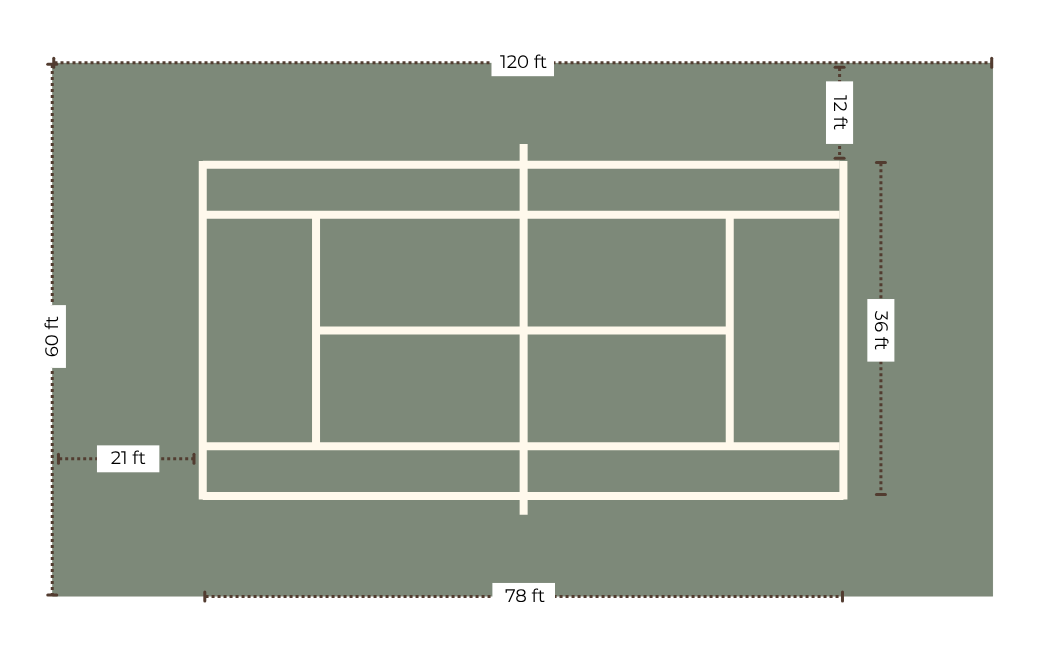
Professional Tennis Dimensions (ITF)
Court with run-off: 120 ft × 60 ft (36.6 m × 18.3 m)
Total area: ≈ 7,200 sq ft (≈668 sq m)
Ideal Home-Court Size
Most private homes expand the footprint for comfort, fencing, and landscaping:
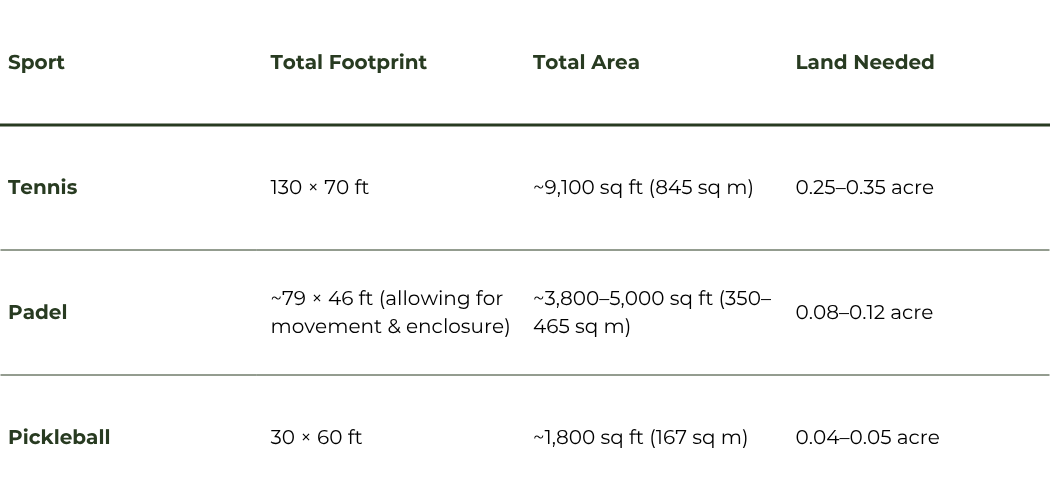
130 ft × 70 ft (≈9,100 sq ft / 845 sq m)
Land Needed
0.18 acre minimum, ideally 0.25–0.35 acres
(Court footprint only)
Tennis courts require space, but the reward is unmatched: a full playing surface suitable for training, family play, and match-style rallies.
Padel Smaller, Sleek, and Easier to Fit
Padel courts are significantly smaller than tennis, enclosed with glass, and extremely efficient in shape. That’s why they fit well into luxury homes, boutique developments, and urban villas.
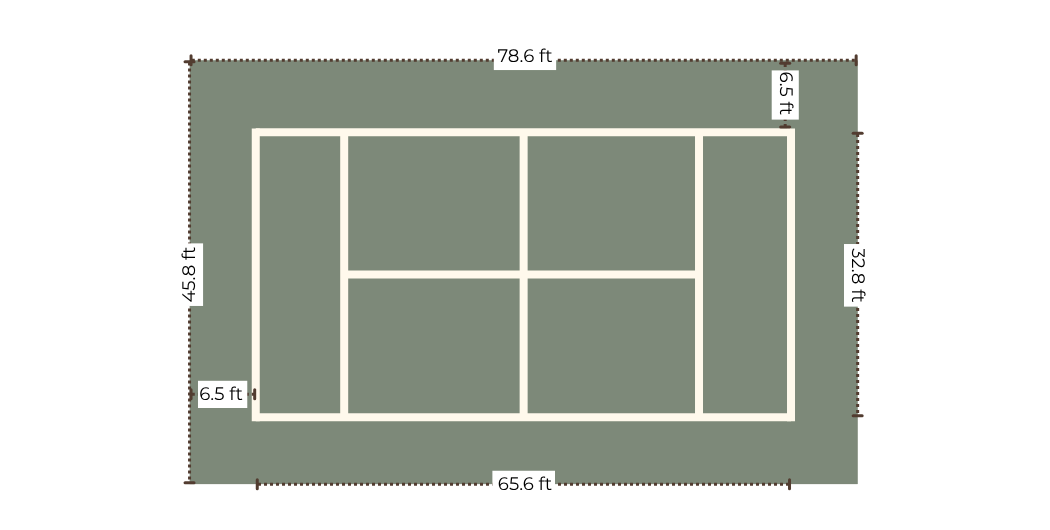
Professional Padel Dimensions (FIP)
Court size: 65.6 ft × 32.8 ft (20 m × 10 m)
Footprint with circulation: ≈ 2,150–2,250 sq ft (≈200–210 sq m)
Total Footprint With Required Clearance
To allow safe movement, proper wall play, and space for the structure, a padel court needs 6.5 ft (2 m) of clear space around the perimeter.
Total footprint: ≈ 79 ft × 46 ft (24 m × 14 m)
Surface area: ≈ 3,650 sq ft (≈ 340 sq m)
Ideal Home-Court Size
If you want room for landscaping, viewing areas, lighting, or a clubhouse:
3,800–5,000 sq ft (≈ 350–465 sq m)
Land Needed
0.08–0.12 acre
Padel delivers incredibly high playability in a small footprint, making it one of the most attractive additions for modern buyers who want a racquet sport at home without sacrificing too much land.
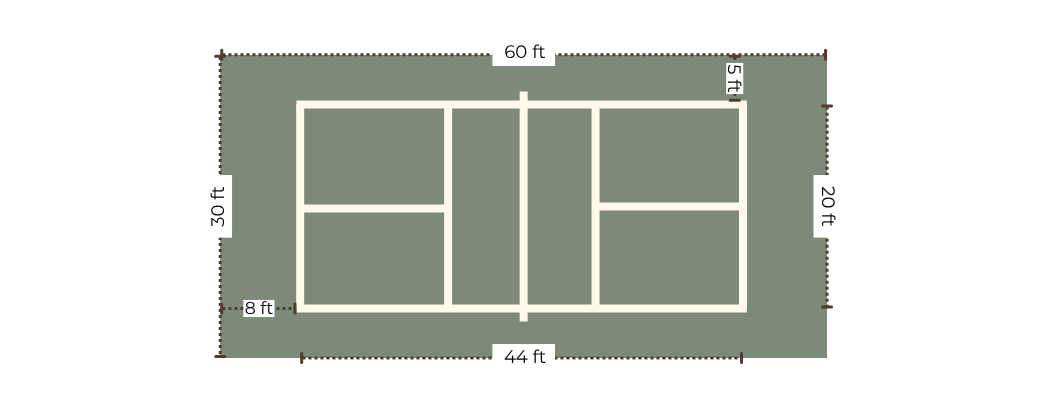
Pickleball Court DimensionsThe Smallest and Most Flexible
Pickleball is the most accessible option for private homes. It requires minimal space, can be added alongside other courts, and adapts extremely well to a variety of lot shapes.
Professional Pickleball Dimensions (USA Pickleball)
Court with run-off: 30 ft × 60 ft (9.1 m × 18.3 m)
Total area: ≈ 1,800 sq ft (≈167 sq m)
Land Needed
0.04–0.05 acre
Small, fast-paced, and universally loved, pickleball is often the “extra court” homeowners add to complete their racquet-sport trio.
How This Compares at a Glance
What About Adding a Court to a Property?
01
Orientation, Surfaces, and Playability
Good play starts with good placement. A north–south orientation reduces sun glare, and the right surface ensures the style and comfort you prefer.
02
Lighting, Fencing & Enhancements
LED lighting, proper fencing, and thoughtful additions like a shaded pavilion or a small gym can elevate a simple court into a daily-use wellness space.
03
Terrain, Drainage & Local Rules
Flat, well-drained ground lowers long-term maintenance. Sloped or protected areas may require engineering or special approvals, and zoning regulations differ widely by region.
For a deeper breakdown on orientation, surfaces, and planning details, you can read our full guide on building a tennis court.
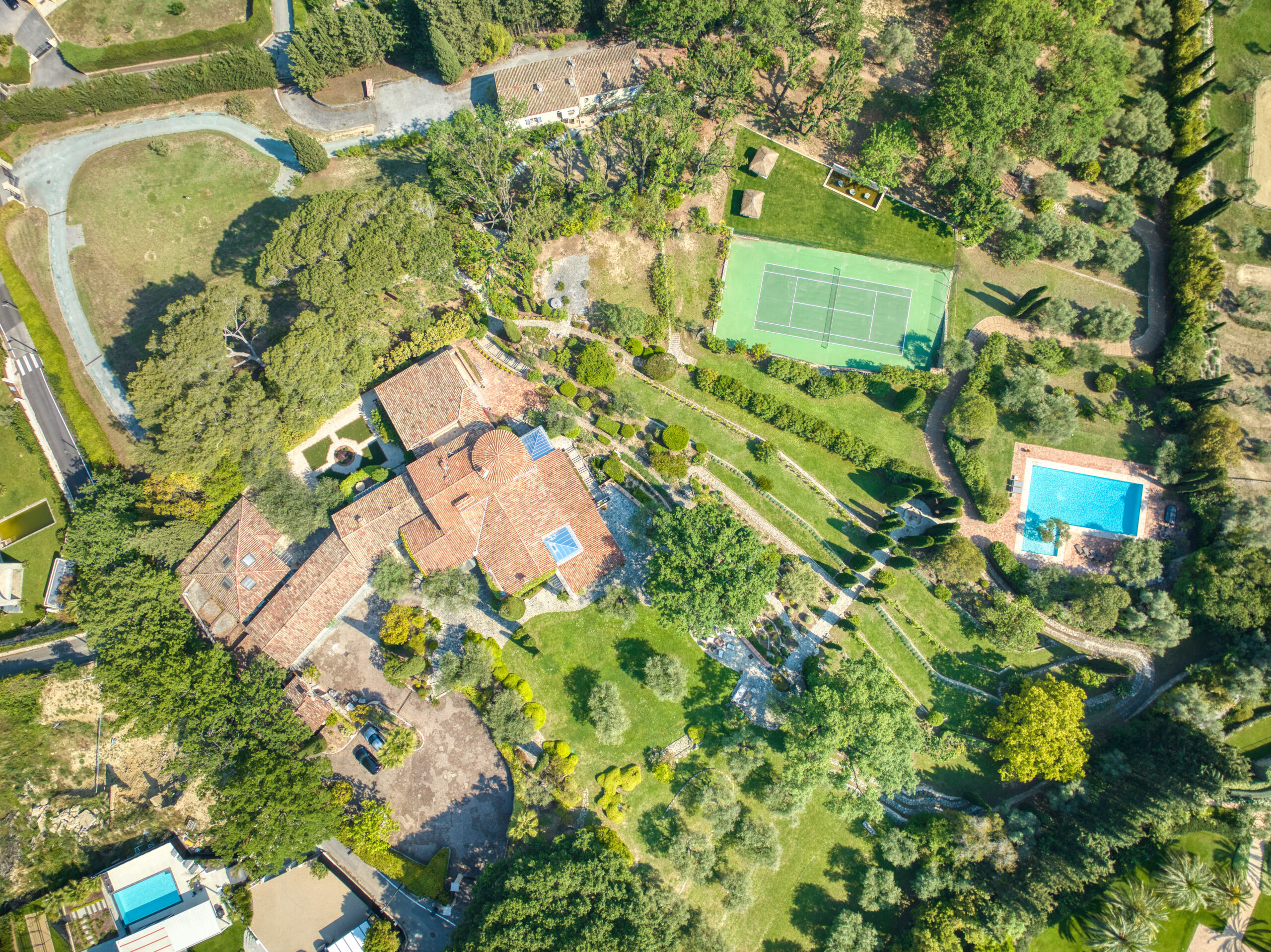
Credit: Beauchamp Estates / Villa La Mougins
When Building Isn’t an Option
Some regions make approvals simple. Others create hurdles that turn a new court into a long, unpredictable process. In those cases, many clients choose a smoother path: investing in a home where the court already exists. It saves time, reduces risk, and allows you to enjoy the lifestyle immediately.
Bringing Your Vision to Life
Building a court at home becomes much easier when you have the right guidance. From surface specialists to designers to planning experts, we can connect you with trusted professionals who know exactly what it takes.
And if building isn’t feasible where you live, we can help you find a home that already has a beautiful court, or one with the space and conditions to add the perfect one.
Until the next match,
Tennis Homes Team