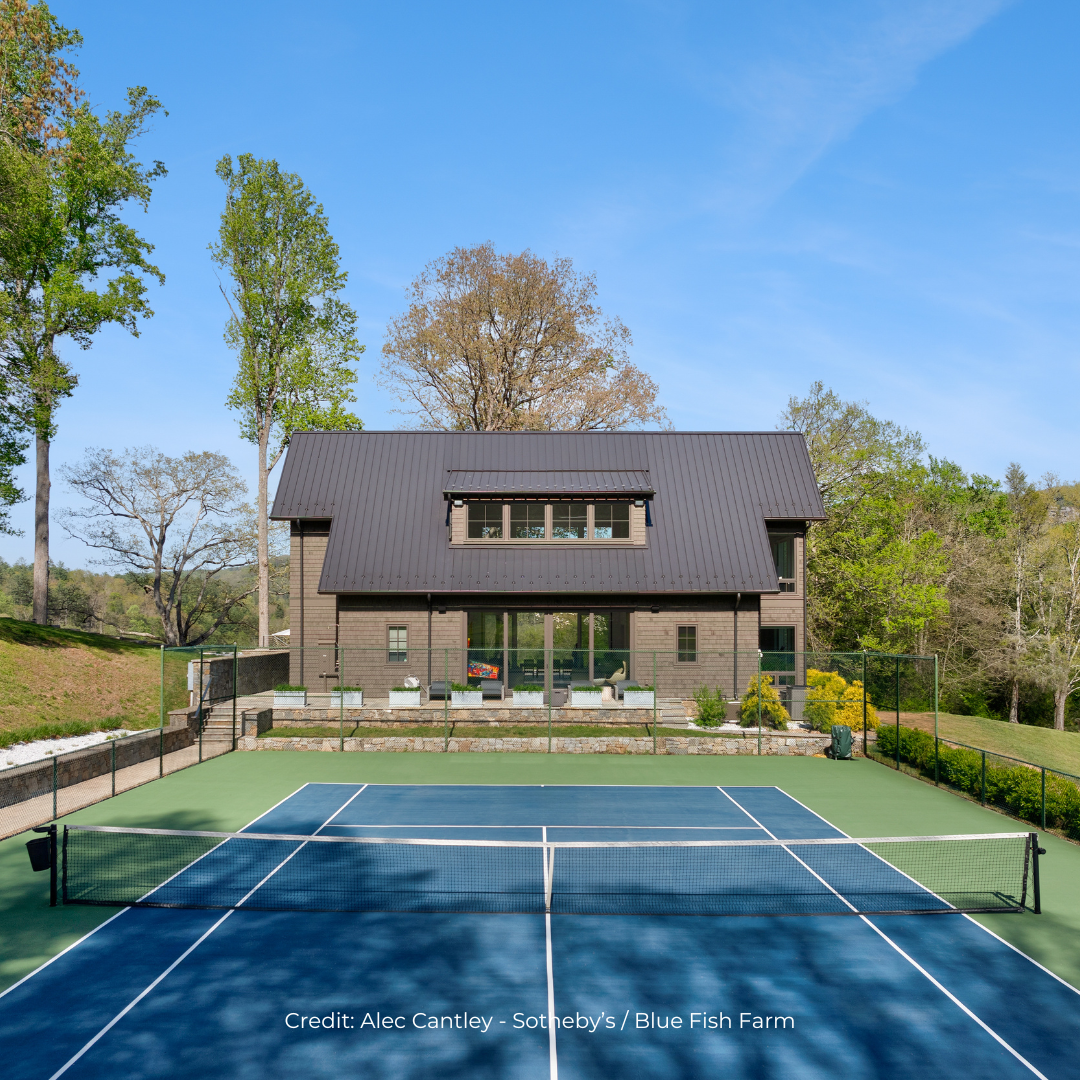
At Tennis Homes, we’re constantly exploring what sets the best tennis properties apart. Not just in design or location, but in how they reflect a true passion for the sport. This week, we are diving into the practical side of building a private tennis court. From orientation to surface type, environmental planning, and modern upgrades, each decision plays a part in how your court will perform and last over time.
Here is what to consider if you want a court that elevates your home and your game.
Credit: Tennis Warehouse – Mikeler
Orientation Matters
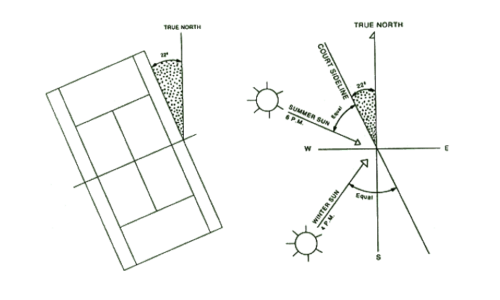
One of the first considerations when building a private tennis court is how it aligns with the sun, it plays a major role in comfort and visibility. The ideal setup is a north-south alignment, which minimizes the chances of players being blinded by the sun during early morning or late afternoon matches.
For added optimization, some builders suggest tilting the court approximately 22 degrees off true north. This subtle adjustment can reduce glare even further, especially in areas with consistent sunrise and sunset angles. A poorly oriented court can compromise play and enjoyment, and in luxury real estate, even small design decisions matter.
Planning Tip: In regions with strong sun exposure throughout the year, such as Southern California or parts of the Mediterranean, orientation becomes especially important. Working with a landscape designer or court specialist can help optimize placement based on local light patterns.
Choosing the Right Surface
The surface of a tennis court affects everything from how the ball bounces to how your body feels after a match. When planning a home court, understanding the key options will help you choose what fits your lifestyle, location, and playing preferences.

Hard Courts
-
The most common surface for residential courts, hard courts are durable, weather-resistant, and require relatively low maintenance.
-
Standard acrylic or asphalt provides a consistent bounce and is suitable for all playing styles.
-
Cushioned systems, which include an added layer beneath the topcoat, reduce impact on joints and are ideal for frequent play.
-
These surfaces can be custom-colored and are generally cost-effective over time.
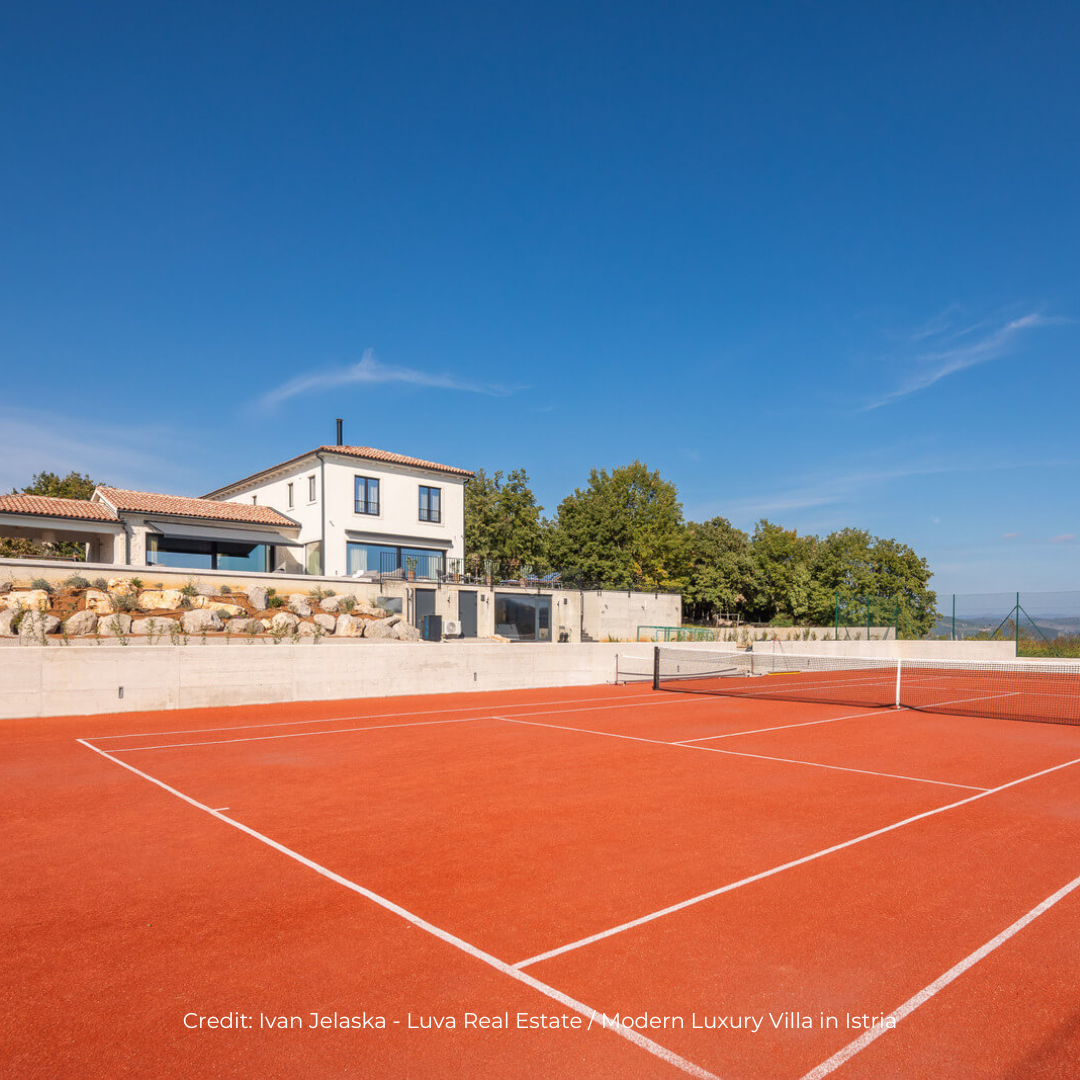
Clay Courts
Clay offers a slower pace and higher bounce, promoting longer rallies and a more strategic style of play.
Natural red clay, as seen in European courts, delivers an iconic aesthetic but demands regular maintenance including brushing, watering, and rolling.
Har-Tru, a green clay popular in the U.S., dries faster and requires less upkeep while still offering a softer, joint-friendly surface.
Clay is ideal for players who prioritize movement, strategy, and a slightly gentler surface.
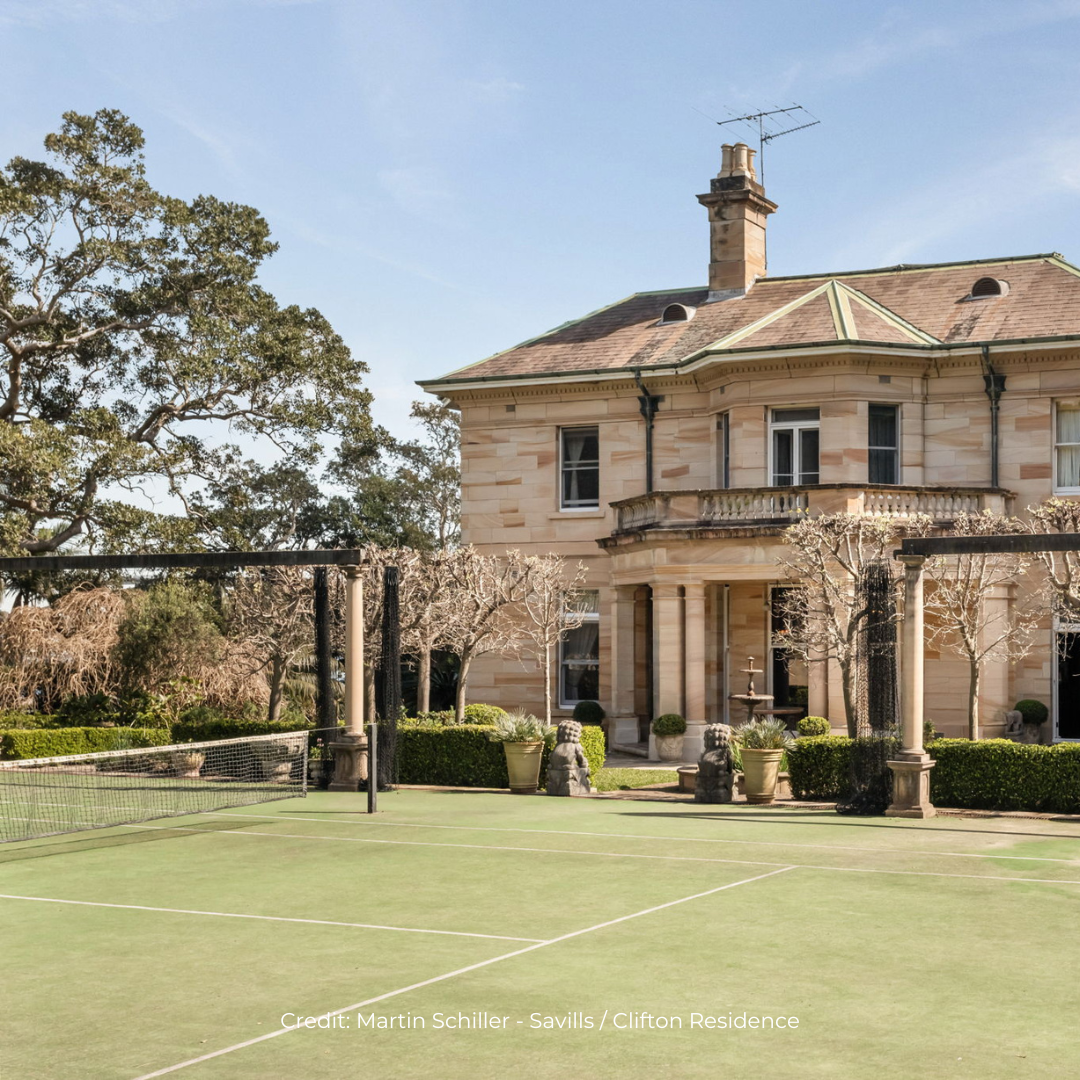
Grass Courts
Grass courts provide a fast-paced game with low bounce, rewarding quick reflexes and net play.
Natural grass courts offer timeless beauty but are the most high-maintenance, requiring mowing, irrigation, and downtime for recovery.
Synthetic grass mimics the look and feel with significantly lower maintenance needs, though it may sacrifice some playing consistency.
Both options are excellent for creating a classic tennis atmosphere in a garden or estate setting.
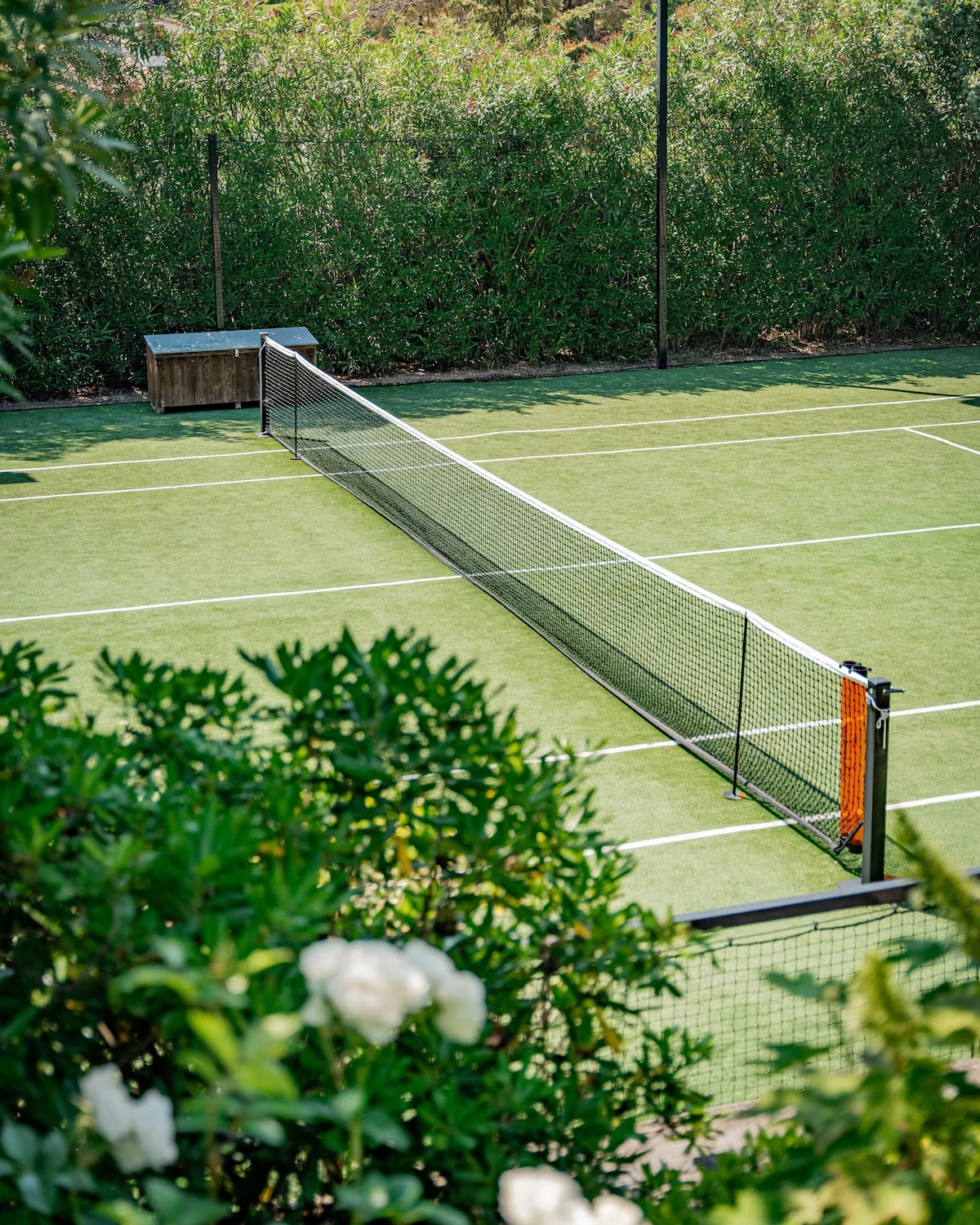
Credit: Beauchamp Estates / Villa Horizon Saint-Tropez
Environmental and Site Planning Considerations
A tennis court does not exist in isolation. Its surroundings can significantly influence play and long-term upkeep.
Planning Tip: Always consult an experienced court builder, such as The Hinding Group ,or landscape architect familiar with your local conditions. A well-sited court can extend lifespan, reduce maintenance costs, and offer a better playing experience in all seasons.
Sun and Shade
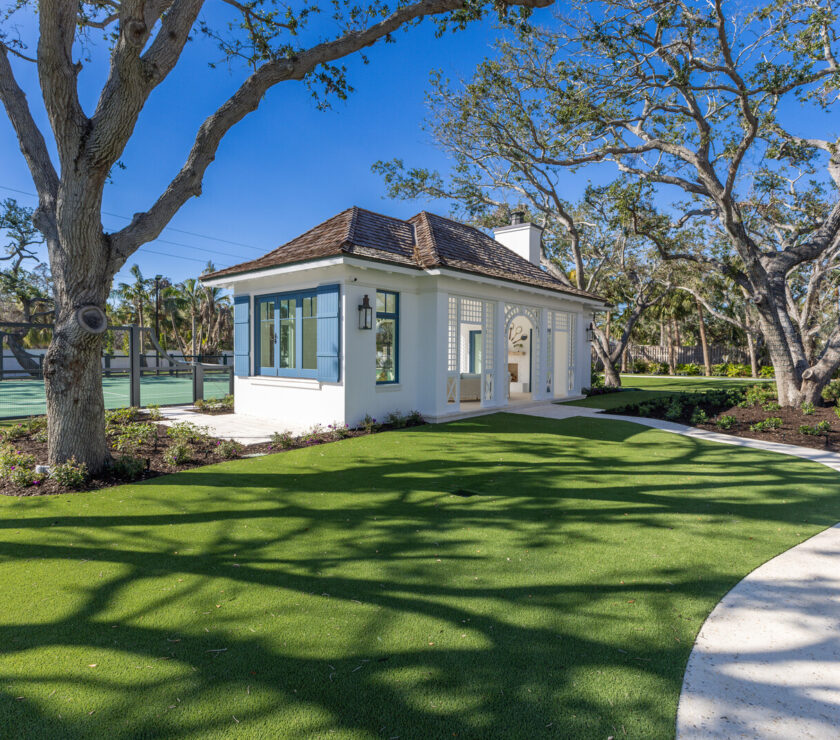
Avoid placing the court too close to tall trees or structures that cast long shadows across the playing area
Persistent shade can lead to moss buildup, slippery surfaces, and uneven wear
Courts in shaded areas may take longer to dry after rain, increasing downtime
If trees are part of the landscape plan, consider their position carefully and maintain regular trimming
Wind Exposure
Strong crosswinds can affect ball control, especially on elevated or open lots
Hedges, retaining walls, or windbreak fences can help reduce wind without blocking visibility
In high-wind areas, consider orienting the court in a way that minimizes wind impact on serve direction or baseline play
Drainage and Ground Elevation
-
Drainage is one of the most overlooked steps in building a private tennis court, yet it is essential for longevity and performance.
-
Courts should be built with a slight slope (typically about one percent) to allow water to run off efficiently
-
Poor drainage can lead to cracking, pooling, and reduced surface lifespan
-
Ensure the sub-base is made with well-draining materials and compacted soil to support longevity
Credit: Brian Milton – Compass / Cowdray Park
Controlled Enhancements: Customizing for All-Season Play
Beyond layout and surface, many luxury tennis homes are now integrating controlled enhancements; features that allow homeowners to play more often, in more conditions, and with greater comfort. These upgrades go beyond aesthetics, offering increased usability and year-round enjoyment.
Design Insight: Controlled enhancements are about more than convenience. They transform a court into a true multi-season destination; a space that reflects not just the love of tennis, but a commitment to design, performance, and personal lifestyle.
Lighting Systems
High-quality LED lighting makes it possible to play after dark, especially during winter months or on shaded properties
Fixtures are typically installed on poles 18 to 20 feet high and angled to reduce glare
Smart controls can automate usage, integrate with home systems, and conserve energy
In some areas, lighting installation may require local permits or zoning approval
Covered and Enclosed Courts
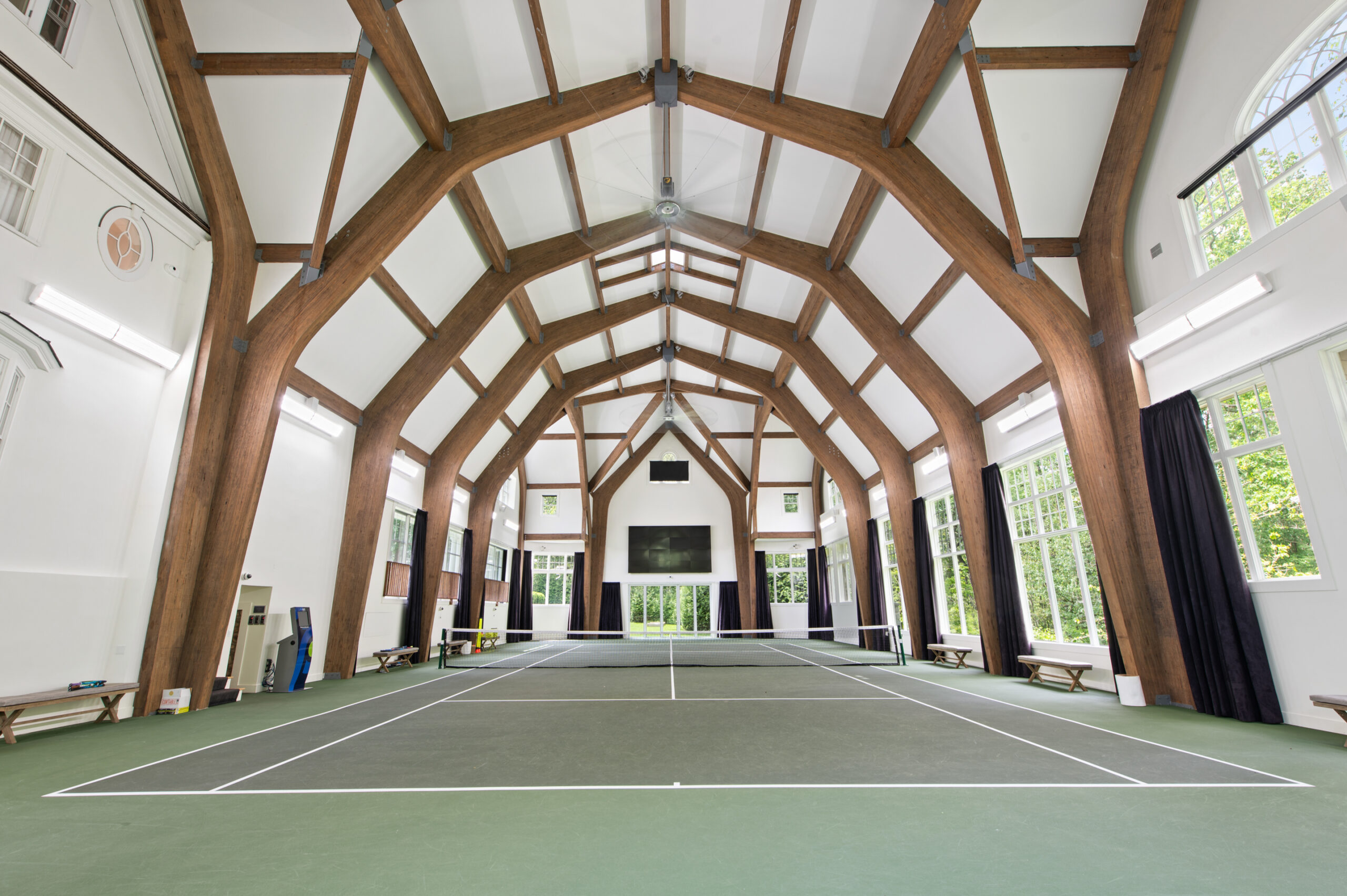
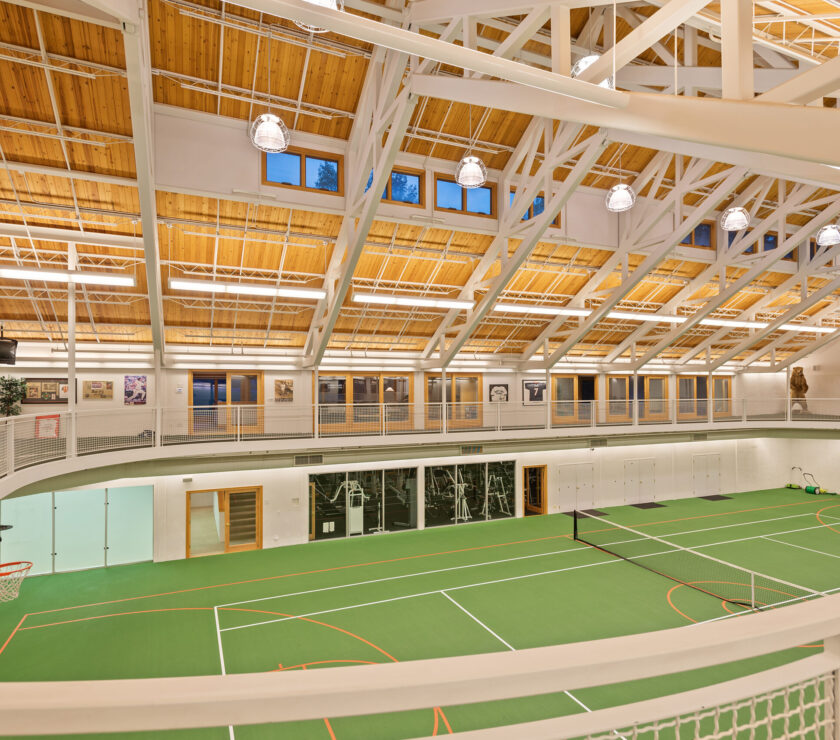
Open-air pavilions or fully enclosed structures offer protection from rain, sun, and snow
Retractable roof systems allow for year-round flexibility, opening up in good weather and closing during storms or extreme heat
These features reduce wear on the court surface and extend its lifespan
Enclosures can range from simple shelters to glass-walled or climate-controlled spaces
Integrated Smart Technology
Courts can now feature lighting, sound, ball machines, and gate access all controllable via app
Homeowners are adding camera systems for match playback, remote coaching, or security
Advanced properties may even include under-court heating, misting systems, or environmental sensors
These systems elevate the court from amenity to experience, making it easier to host, train, or play at any time
Get stories like this and curated listings by joining our newsletter