January 22, 2026
Why design alone is not enough
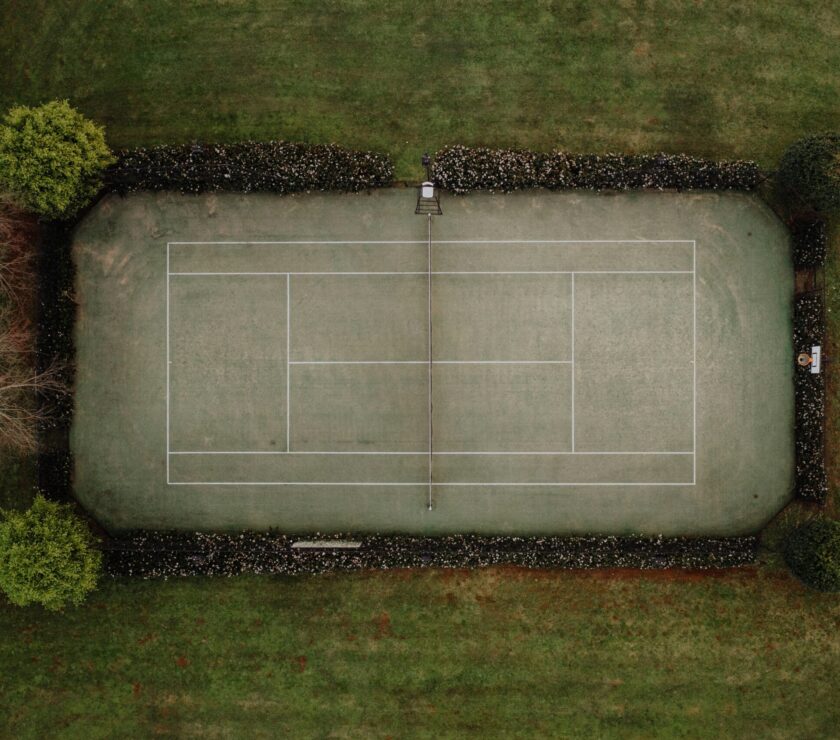
A tennis home can be visually compelling, thoughtfully designed, and beautifully resolved, and still feel incomplete. Often, the missing piece is not within the home itself, but on the court.
A tennis, padel or pickleball court may be carefully positioned, well integrated into the landscape, and aligned with the architecture, yet still fall short in daily use.
This is because a tennis home is not defined by design alone. It is defined by the balance between how the court belongs to the property and how well it performs and endures over time.
When both are resolved, the home feels whole. When one is missing, something subtle but important is lost.
Integration Gives a Court Its Place
In the strongest tennis homes, the court feels resolved within the property as a whole. Its location respects the landscape. Its proportions feel appropriate. Its presence does not compete with the house, but complements it.
This sense of belonging is what allows a court to feel calm and intentional rather than added as an afterthought.
Integration is not about proximity. A court may sit close to the home or at a distance. What matters is that its position makes sense: visually, practically, and experientially.
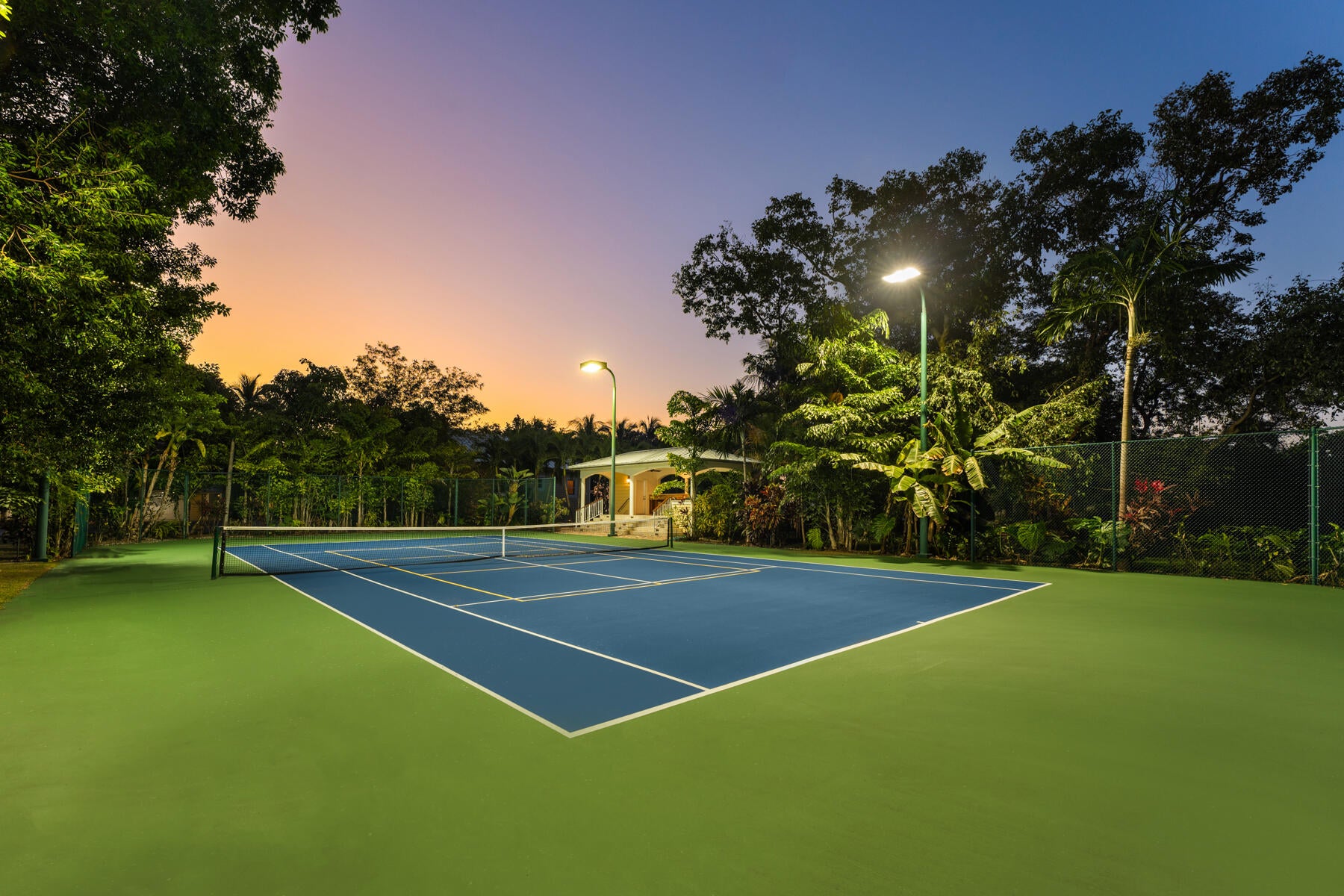
Home Featured: Palm Tennis Paradise | Leslie Leopold & Cheri Tindall | Ocean Sotheby’s International Realty | 10ak Studios
Condition Determines Whether the Court Is Truly Used
Even the most elegant court loses its purpose if it is not well maintained. Surface wear, fading lines, inconsistent bounce, poor drainage, or neglected surroundings quickly change how a court is perceived. What once felt like a feature begins to feel dormant.
In that moment, the court stops contributing to daily life on the property. Maintenance, therefore, is not simply a practical concern. It is what allows the court to remain active, inviting, and relevant.
Function Makes Integration Credible
A tennis, padel or pickleball court feels complete when it is easy and enjoyable to use.
That does not require excess, but it does require fundamentals to be addressed:
A surface suited to how the court is actually played
Lighting that extends usable hours without disruption
Comfortable areas for rest, shade, or viewing
Clear and logical access from the house and garden
A court may be intentionally set apart, and often is. When that separation is supported by comfort and usability, a pavilion, seating, or sheltered space, it feels purposeful rather than disconnected.
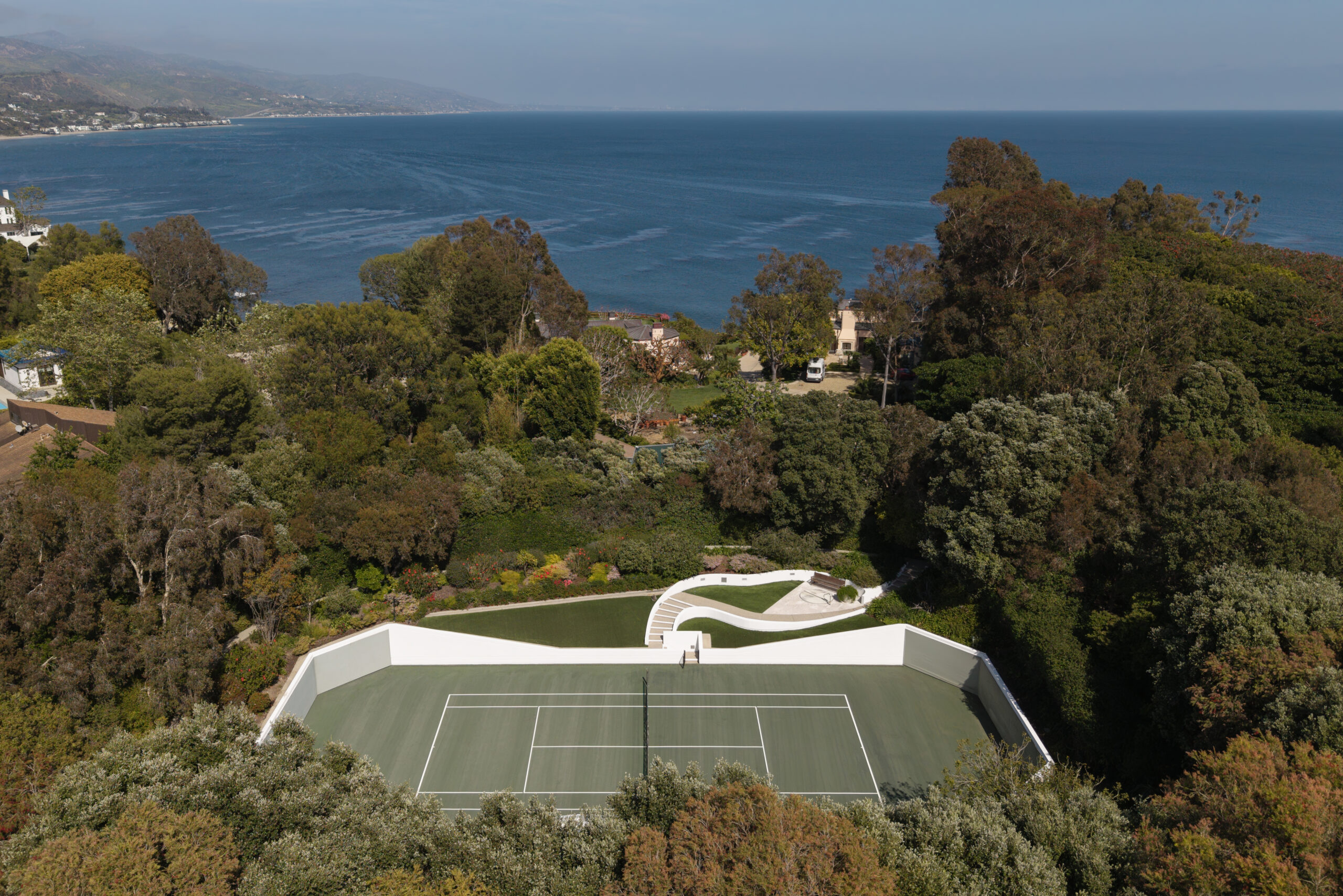
Home Featured: The Point Dume Legacy Estate | Chris Cortazzo | Compass
Beauty Without Use Falls Short
Even the most elegant court loses its purpose if it is not well maintained.
Surface wear, fading lines, inconsistent bounce, poor drainage, or neglected surroundings quickly change how a court is perceived. What once felt like a feature begins to feel dormant.
In that moment, the court stops contributing to daily life on the property.
Maintenance, therefore, is not simply a practical concern. It is what allows the court to remain active, inviting, and relevant.
Bringing It Together
The most successful tennis homes resolve both sides of the equation.
The court belongs to the property, and it performs reliably through use and care.
Design gives it presence. Maintenance gives it longevity.
Together, they create a tennis court that feels finished – and continues to add meaning to the home well beyond first impressions.
We have explored the technical foundations behind this balance in earlier articles on “Building A Private Tennis Court“ and “The Tennis Homes of Tomorrow“. This piece builds on that groundwork, focusing on what makes a tennis home feel complete once design meets daily use.
If you would like to contribute a perspective, share a project, or continue the conversation, we welcome you to get in touch.
Until the next match,
Tennis Homes Team