April 2, 2026
What Tennis Homes' Portfolio Reveals
Clay courts account for 8% of the Tennis Homes portfolio: 10 properties out of 125. Seven feature traditional red clay, while three use Har-Tru, the green clay surface more common in the United States.
The distribution is telling. Red clay appears primarily in Europe and subtropical coastal settings, while Har-Tru shows up in the northeastern U.S.
That scarcity is part of the story. Clay courts are beautiful, but they only thrive where climate, infrastructure, and maintenance support them.
The French Riviera Connection
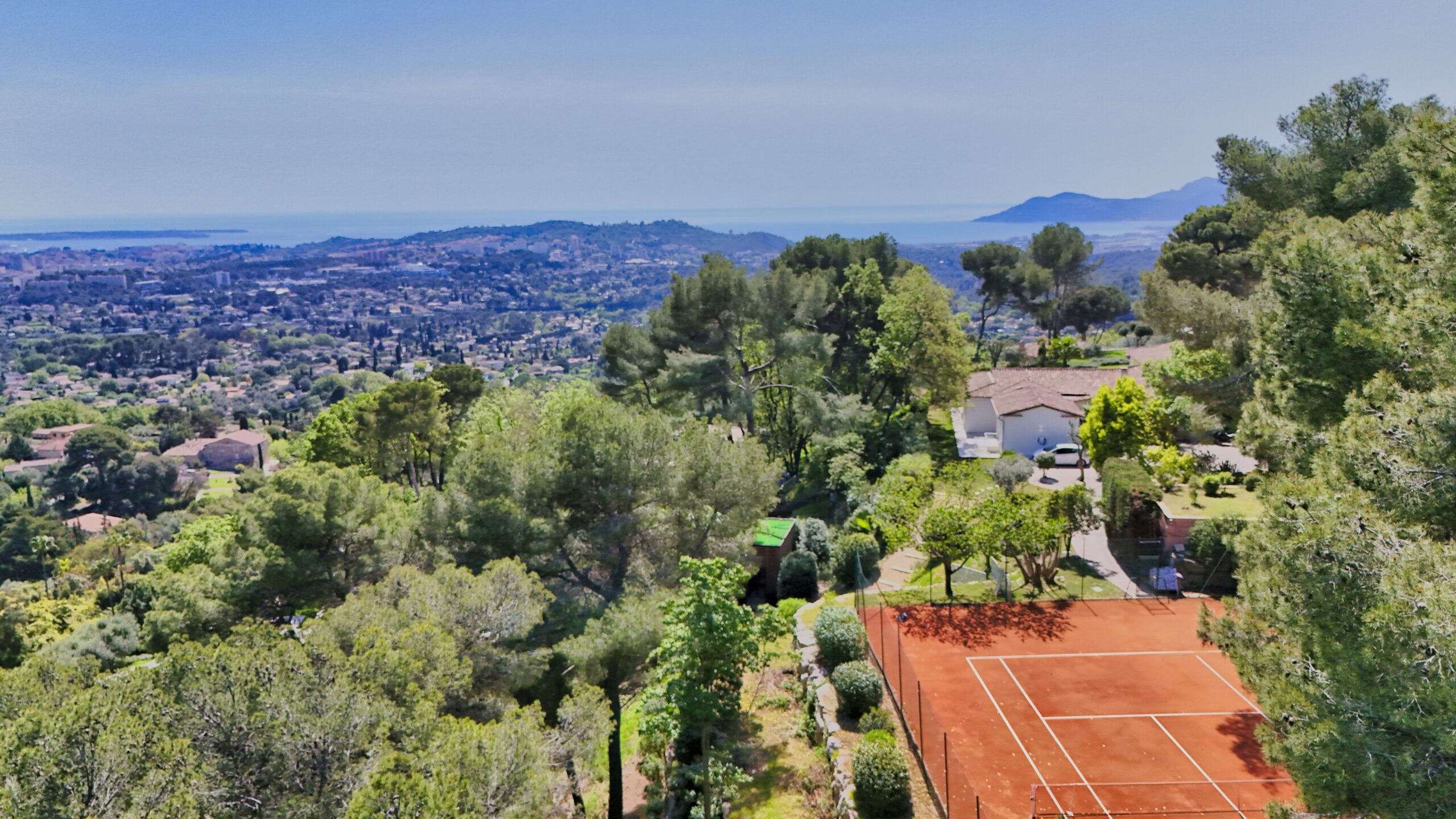
Clay court tennis took shape in the late 19th century on the French Riviera, where grass courts proved difficult to maintain in the Mediterranean climate. Crushed terracotta offered a more practical surface and, over time, became part of the region’s tennis identity.
The Monte Carlo Country Club, inaugurated in 1928 with its clay courts stepped above the sea, helped cement the association between red clay, European tennis, and a certain kind of luxury. The South of France did not just adopt clay. It helped define its prestige.
That legacy still shows in the Tennis Homes portfolio. Three of our seven red clay properties are in the South of France: Le Castel in Cannes, and Maison Céleste and Provençal Villa in Mougins.
Red Clay vs. Har-Tru: Two Surfaces, Different Solutions
Not all clay courts are the same.
Red clay is the traditional European surface, made from crushed brick or similar mineral material layered over a carefully built base. It is the surface most closely associated with Roland-Garros and with the slower, more strategic style of play clay is known for.
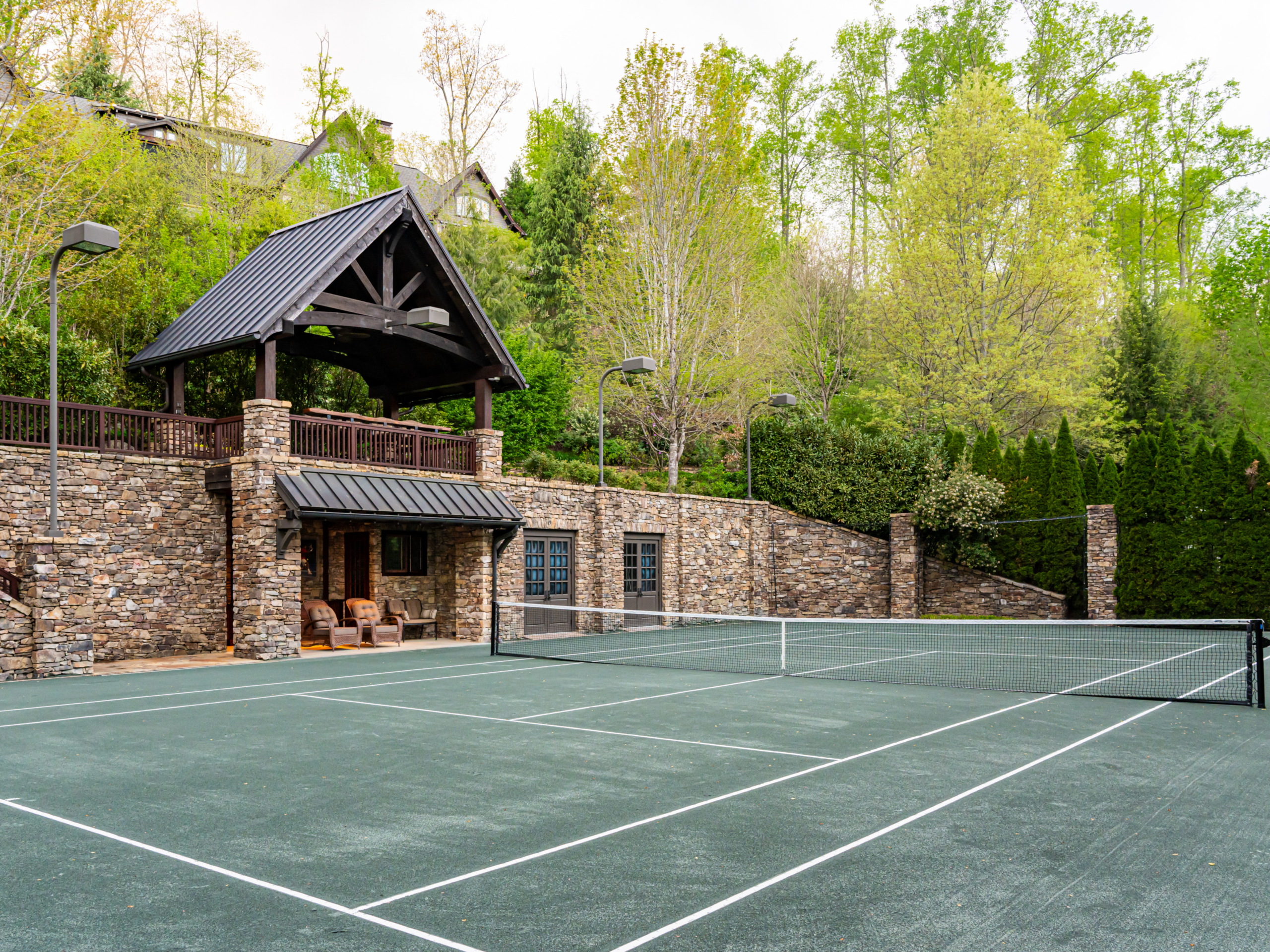
Har-Tru is the U.S. adaptation. Made from crushed metabasalt rather than brick, it drains faster and tends to perform better in climates where traditional red clay is harder to maintain.
That distinction matters in residential real estate. Within the Tennis Homes portfolio, red clay clusters in Europe and subtropical coastal zones, while Har-Tru appears in the northeastern United States as a more climate-appropriate alternative.
Why Clay Remains Rare
Clay courts require more than admiration. They require support.
Moisture is essential to keeping the surface stable and playable. In the wrong setting, clay dries into dust or breaks down through freeze-thaw cycles. That immediately narrows where it works well.
Then there is maintenance. Clay courts need regular watering, rolling, brushing, and seasonal attention. In residential settings, that often means subsurface irrigation, proper drainage, equipment storage, and either dedicated staff or owners willing to stay involved.
This is why hard courts continue to dominate in many U.S. residential markets. They are more flexible across climates, far less demanding to maintain, and better aligned with what most homeowners expect from a private court.
Clay, by contrast, tends to appear where three things come together: the right climate, the right infrastructure, and a tennis culture that values the surface enough to care for it properly.
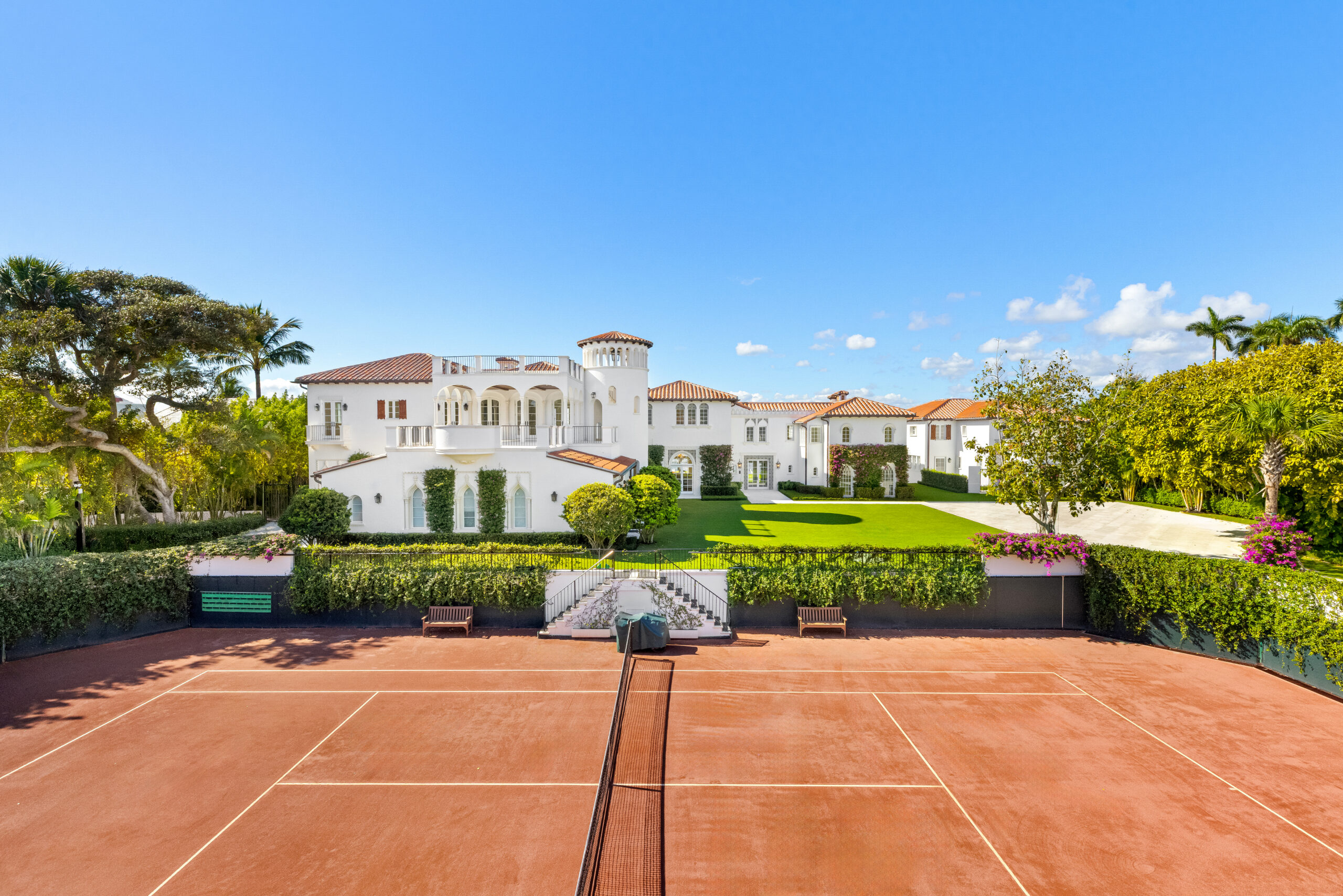
Across the Tennis Homes portfolio, that pattern is visible. Villa Aria sits on Croatia’s humid Adriatic coast. Triton Villa benefits from tropical conditions in Turks & Caicos. Casa del Ensuenos in Palm Beach reflects one of the few U.S. markets where both red clay and Har-Tru have found a lasting residential foothold.
Why That Rarity Matters
Clay courts remain uncommon not because they are overlooked, but because they ask more of a property and of the people who care for it. They depend on a rare combination of climate, infrastructure, and tennis culture.
That is also what makes them distinctive. In the right setting, a clay court is not just another amenity. It slows the rhythm of play, shapes the experience of the home, and gives the property a character that few private courts can match.
Until the next match,
Tennis Homes