June 25, 2026
A field guide to tennis ball types, pressure, felt, altitude, and why the right can depends on the court beneath your feet
Before You Open the Can
Most people treat a tennis ball as an afterthought. One yellow object, sold in a can, more or less interchangeable. It is not.
The International Tennis Federation recognizes four types of regulation tennis ball, before you even get to felt, pressure, surface, climate, and altitude. At the top of the game, balls are replaced after the first seven games and then every nine games after that, because by then they are no longer the ball they started as.
Once you know what to look for, the ball becomes part of the court itself. The surface you play on, the weather around it, and the elevation beneath it all point to a specific choice. Here is how to read the can.
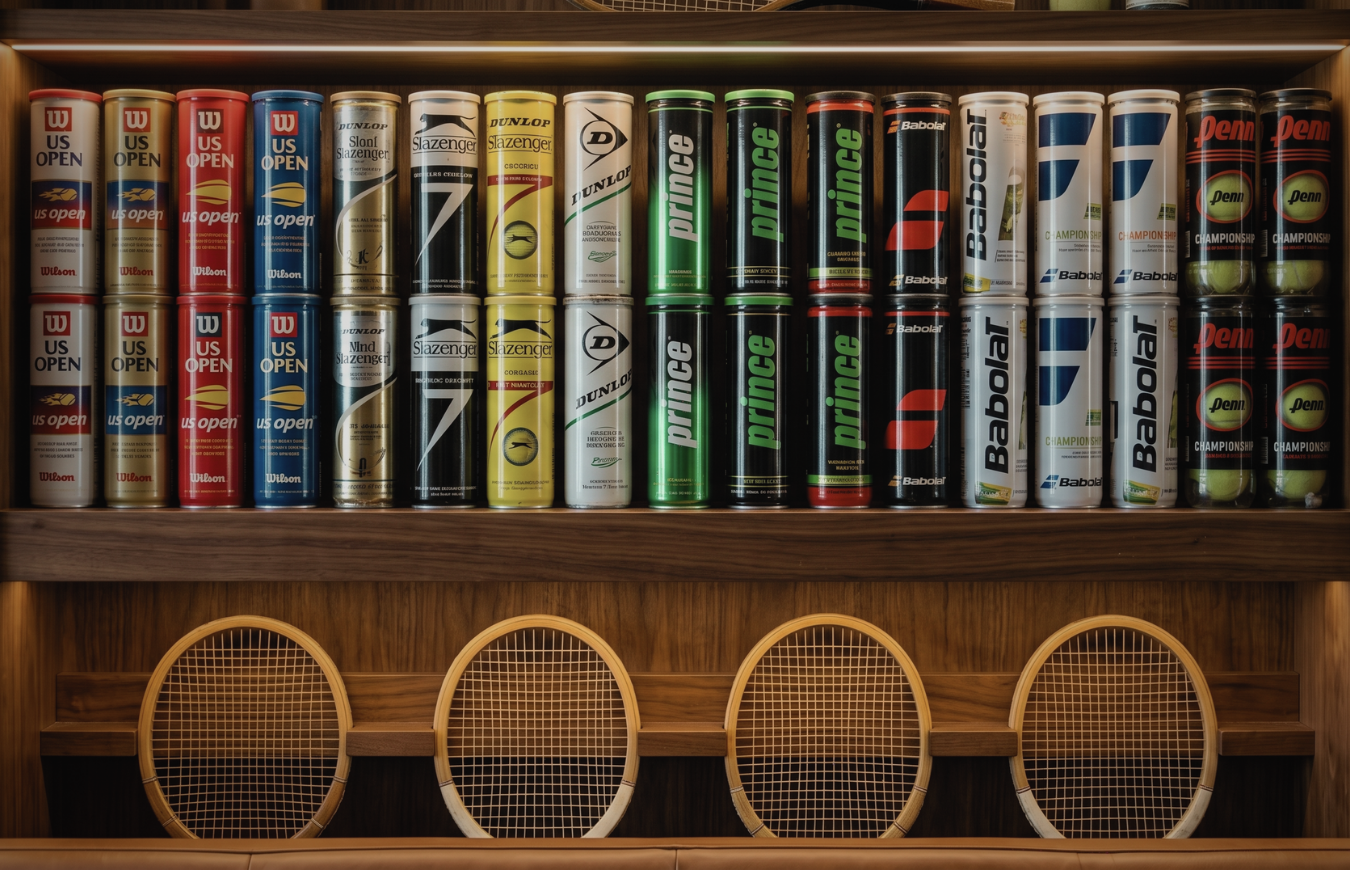
AI-generated concept image, created for visual inspiration only.
All About The Pressure
That hiss when you crack a fresh can is the point of the product. A standard tennis ball is a hollow rubber core pressurized to around 14 psi, higher than the air around it. That internal pressure is where most of the bounce comes from. The sealed can holds the same pressure so the ball does not start dying on the shelf.
Once the can is open, the air slowly escapes through the rubber. Within two to four weeks of regular play, a pressurized ball goes flat, or “dead.” That is why professional matches change balls so often, and why a can you opened last spring plays like a beanbag now.
Pressureless balls are the exception. They get their bounce from a thicker, more solid rubber wall instead of trapped air, so they last much longer. That makes them useful for ball machines, baskets, and heavy practice. The trade is feel: they are heavier, stiffer, duller off the string, and most players notice the difference within a few hits.
The Four Balls Nobody Mentions
The ITF recognizes four categories. Type 2, the medium ball, is the standard, the one in almost every can you have ever bought. Type 1 is slightly harder and faster. Type 3 is larger, so it drags more through the air and plays slower. The fourth is the high-altitude ball, built for elevation.
The logic reads backward at first. The ball is meant to counterbalance the court, not match it. A firmer, faster Type 1 ball is intended for slower surfaces like clay, to put pace back into a game the surface wants to slow down. A larger, slower Type 3 ball is intended for faster surfaces, to take the edge off. The fast ball belongs on the slow court, and the slow ball belongs on the fast court.
In practice, almost everyone plays Type 2. Type 1 balls are rare, and Type 3 balls are almost invisible in normal circulation. But the principle matters: the ball and the court are a pair, not two separate purchases.
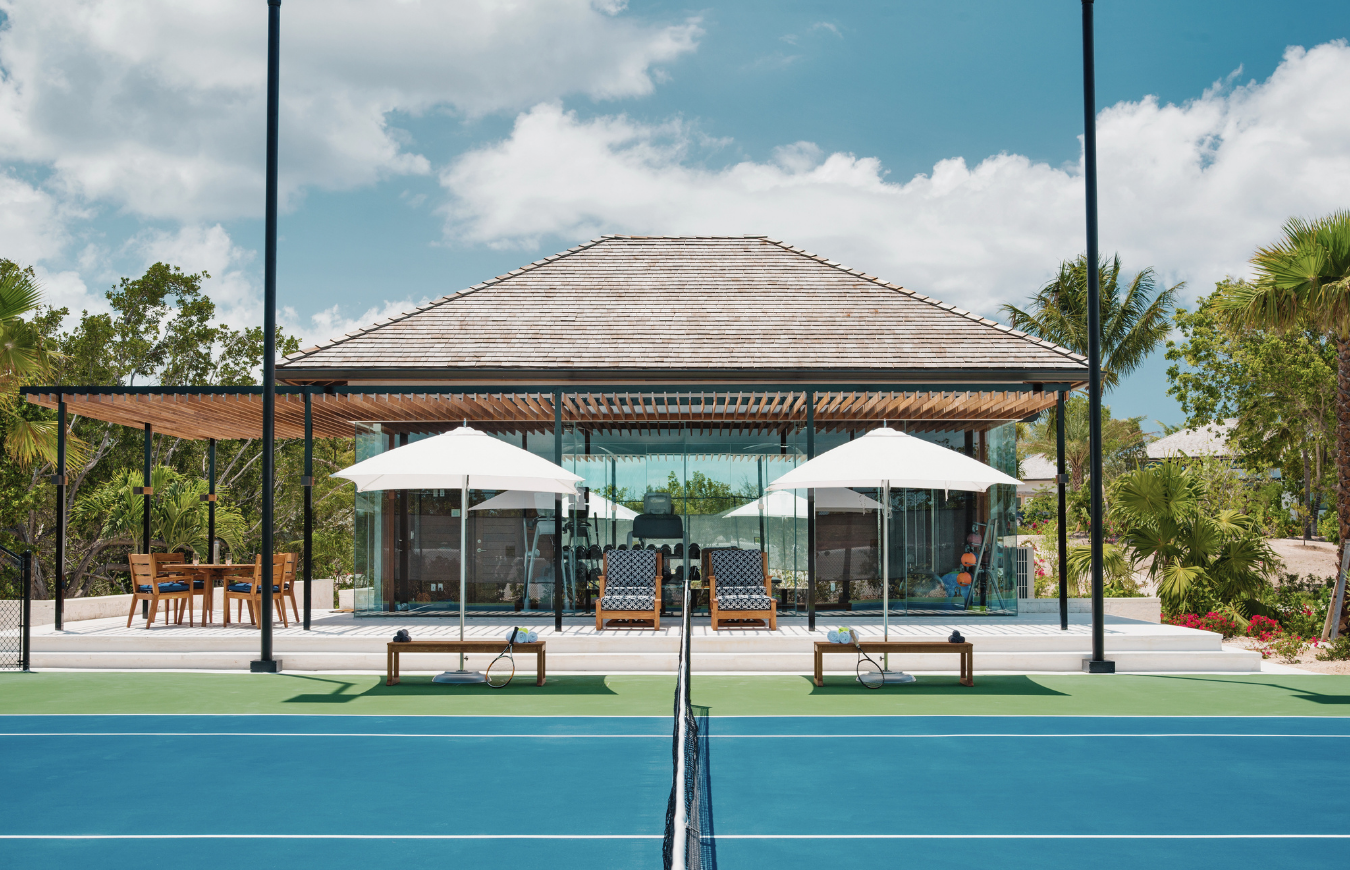
The Surface Decides the Felt
The felt is the fuzzy cover, and it comes in two main grades because different surfaces treat the ball differently.
Extra duty felt is thicker and woven a little looser. It is built for the abrasion of outdoor hard courts, where concrete and asphalt wear through the cover quickly. Put the same ball on clay and it becomes the wrong tool: the looser felt picks up grit, puffs up, gets heavy, and slows the ball down.
Regular duty felt is thinner and woven tighter to the core. This is the clay and indoor ball. The tighter weave helps keep clay from working under the felt, so the ball does not fluff up and bog down. Many indoor facilities also prefer it because it sheds less fuzz.
The insider tell is printed on the ball. The classic convention is red print for regular duty balls and black print for extra duty balls. Check the next can in your bag.
Grass, rare as it is in private hands, traditionally takes a regular-duty style ball, sometimes treated so the grass does not stain it.
What the Air Does to the Ball
Altitude changes everything. Go up in elevation and the air thins out. Less air means less drag, and the ball’s internal pressure has less outside pressure pushing back against it. Above roughly 4,000 feet, a standard pressurized ball flies faster and bounces higher than it should, almost as if it were overinflated.
It is the same physics that puffs out a sealed bag of chips when you carry it up a mountain. The pressure inside has not changed, but the pressure outside has dropped.
High-altitude balls solve this with lower internal pressure, tuned so the bounce returns closer to normal at elevation. Anyone with a court in the mountains, Park City, the high desert, stretches of the Alps, or the Sierra should be thinking about them. Play those courts with sea-level balls and the game starts to misbehave.
Madrid is the tour’s famous example. The city sits below the official high-altitude line, but high enough that the ball already plays quick and lively. That is part of why clay in Madrid behaves nothing like clay at sea level.
Temperature and humidity do quieter versions of the same thing. Warm air makes the gas inside expand and the ball play livelier. Cold flattens it. Damp felt absorbs moisture, gets heavier, and slows down. The ball you open is shaped by the weather as much as by the can.
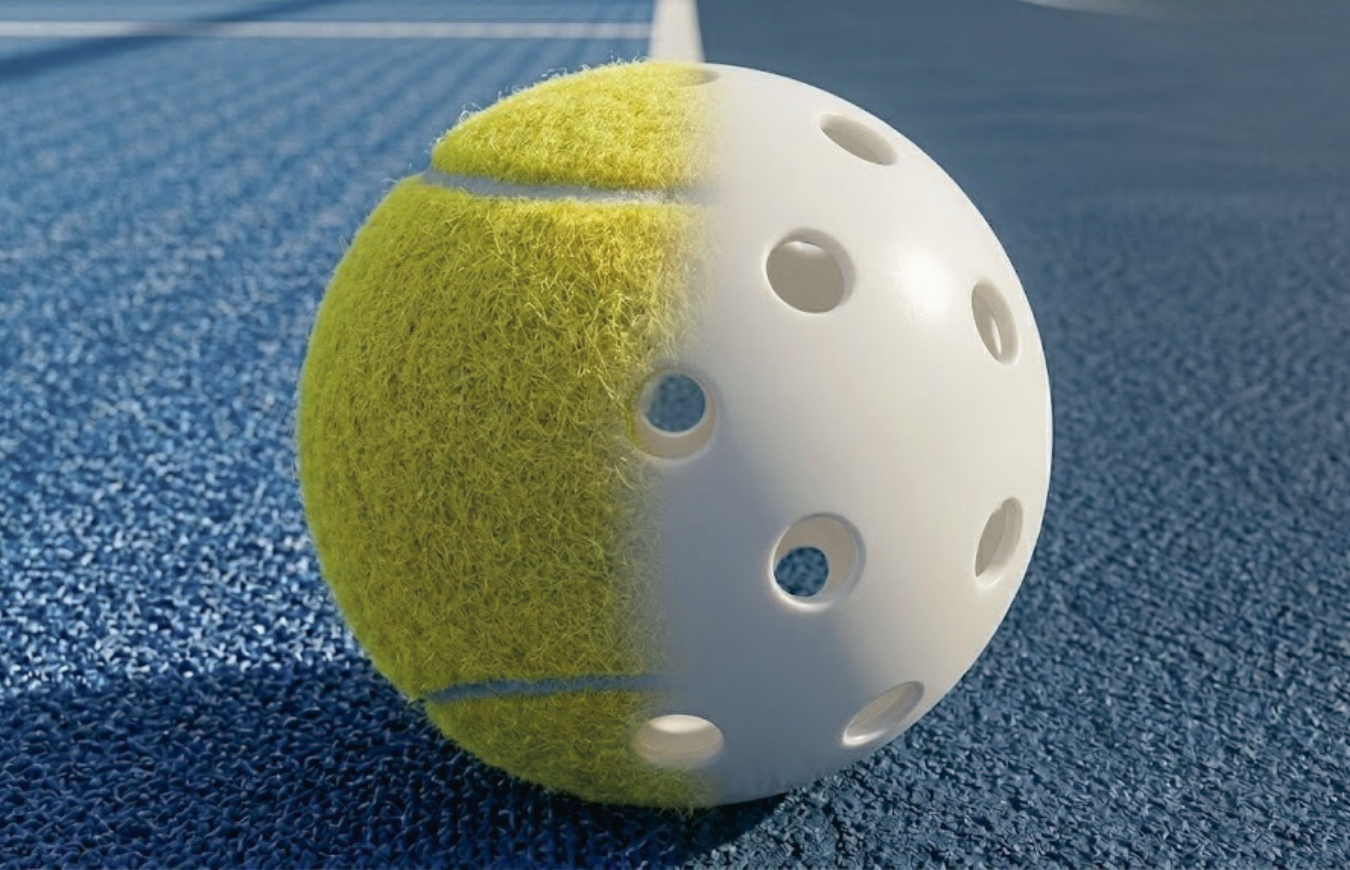
AI-generated concept image, created for visual inspiration only.
The Cousins: Padel and Pickleball
A padel ball looks like a tennis ball, but it is not one. It is slightly smaller and runs at lower pressure, around 10 to 11 psi against tennis at about 14. That is deliberate. On an enclosed court with glass walls and a smaller floor, a full tennis ball would be too fast and bounce too high to control off the glass.
Less pressure means a lower bounce and a slower pace. That is what makes padel a game of angles, walls, and placement rather than raw power. The balls are often made from similar materials, sometimes in the same factories, but tuned for a different court.
Pickleball is a different object altogether: hard perforated plastic, no felt, and no internal pressure. The bounce comes from the plastic itself. The detail most people miss is indoor versus outdoor. Indoor balls usually have larger holes and softer plastic, which gives a quieter, more controlled bounce on gym floors. Outdoor balls usually have smaller holes and harder plastic, built to cut through wind and survive concrete.
Near a house, that sound is not a small detail. One sport, two balls, opposite engineering, chosen entirely by where the court sits.
The Court Sets the Terms
Every choice runs in the same direction. The surface decides the felt. The elevation decides the pressure. The climate changes the bounce before you even walk on court. The ball is not the starting point. The court is.
That is the detail worth holding onto. A private court is not simply a slab with a net on it. It is a set of decisions: surface, orientation, climate, maintenance, use. The right ball is just the final decision in that chain.
That is also what we look for in every home in the Tennis Homes network: not a court that was added at the end, but a court that was considered from the beginning.
Until the next match,
Tennis Homes