June 18, 2026
The Sedgwick Cottage
Chapter 01
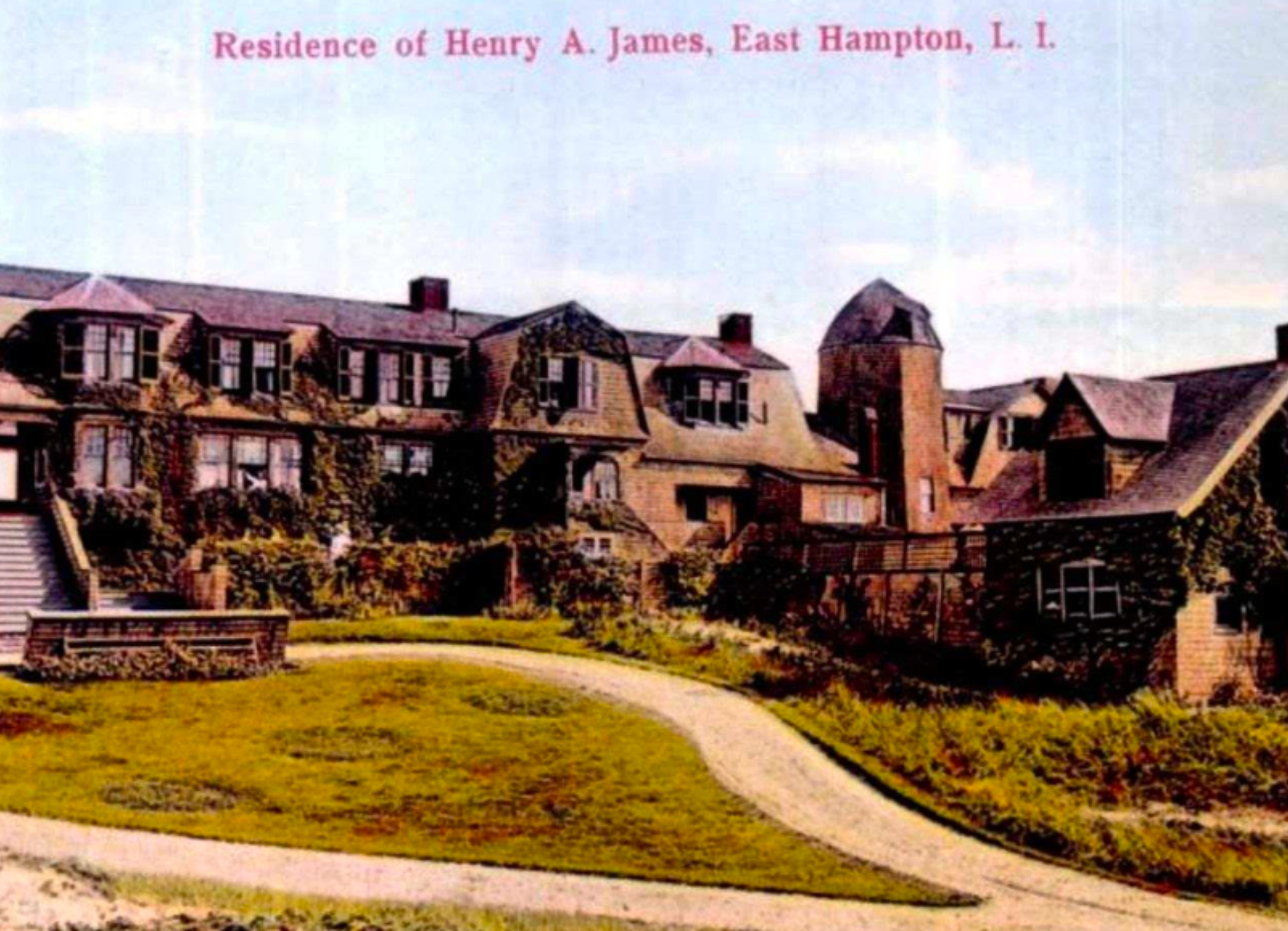
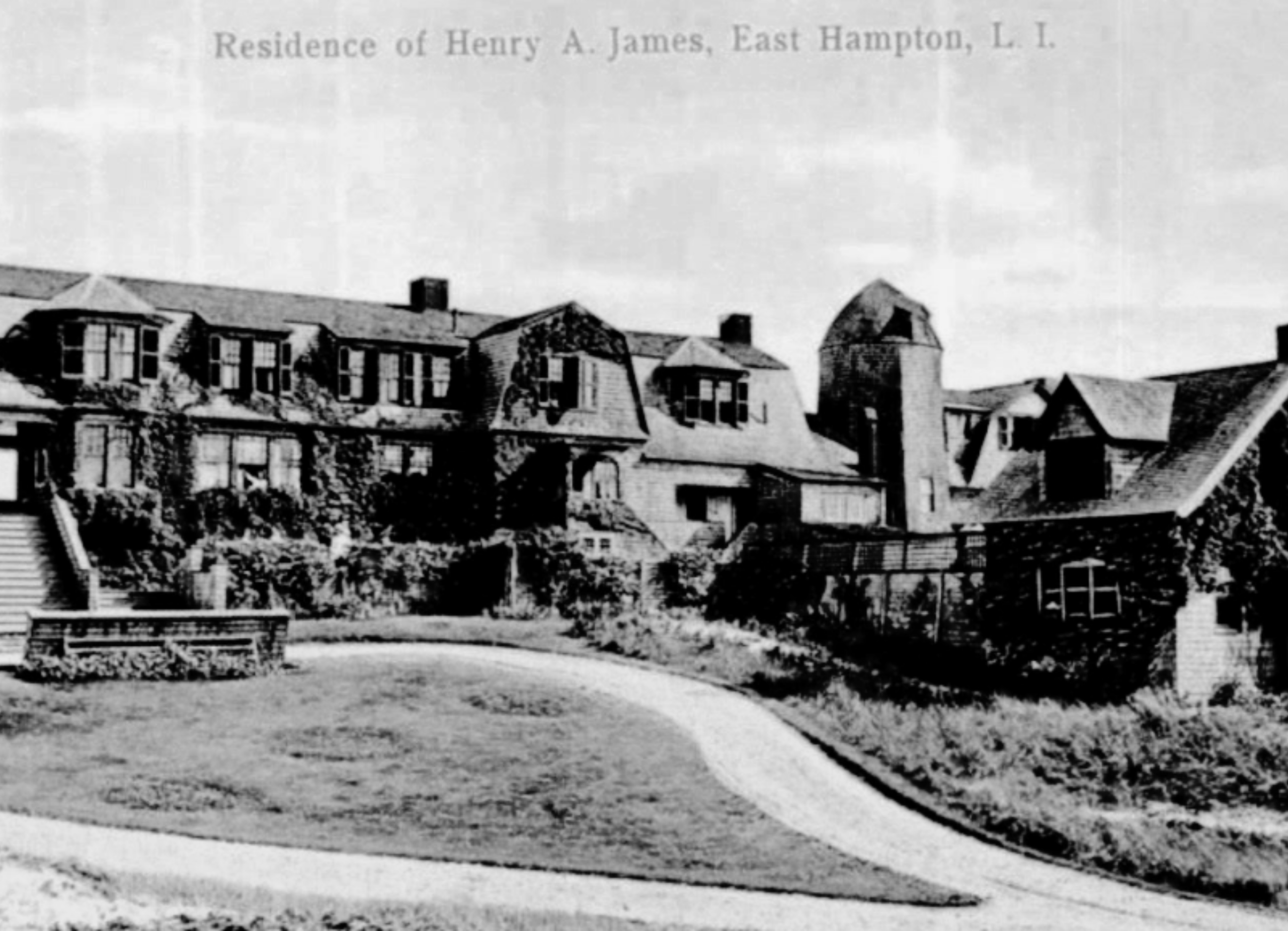
The original residence, known as Sedgwick Cottage, was completed in 1894 for Laura Brevoort Sedgwick James, who commissioned it months before her marriage. Its architect was J. Greenleaf Thorp, who designed more cottages in East Hampton than any architect of his era and did as much as anyone to popularize the village's unassuming style. His best-known design, Grey Gardens, still stands about half a mile away.
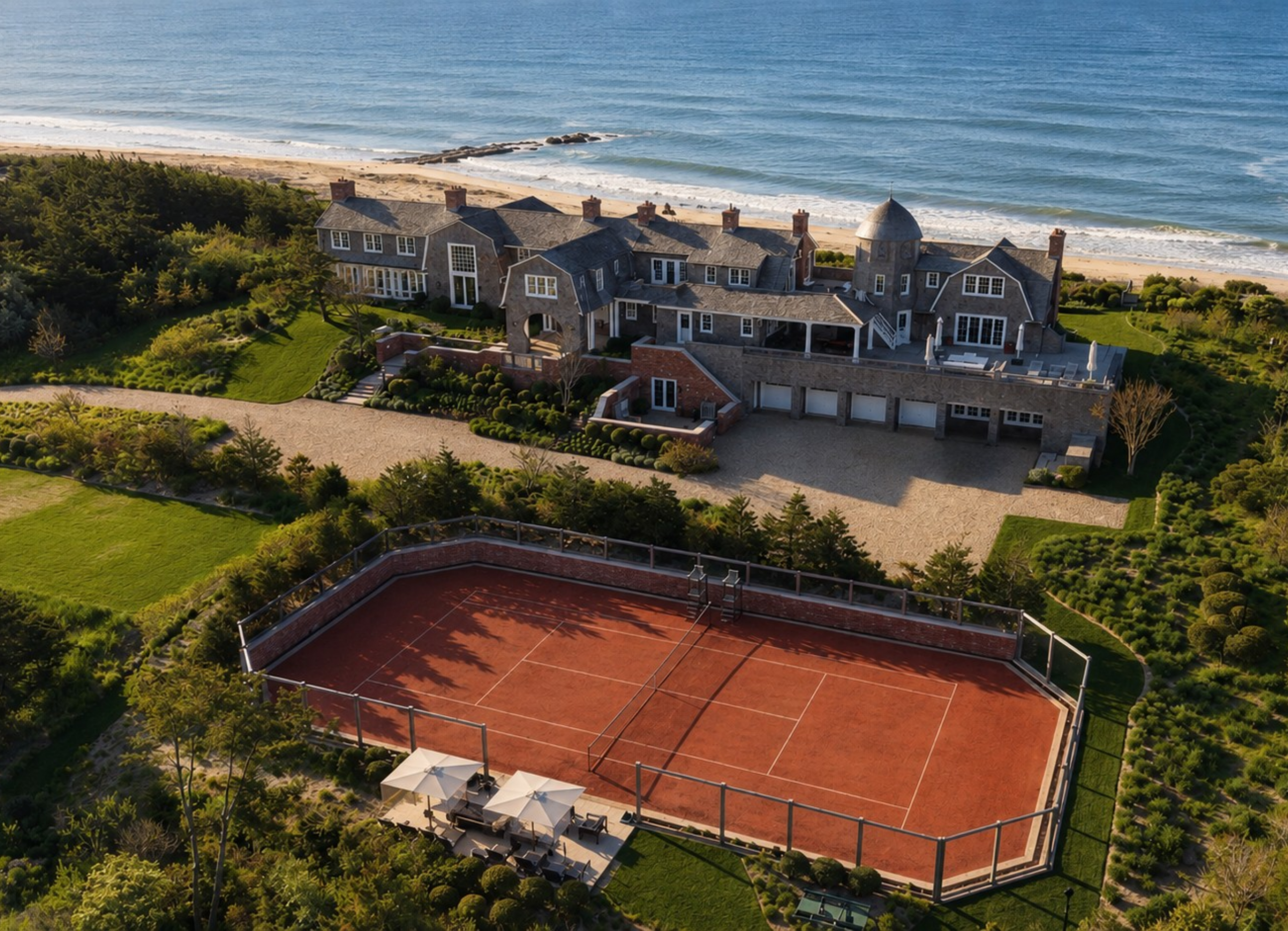
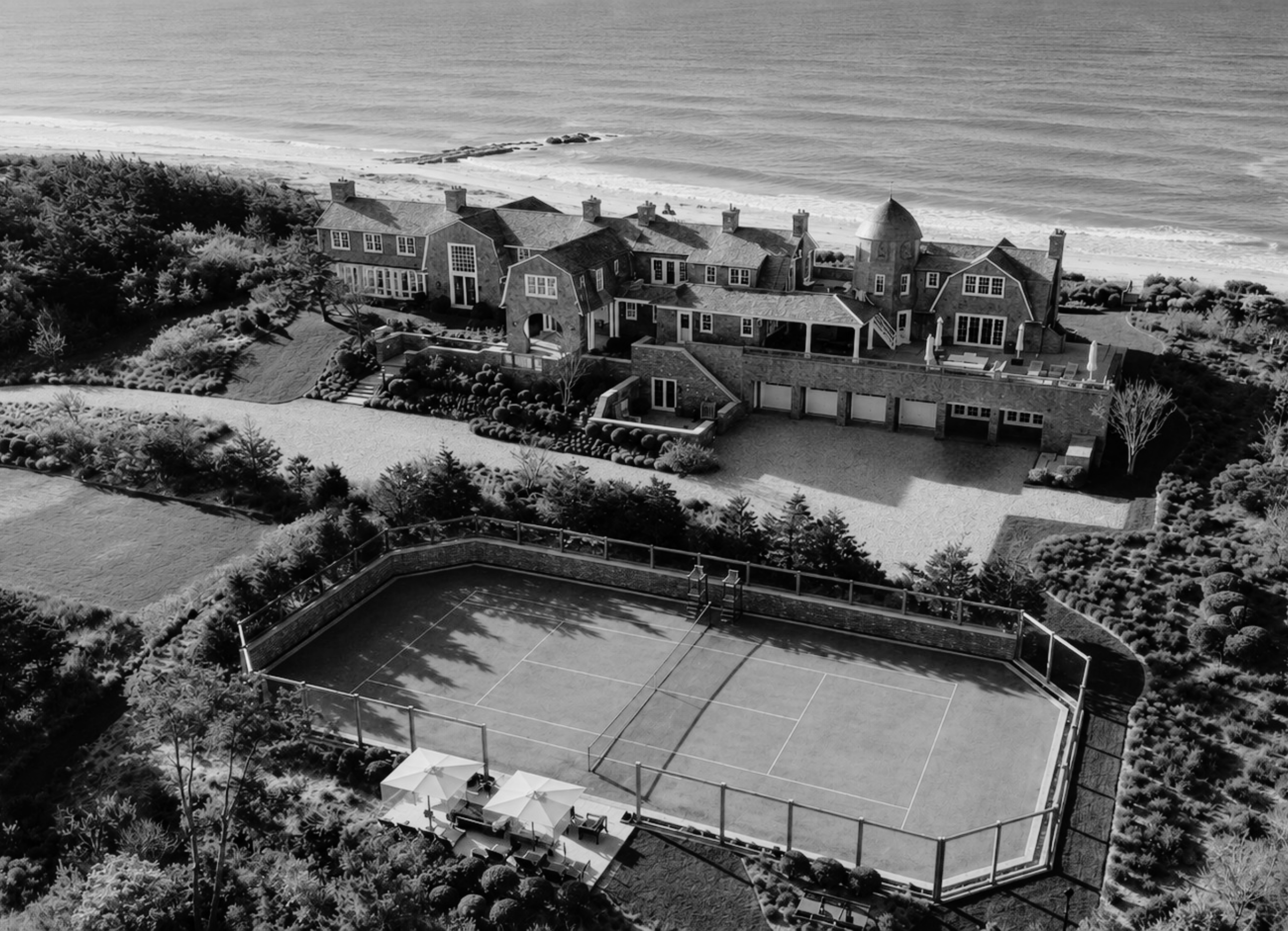
Thorp built in the shingle style, and he built with restraint. Weathered cedar cladding. Gambrel roofs. Deep verandas and screened porches that hold the line between the rooms and the weather. In 1899 came the detail that still reads from the beach, a tower rising to a rounded dome above the western wing, a curved staircase and paneling carried all the way to the top.
Inside, the proportions are generous without being grand. Wide-plank pine underfoot, beamed and coffered ceilings, eight fireplaces, a foyer set against a two-story stone surround. Light moves through the rooms across the day, gray to gold in the morning, long and level by late afternoon. This was never the architecture of the Gold Coast. It was quieter, closer to the dune grass, made for summers spent mostly outdoors. That restraint became the compound's character, and it is the thread every owner since has followed.
The land & the water
Chapter 02
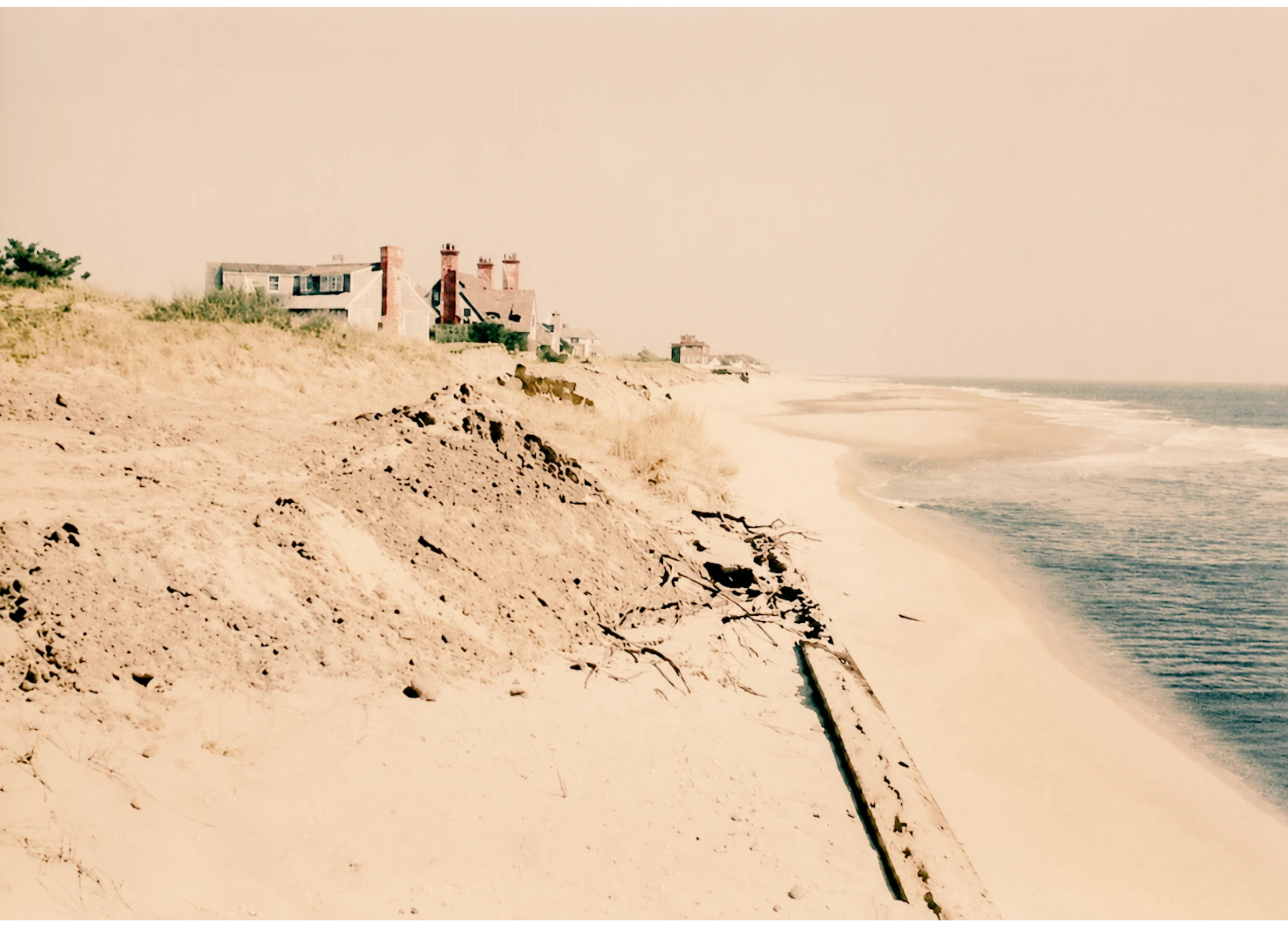
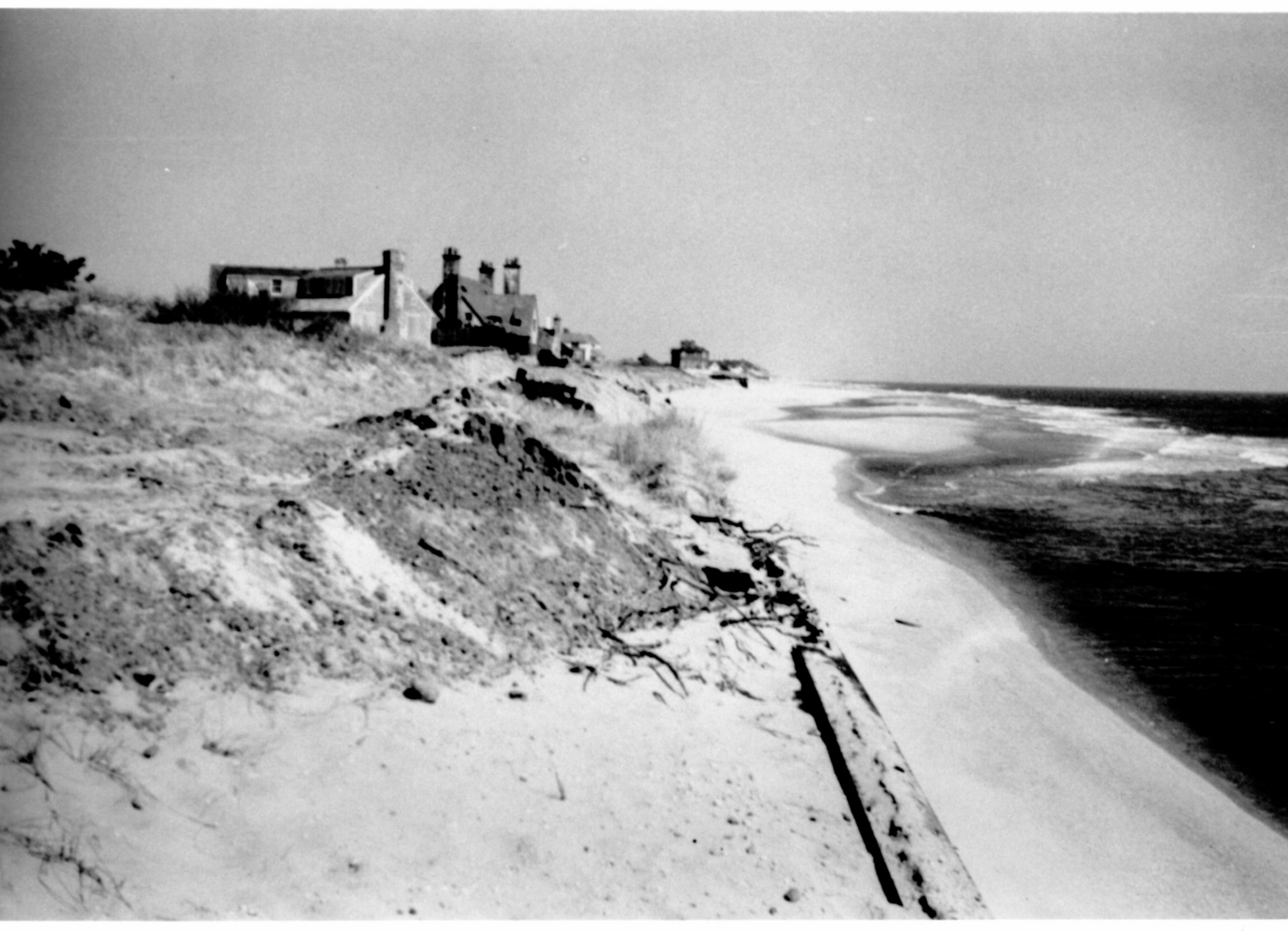
In 1935, Sedgwick Cottage was sold to Juan Trippe, founder of Pan American World Airways. Trippe wrote his chapter into the landscape more than the walls. He expanded the compound across the dunes, improved the shoreline, and reshaped the edge of Georgica Pond, excavating a deep hole so he could arrive from Manhattan by seaplane and set down on the water at the foot of his own lawn.
The boathouse anchored family life. It remains the last working boathouse on the pond, a grandfathered structure no later owner has been able to replicate. Trippe's grandson remembered the dew on the path to it at dawn, the buried Model-T cars holding the dunes in place, and learning to catch blue crabs off the dock with a length of string. He also remembered ordering a stranger off the lawn as a boy, then realizing he had just thrown Paul Newman off the property.
The compound still carries the shape Trippe gave it: five hundred feet of ocean frontage, private access to the pond, and paths that wind through sand and beach grass between the residence, the water, and the dunes.
The rooms reconsidered
Chapter 03
In 1987 the property passed to Calvin and Kelly Klein. They bought it after watching the light from the boathouse one evening. The light and the land are very special, Kelly Klein said of the decision.
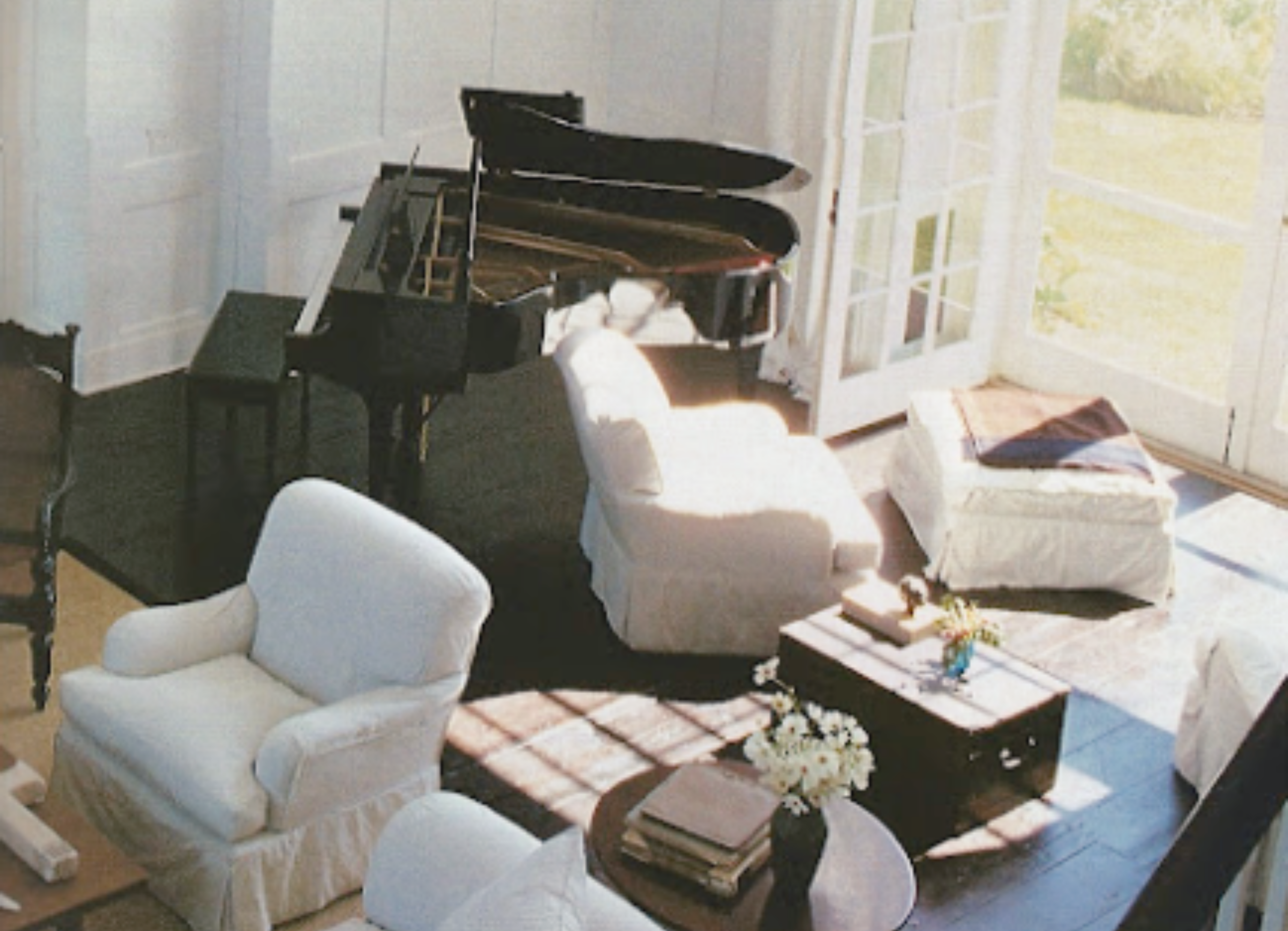
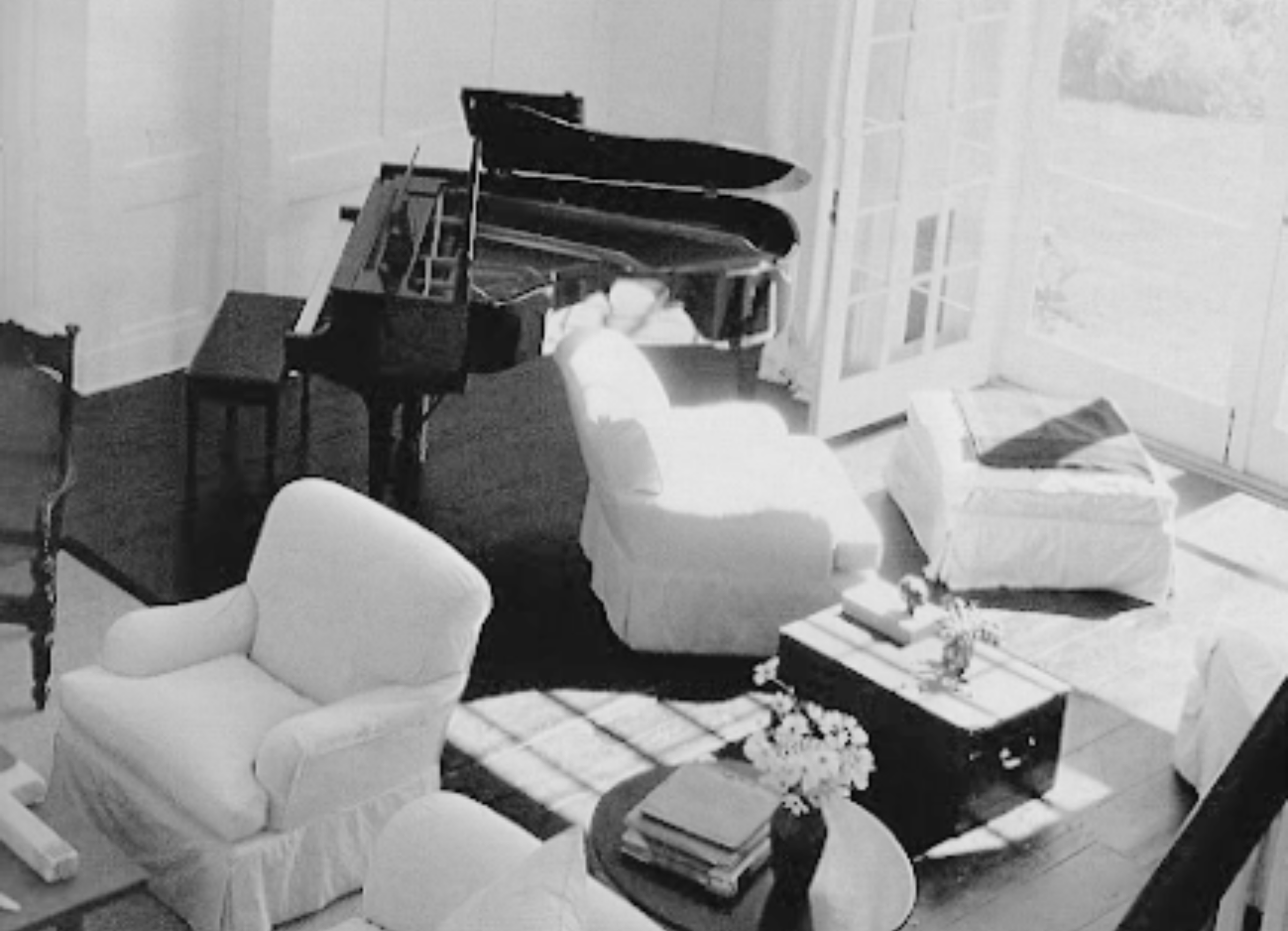
What followed was a reimagining that never erased the original. Working with the French architect Thierry Despont, known for his work on the Ritz Paris, the Woolworth Building, and the restoration of the Statue of Liberty, the Kleins opened the living room into its current double-height form, later topped by a glass catwalk. The palette came down to white. Cotton slipcovers, floorboards reclaimed from old houses in Vermont and Maine and stained dark against the pale walls, Georgia O'Keeffe canvases above the mantels, a freestanding tub set beneath a bank of windows with the ocean filling the frame. Vogue Decoration photographed the rooms in 1992. They looked like the inside of an idea: uncluttered, exact, lit by the sea.
Three names, three distinct lives, one shoreline compound. None of them tore it down. Each of them continued it.
The tennis court
Chapter 04
For most of its life, this property told its story through water: the ocean, the pond, the boathouse, the dunes that hold everything in place. Tennis was never part of it. By the time the current owners arrived, a private court had become close to a given on compounds of this scale in East Hampton. They could have laid a conventional surface and moved on. Instead, they built in European red clay.
That choice is what makes the court so revealing. Red clay is the surface of Roland Garros: crushed brick over carefully graded layers, slower under the ball, higher in the bounce, more demanding in the point. It rewards patience, footwork, and the willingness to build a rally rather than end one too quickly. It also asks to be cared for, watered, rolled, brushed, and kept true through the season. In a climate like this one, holding it in real playing condition takes intent.
That intent is the tell. Among the private courts we track across the area, true red clay is something we have come across only a handful of times. This is one of them, kept the way the surface is meant to be kept, with a viewing terrace set beside it for those who come to watch. A court like this is not laid to satisfy a listing. It is built by someone who plays, who knows the difference in the bounce, and who wanted the daily rhythm of the compound to include it. Trippe built for the water. The Kleins built for the light. These owners built for the game.