May 20, 2026
The Question Nobody Asks Until It Is Urgent
Finding a private court in need of work is one of the more common situations buyers navigate. The question that follows is almost always the same. Do we fix this or start again?
It sounds like a simple question. It is not. The answer depends on things that are not visible from where you are standing, and getting it wrong in either direction has real consequences for cost, timing, and what you are left with.
Jump to the section that matters most to you
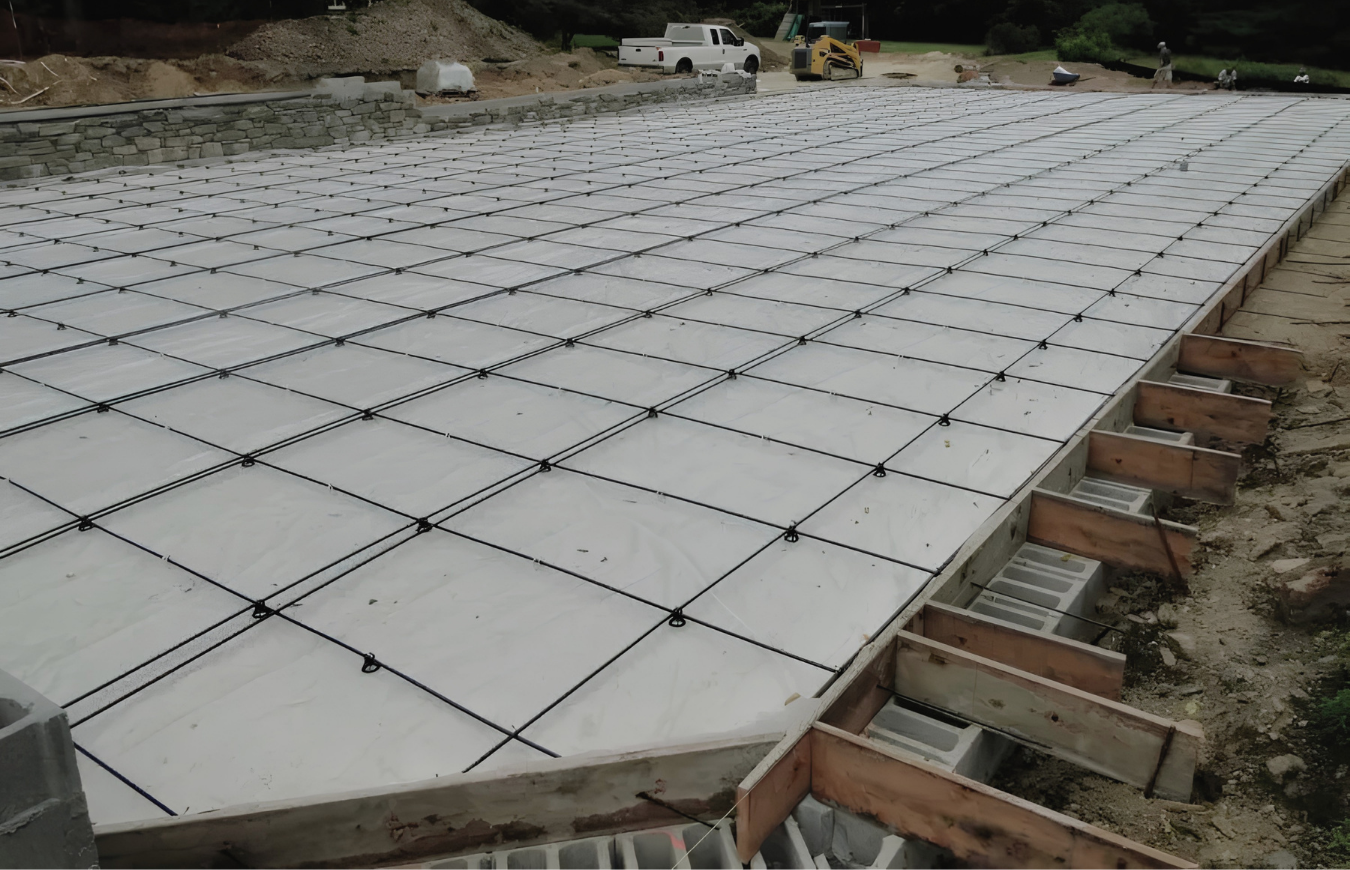
Photo: The Hinding Group
The Condition Question
What Is Actually Under the Surface
This is where the conversation has to start, and it is the one area where instinct is least reliable.
A court can look exhausted and be structurally sound. Faded lines, a worn surface, cracked fencing. All of that is cosmetic. If the base is solid and the drainage is working, a renovation can bring the court back to a genuinely high standard at a fraction of the cost and time of a new build.
The reverse is also true. A court can look presentable and have fundamental problems underneath. A failing base, poor drainage, subsidence. In those cases, renovation is not really renovation. It is cosmetic work on top of a structural problem, and the result will not hold.
The assessment needs to go below the surface. A qualified contractor who understands court construction will look at the base layers, test the drainage, check the perimeter, and give an honest read on what the court actually is versus what it appears to be. That assessment changes everything that follows.
Permits
What You Could Lose by Tearing It Down
This is the variable most buyers and owners underestimate, and in some markets it is the only variable that matters.
An existing court often carries permissions that are no longer available. Setback rules, noise regulations, land use restrictions, green belt limitations. Planning frameworks change. What was permissible when the original court was built may not be permissible today.
Tearing down an existing court can mean losing the right to build a new one in the same position, at the same scale, or in some cases at all. In parts of the South of France, the UK, and several US coastal markets, situations exist where renovation is the only viable path forward precisely because the permit position makes a new build legally complicated or practically impossible.
Before any decision is made, the permit question needs a clear answer. What does the existing court have by way of permissions? What would a new build require? And what, if anything, would be lost in the process of demolition?
In markets where courts are scarce, that answer is often the most important one in the room.
Orientation and Placement
The One Thing Renovation Cannot Fix
Every other problem a court can have is addressable. Surface, base, drainage, fencing, lighting. All of it can be repaired, replaced, or upgraded within a renovation scope.
Orientation cannot.
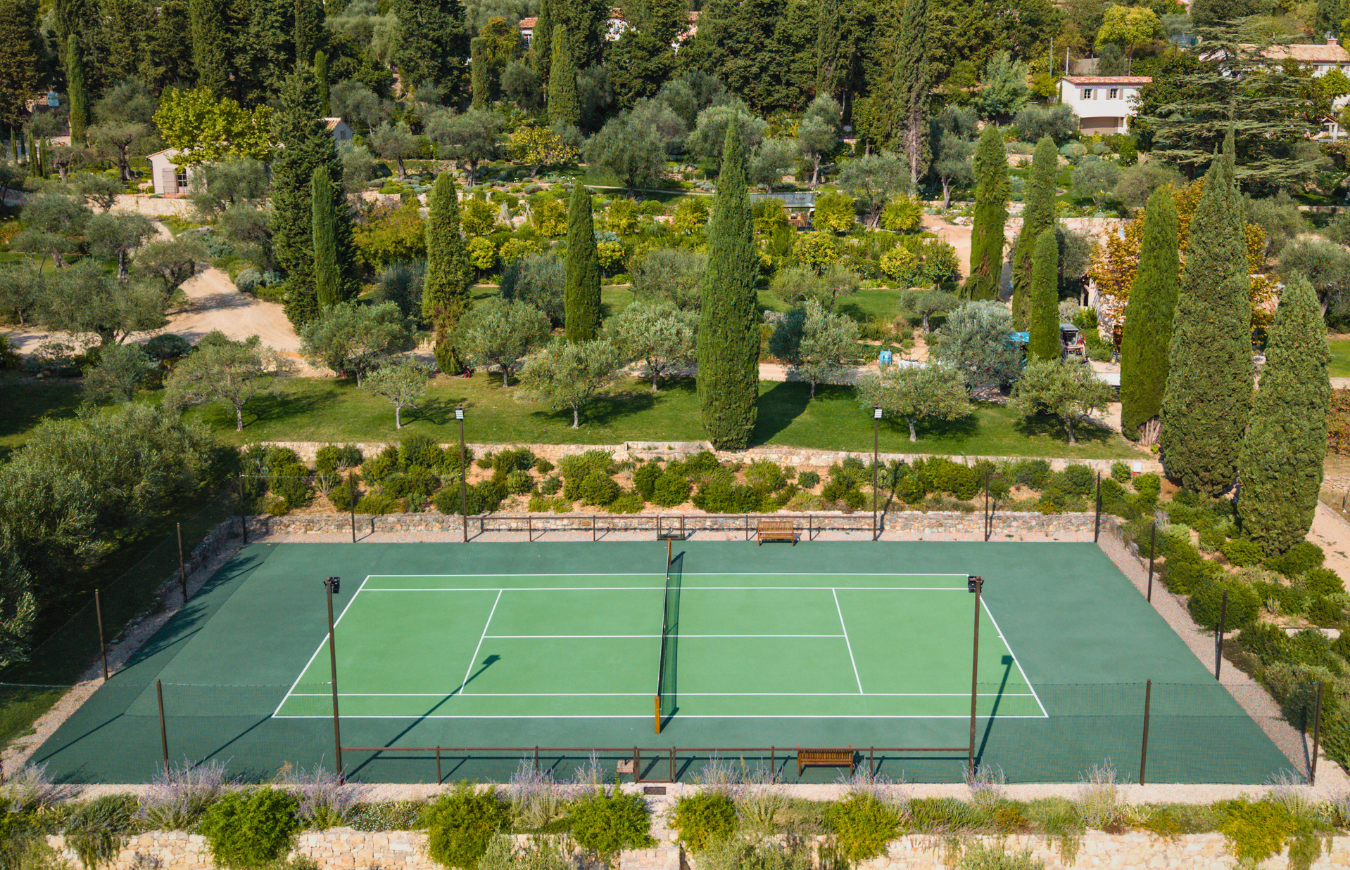
If the court faces the wrong direction relative to the sun, players will be looking directly into the light at certain times of day. If it sits in the wrong position relative to the house, it will never feel integrated into the estate no matter how well it is surfaced. If the dimensions are wrong or the run-off space is inadequate, the playing experience will always reflect that.
These are the cases where renovation preserves a problem rather than solving it. That said, orientation is only worth correcting if the space and setback rules allow it. A new court still needs to fit within the same land, the same legal constraints, and the same relationship to neighbouring properties. If those conditions make repositioning impractical, it is worth knowing that before the demolition conversation begins.
The orientation question is one of the first things worth establishing. If the existing court is well-positioned relative to the sun and the property, that is a strong argument for saving it. If it is not, the rest of the conversation changes.
Cost
Renovation Is Not Always Cheaper
The assumption that renovation costs less than a new build is reasonable but not reliable.
A court with a sound base, good drainage, and a straightforward surface replacement is genuinely cost-effective to renovate. The structural work is already done. What remains is finishing.
A court with a failing base, drainage problems, and years of deferred maintenance is a different proposition. Stripping back to the base, repairing or replacing the drainage infrastructure, rebuilding the layers properly. At that point the scope starts to resemble a new build, and the cost follows.
The economics only favour renovation when the underlying structure is genuinely sound. That is why the condition assessment comes first. Without it, cost comparisons are guesswork.

Timing and Disruption
How Much of a Project You Are Willing to Take On
For many owners, the decision is less about cost and more about time. A surface renovation on a structurally sound court can be completed in a matter of weeks. A full new build, permits included, can run to twelve or eighteen months in markets where the planning process is slow or the construction season is short.
For a buyer who wants to be playing by summer, that gap is the entire decision.
Disruption matters too. A renovation is contained. It affects the court and its immediate surroundings. A new build is a construction project, with everything that involves. Access, noise, materials on site, the presence of contractors over an extended period. Some owners absorb that without difficulty. Others find it changes how the property feels to live in during the process.
Knowing which kind of owner you are is worth factoring in before the structural assessment becomes the only lens.
The Surface Change Question
Renovation as an Opportunity
Renovation often prompts a decision that goes beyond structural repair.
Owners who inherit a clay court sometimes use the renovation moment to reconsider the surface entirely. A switch to hard court or synthetic changes the maintenance profile, the playing experience, and the year-round usability of the court. For some owners, it is the right move. For others, particularly those who chose the property partly because of the clay, it is not a conversation at all.
What matters is that the surface question is treated separately from the structural one. A court that is worth saving structurally does not automatically dictate what surface goes back on top. That is a decision about how the court will be used, in which climate, and by whom.
The renovation process is a useful moment to make that decision with proper information rather than inheriting a default.
What the Decision Actually Comes Down To
There is no universal answer. There is only a specific court, a specific property, and a specific set of constraints.
Start with the condition assessment. Then the permit position. Then the timeline. In most cases those three questions point clearly in one direction.
Until the next match,
Tennis Homes