May 13, 2026
Play Is Just the Beginning
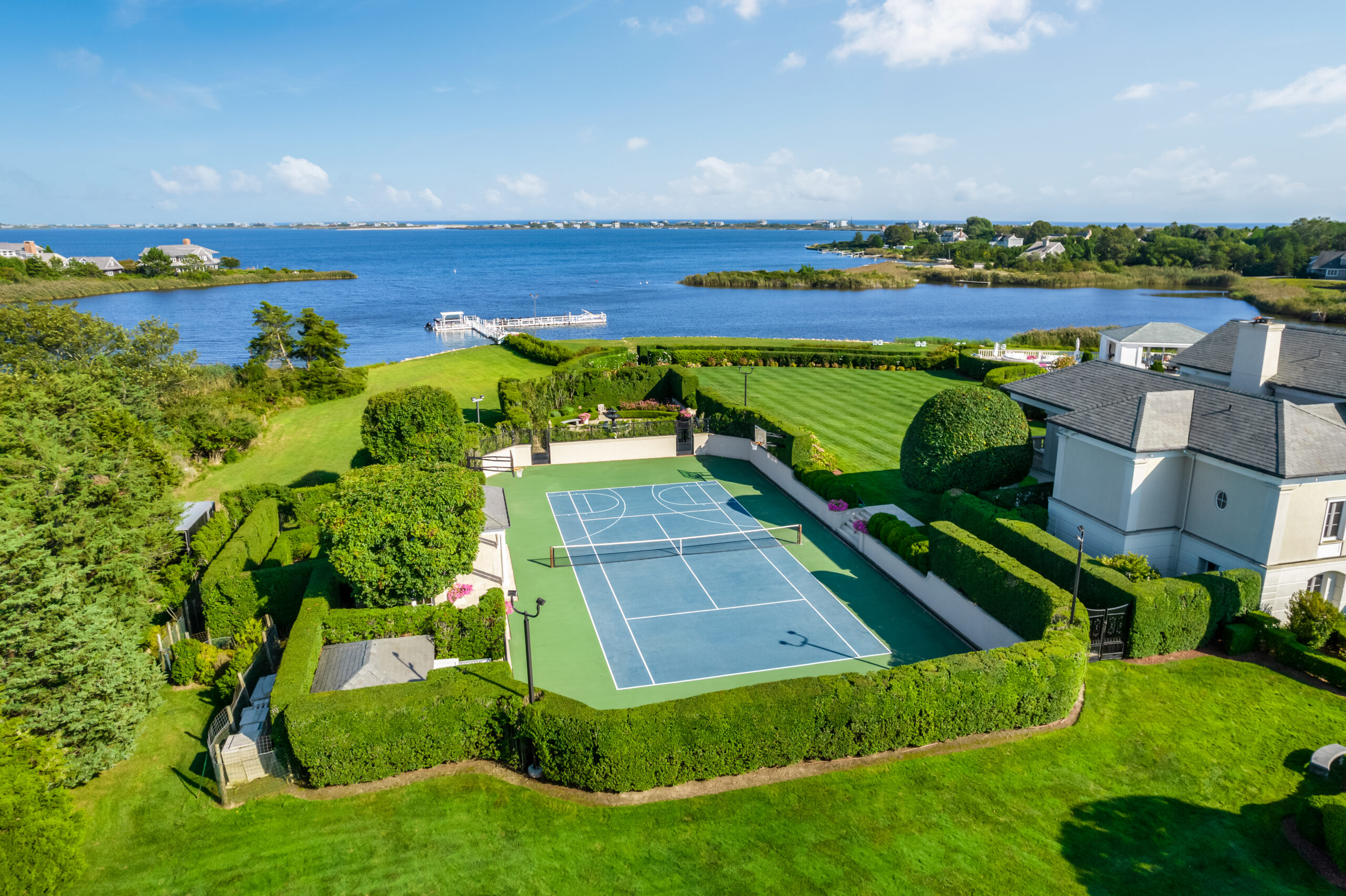
Picture a summer afternoon on your private court. Two sets, a good match, the kind of session the court was built for. When the last point is played, where does the afternoon go?
That question is what a pavilion answers.
A private court needs nothing beyond itself to function. The surface, the net, the lines. That is enough to play. But the best tennis estates tend to share something beyond the court itself. There is a place to land when the match is over. Somewhere for guests to sit during play. A setup that makes starting a session easy and finishing one comfortable. The court is the reason to be there. The pavilion is what makes it feel like a place.
Beyond the Functional
A well-maintained court will always get used. That is not the question. The question is what role the court plays in the broader life of the property.
For some owners, the court is a private training environment. Clean, focused, purposeful. The match ends and life continues inside the main house. That is a completely valid approach and some of the finest estates in the Tennis Homes network are built exactly that way.
For others, the court is a social anchor. The place where afternoons happen, where guests gather, where the property reveals a different side of itself. The pavilion is what enables that. It extends the court from a playing surface into a setting.
Neither approach is better. They reflect different intentions. What matters is knowing which one fits how you actually live, and whether the property you are considering was built with the same thought.
The Functional Core
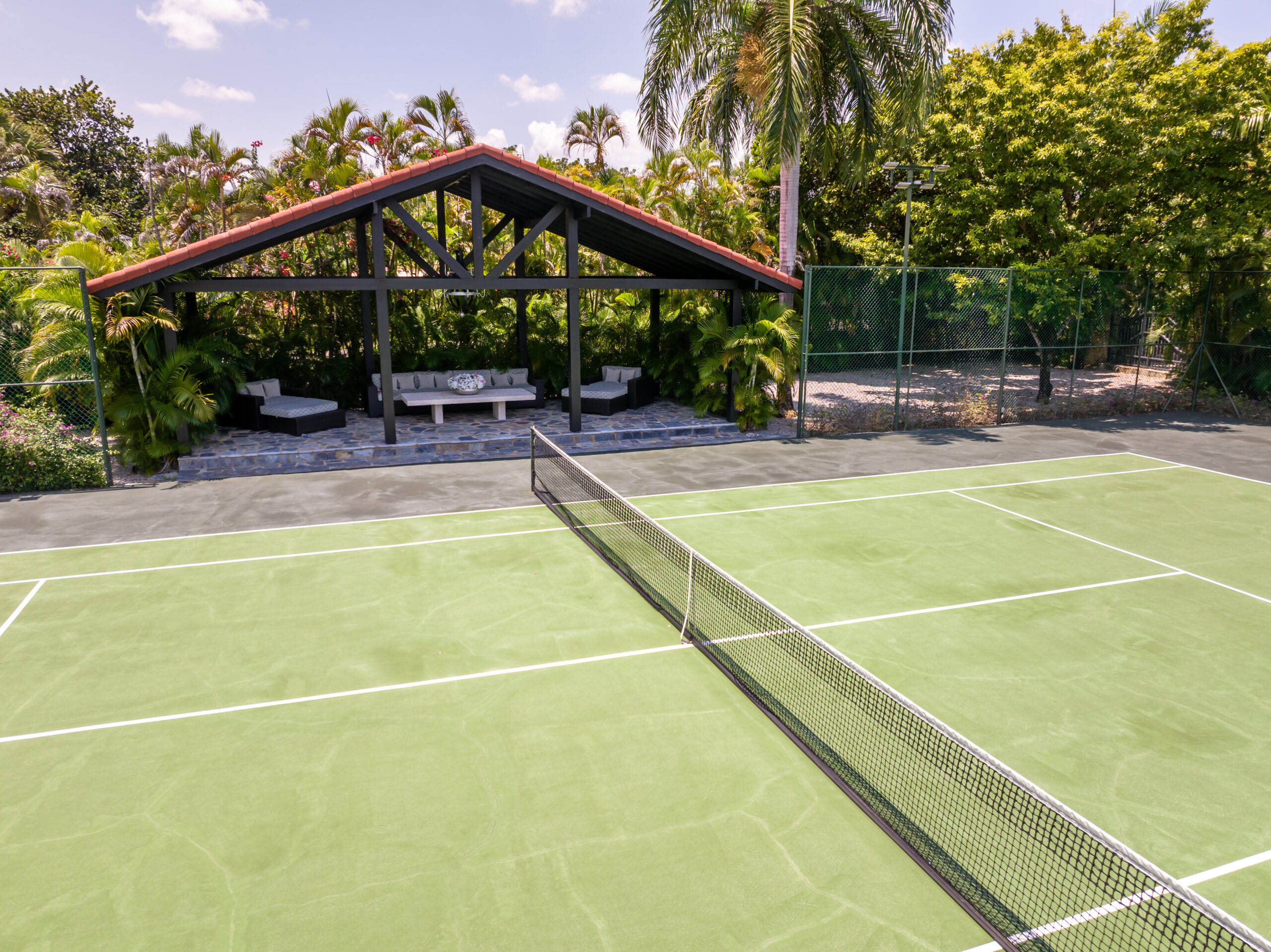
A pavilion that earns its place starts with a few basics. Not amenities. Necessities.
/01
Shade and seating
Matter more than they sound. Not a bench against the fence but a proper covered area where guests can sit comfortably between sets, watch play without squinting, or simply be part of the afternoon without being in the sun. The orientation of the structure relative to the court and the position of the sun at typical playing hours is a detail worth checking. A shaded area that faces the wrong direction at 3pm in July is not really shade.
/02
Equipment storage
Rounds out the core. A dedicated space for rackets, ball machines, hoppers, and spare gear removes a small but real friction from starting a session. When equipment lives in the garage or the hallway off the kitchen, it adds a step. Courts that are easy to begin using tend to be used more. That is not a rule. It is just human nature.
/03
A bathroom
Is the single most practical addition a pavilion can offer. On larger estates, the main house can sit 150 to 200 meters away. That distance is easy to forget when you are planning a court and easy to notice once you are using one.
For clay courts specifically, there is an additional practical case. Clay travels. After a session on a red clay surface, shoes and socks carry the surface with them. A bathroom and an outdoor shower near the court means clay stays at the court rather than moving through the corridors and interiors of the main house. It is a small operational detail that owners of clay court estates tend to feel strongly about once they have experienced both ways.
The Layer That Changes How the Property Lives
Beyond the practical core, the pavilion starts to become something more interesting.
/01
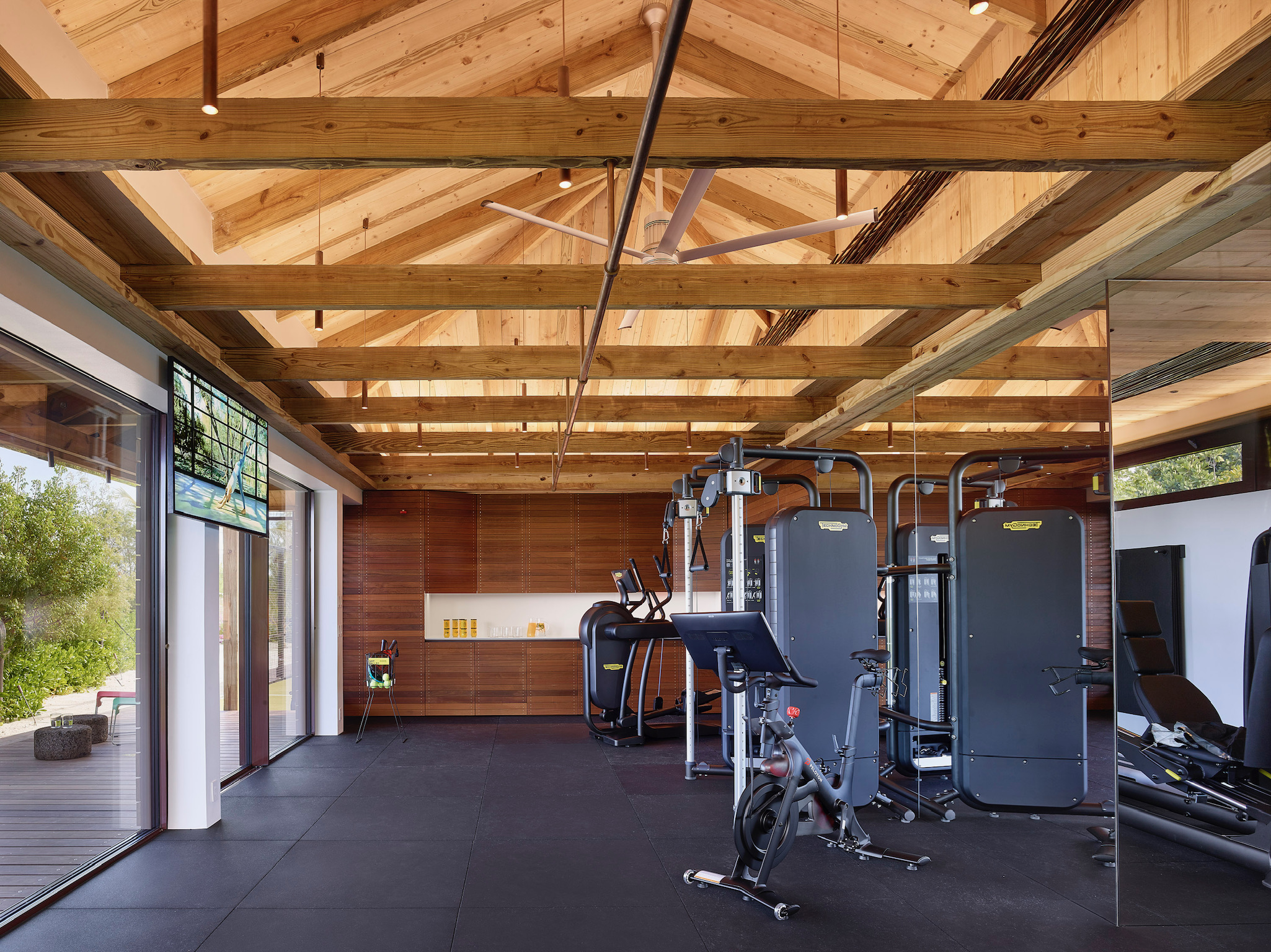
Post-match recovery
Has become one of the more significant considerations in tennis estate design over the last several years. Cold plunge installations, compact gym setups, and outdoor shower areas have moved from unusual to expected at a certain level. In our analysis of tennis estates with dedicated pavilion infrastructure, those with some form of recovery setup drew consistently stronger engagement from buyers who use the court regularly and seriously. For that buyer, recovery is not a luxury addition. It is part of how they think about the game.
/02
An outdoor grill
Changes what happens after play in a different direction. Tennis becomes the start of an afternoon rather than the whole of it. The match ends. People gather. Lunch happens. That rhythm is part of what separates a tennis estate from a property that happens to have a court. The court earns its place in the social life of the home rather than sitting at the edge of it.
/03
A wet bar
Cold water when you need it, a proper towel, something to drink at the end of a match. Details that communicate the court was designed with actual use in mind rather than visual impact alone.
Design: Integrated vs. Standalone
The question of how a pavilion relates to the main residence is as much an architectural one as a functional one.
Some pavilions are standalone structures with their own resolved identity. Built apart from the main house, with their own materials, scale, and character. When done well, they feel like a considered destination within the estate. When done poorly, they feel like a different property.
Others are integrated elements, materially and visually connected to the main residence. An extension of the same architectural language. When that connection is genuine, the result is a court environment that feels like it was always part of the plan.
The pavilions that hold up best over time tend to share one quality: they were designed as part of the original brief, not added later. When the same hand that resolved the main residence also touched the pavilion, the materials connect, the scale makes sense, and the positioning relative to the court and the landscape reads as intentional.
When the pavilion came later, from a different brief and a different set of hands, you can usually see it. The seam shows.
What the Pavilion Says About the Property
A court without a pavilion says nothing negative about the estate or how it was built. Courts without pavilions can be exceptional playing environments. The absence of a structure is not a shortcoming. It is a choice.
What a well-built pavilion adds is a particular kind of hospitality. It says the court was designed not just for play but for the time around play. For guests who are watching. For afternoons that extend beyond the match. For owners who want the court to be a place as much as a surface.
That distinction matters to different buyers in different ways. A buyer looking for a private training court with serious infrastructure may not weight the pavilion heavily. A buyer looking for a property where the court shapes how the home is used socially will weight it significantly.
In our network, the properties where the court and its surrounding structures were considered together consistently attract buyers who use them in exactly that way.
Worth Considering
When you are evaluating a tennis estate, the pavilion question is less about what is there and more about whether the setup reflects how you intend to use the court.
Think about a typical session. Where do guests sit while you warm up? Where does the afternoon go when the match finishes? Is the transition from court to the rest of the property easy, or does it require moving back through the main house carrying equipment and clay?
If those questions feel relevant to how you would live with the court, the pavilion is worth examining carefully. What is there, what could be added, and what the estate feels like with and without it.
If the court itself is what matters to you, and everything else can be handled through the main house, then the pavilion is a secondary consideration. The court should still be evaluated on its own terms: surface, condition, orientation, quality of construction.
The best estates make both conversations easy to have. The court speaks for itself. And the space around it tells you something about the kind of life the property was built for.
Until the next match,
Tennis Homes