Why Clay Courts Are Vanishing from Luxury Estates
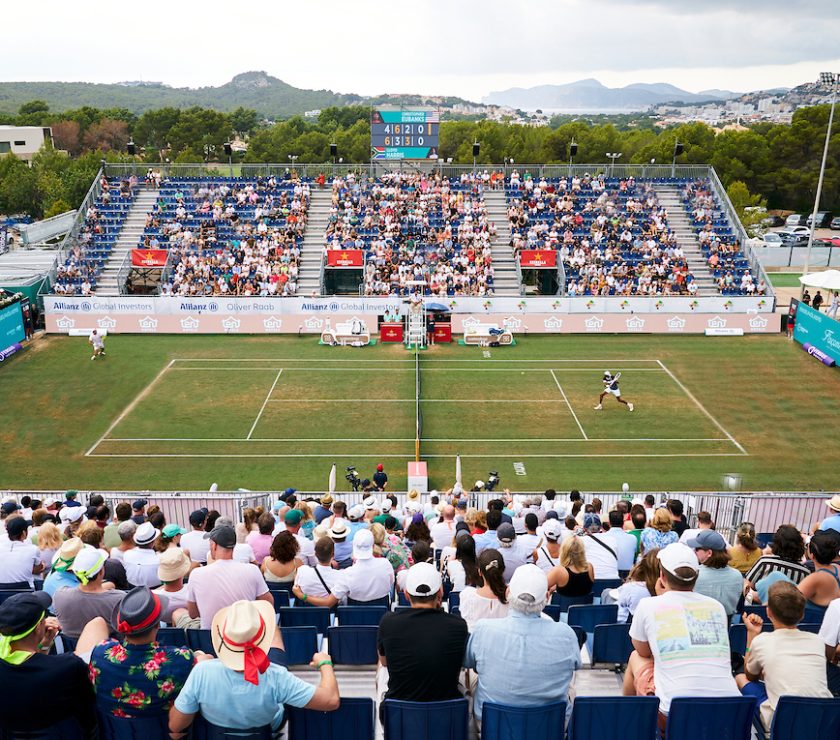
When you’re searching for a private tennis court rental, clay might feel like the obvious choice. The French Open plays on it. Legendary rallies have shaped the surface. The word itself carries romance: Clay courts conjure images of the French Riviera, where the sport’s most storied surfaces were born.
But here’s the reality: only 9% of our rental portfolio features a clay court. Three sit within driving distance of each other on the Côte d’Azur. One remains an anomaly in the Caribbean. The scarcity tells a story that most tennis home seekers never hear about clay.
Clay courts are disappearing. Not because they’ve fallen out of fashion with professionals, but because private homeowners have learned what the French Open learns every May: maintaining clay demands constant attention, dramatic water management, and a climate that cooperates. For luxury rental properties in regions facing increased rainfall, clay has become impractical. And when impractical, property owners increasingly convert to alternatives – synthetic turf, hard courts, artificial clay surfaces – that play similarly but demand far less devotion.
This is the clay court story nobody talks about. And if you’re serious about renting a property with a genuine clay court, you’re hunting for something genuinely rare.
The Unlikely Origin of Clay Courts on the French Riviera
Clay courts weren’t invented by architects. They were born from a problem that resorts couldn’t solve.
In the 1880s, English tennis champions William and Ernest Renshaw spent winters on the French Riviera teaching guests at luxury hotels like the Hôtel Beau-Site in Cannes. Their grass courts couldn’t survive the intense Mediterranean sun. The heat dried the turf into brown, cracked earth that guests found unplayable.
The brothers found their solution in the nearby town of Vallauris, a pottery center for centuries. They sourced discarded terracotta shards from ceramic factories, pulverized them, and spread the powder across their deteriorating grass courts. Within one or two years, approximately 104 clay courts had been built in Cannes alone. The pottery factory couldn’t keep up with demand, so manufacturers switched to crushed brick.
What emerged wasn’t aesthetic innovation. It was practical problem-solving. Clay courts were durable in hot, dry Mediterranean climates, required less water than grass, and allowed tennis to flourish in regions where grass couldn’t compete with the environment. From that foundation, clay spread across Europe and South America.
Today, the only Grand Slam tournament played on clay is the French Open. But clay’s dominance in the luxury residential market tells a markedly different story.
Why Clay Courts Are Becoming Harder to Maintain
Clay courts require constant active maintenance. Unlike hard courts you install and forget, clay demands regular brushing to redistribute particles, rolling to compact the surface, and careful watering to maintain precise moisture levels. For residential properties with multiple guests, this becomes unsustainable. Any interruption in this cycle degrades the surface immediately.
The bigger issue: clay courts don’t drain quickly. In regions with heavy rainfall, they require extended drying time after precipitation, rendering them unplayable for 24 to 48 hours. The French Riviera historically tolerated this because rainfall was predictable and seasonal. But regional patterns have shifted. Increased precipitation across Europe means properties once designed around reliable dry seasons now face unpredictable downtime.
When clay courts reach their maintenance threshold, owners convert to three alternatives: hard courts (acrylic surfaces that drain quickly and remain playable year-round), synthetic turf systems (designed to mimic clay appearance while eliminating drainage issues), or artificial clay surfaces (engineering solutions that replicate clay characteristics without maintenance burdens). Products like ClayTech, Classic Clay, and OmniCourt offer medium-soft surfaces that allow sliding like traditional clay, without the weather vulnerability.
Four Clay Court Properties: Individual Profiles
Our four available clay court rentals are concentrated in two geographic clusters. The South of France remains the epicenter of clay court culture for private estates, a direct continuation of where the surface originated 140 years ago.

Le Castel, Cannes
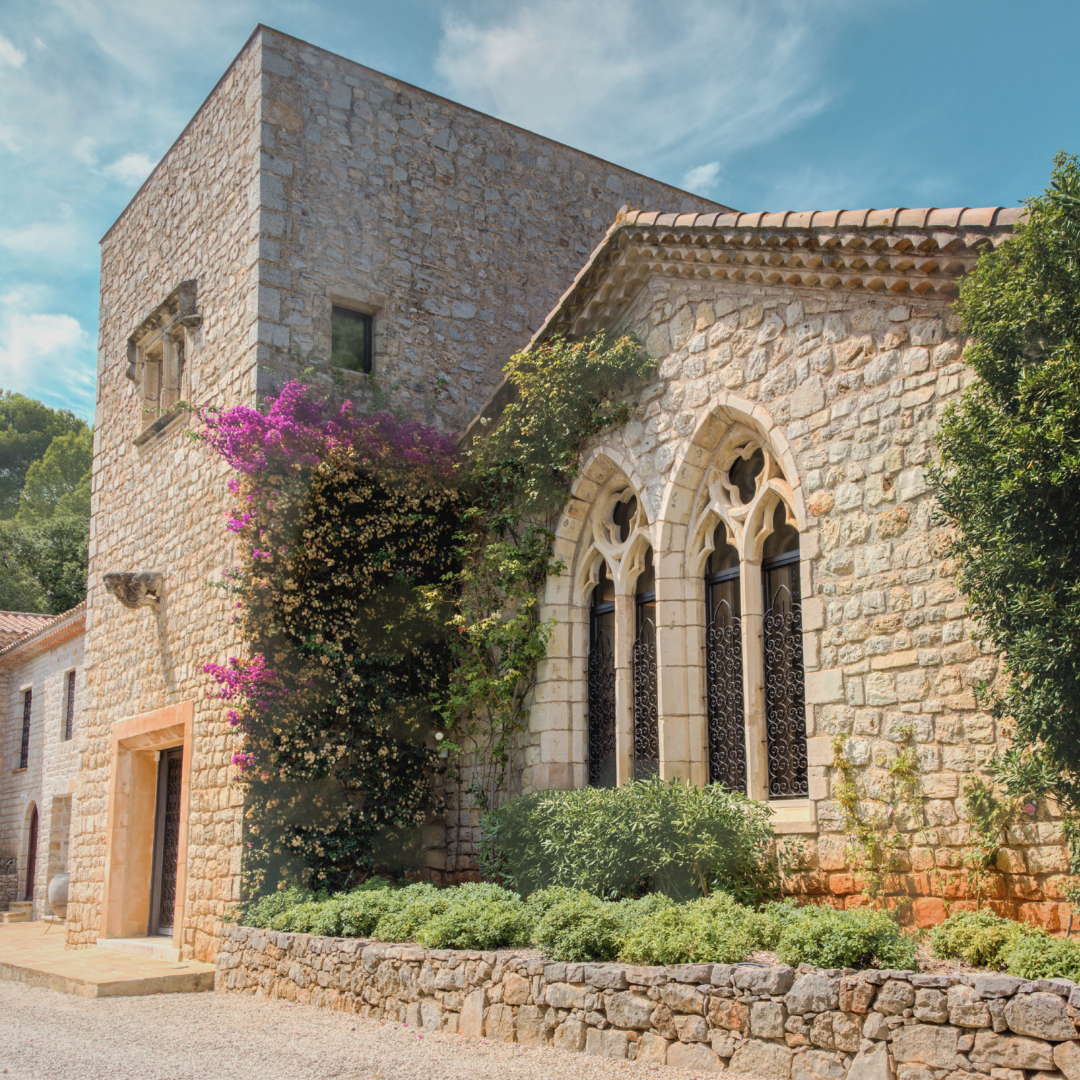
Le Castel sits 10 minutes from Cannes' old town on a 45,000-square-meter estate built from monastery remnants. Six bedrooms accommodate up to 12 guests. The clay court anchors the property alongside a heatable pool, sauna, and Provençal gardens. What distinguishes Le Castel: you're renting proximity to clay court origins. For players serious about understanding the surface's heritage, this property delivers historical context alongside playability.
Represented by Carlton International
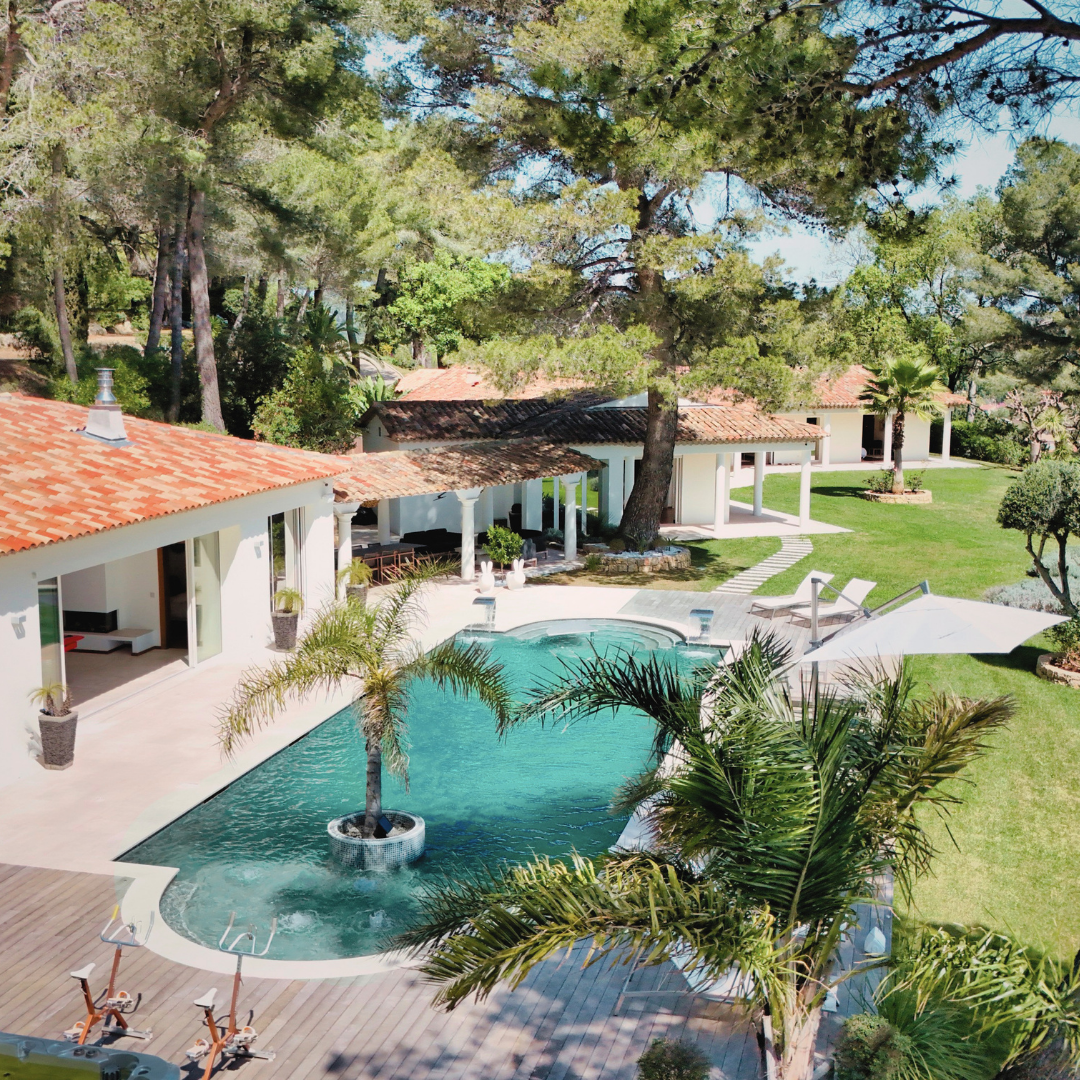
Maison Céleste, Mougins
Maison Céleste occupies a hilltop in Mougins with Bay of Cannes views across a 10,000-square-meter park. Five ensuite bedrooms and a guest house create flexible arrangements. The clay court integrates into a wellness ecosystem: heated saltwater pool, waterfall, gym, sauna, hammam, and multiple dining areas. What distinguishes this property: clay exists within a complete lifestyle package for groups seeking to balance serious practice with rejuvenation.
Represented by Beauchamp Estates
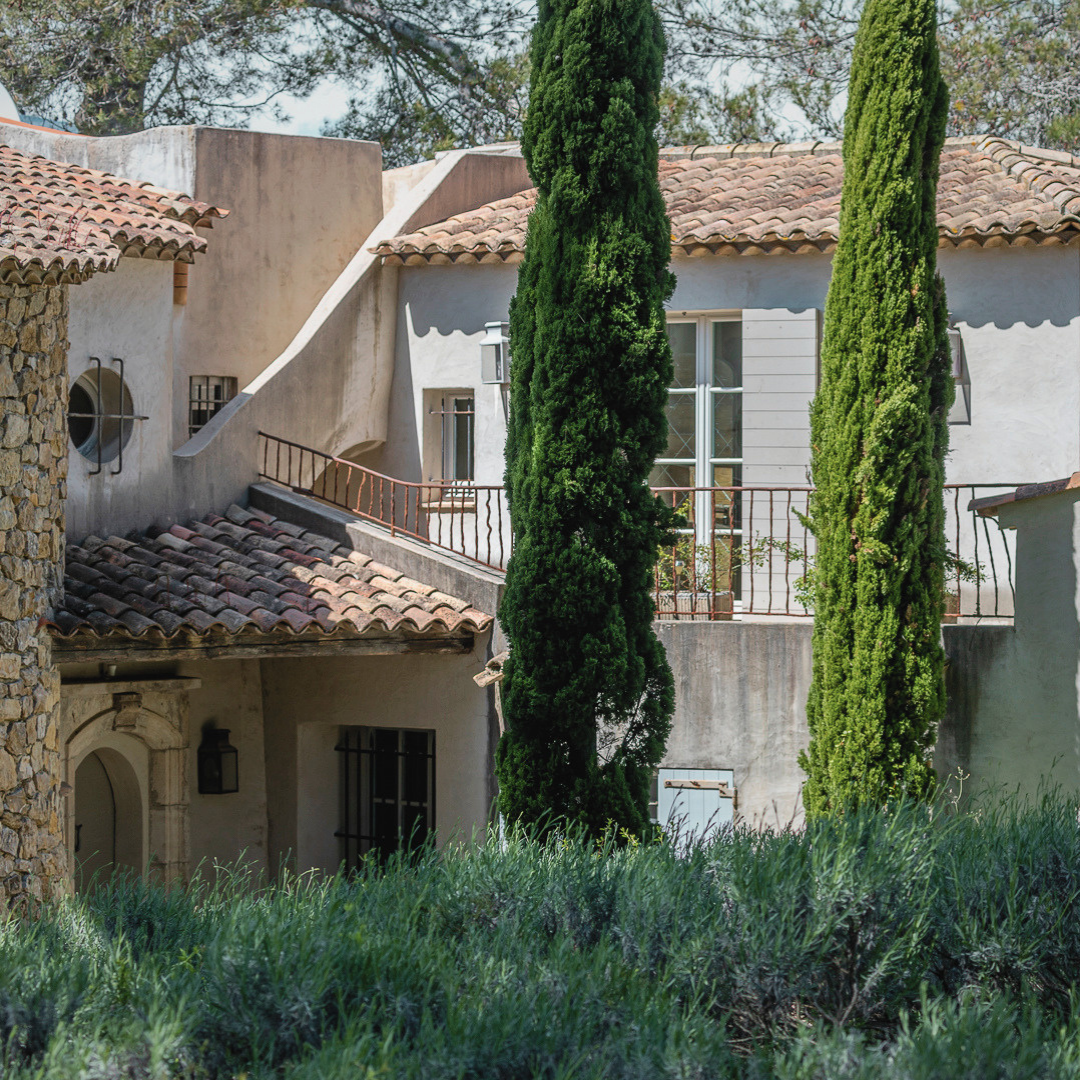
Provençal Villa Mougins
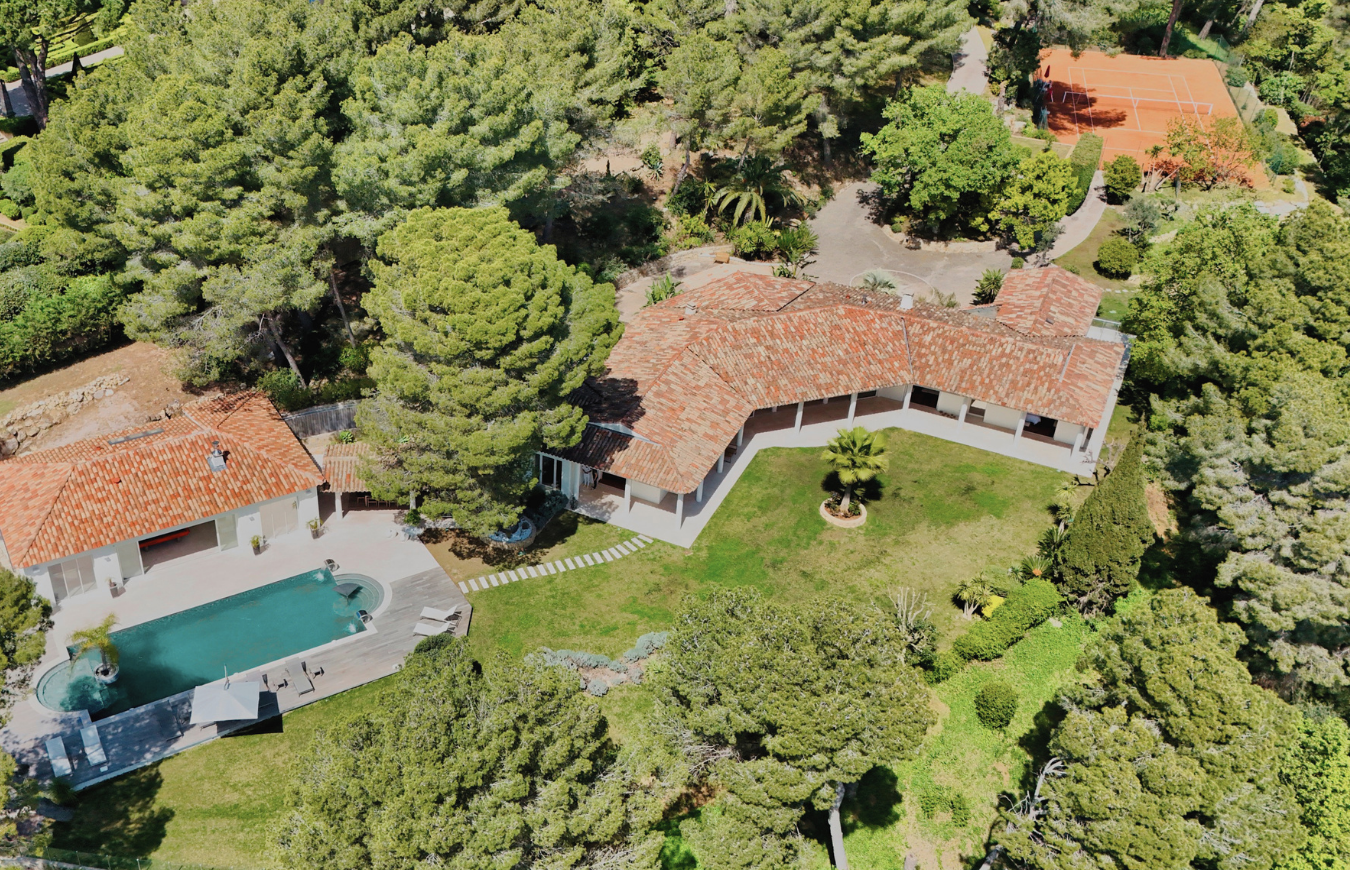
Provençal Villa Mougins sits in prestigious Mougins across 9,650 square meters of Mediterranean gardens. The villa accommodates 14 people across a main house and guest house, with a resident caretaker managing grounds. The clay court anchors the property with heatable pool, steam room, and extensive pool house. What distinguishes this property: it's purpose-built for group tennis retreats and multigenerational gatherings.
Represented by Carlton International
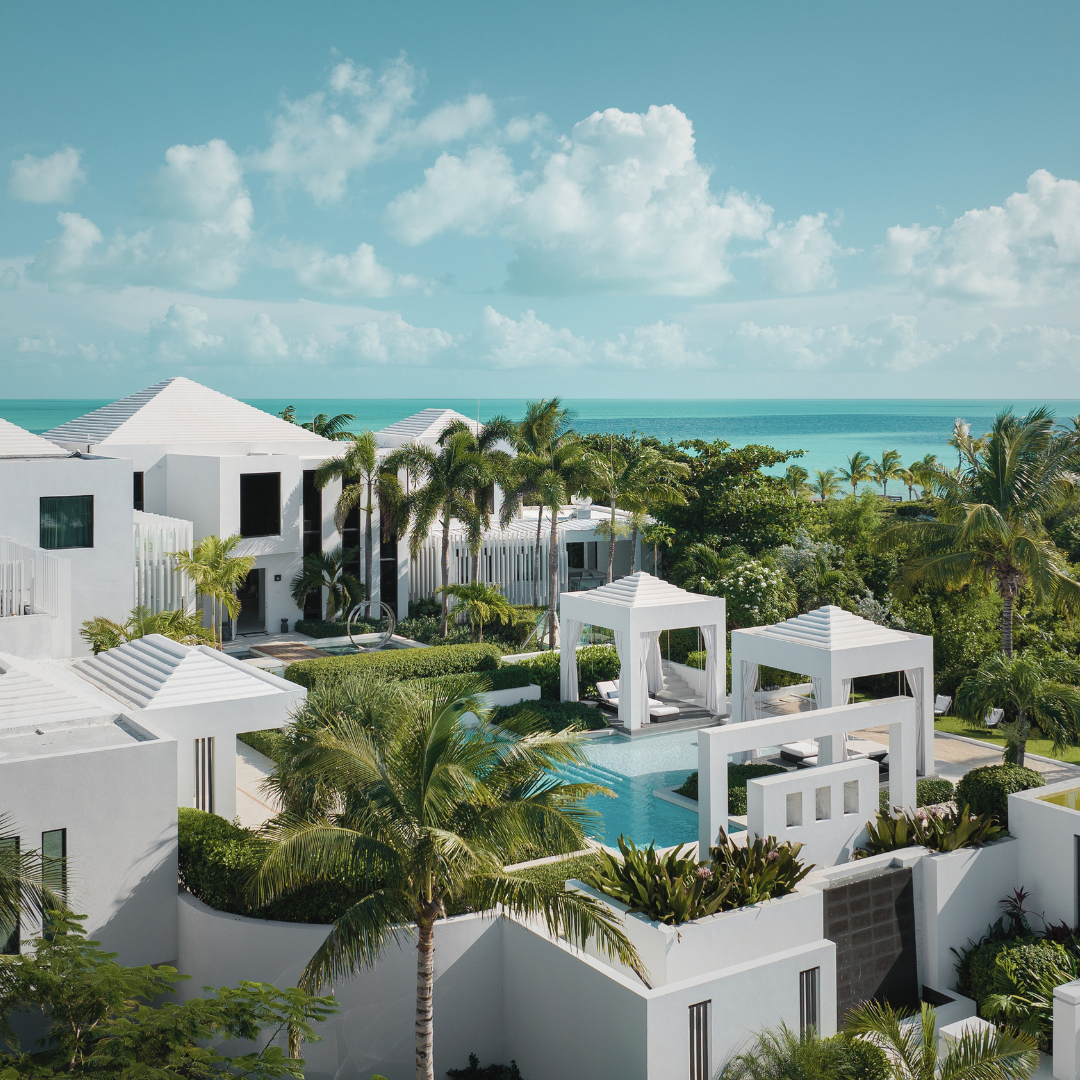
Triton Villa, Turks & Caicos
Triton Villa breaks every pattern. Located on Long Bay Beach in Providenciales, Turks and Caicos, this 15-bedroom, 7-acre compound is available for both sale and rent. The sports complex includes a clay court, two padel courts, and one pickleball court with open-air bar and showers. Beyond courts: multiple pools, outdoor cinema, gymnasium, fire-pit lounge, and luxury finishes. This is the only clay court property we represent in the Caribbean, a region where hard courts and padel dominate. Triton's owner consciously chose clay despite maintenance demands, proving that clay persists where owners prioritize it.
Represented by Ian Hurdle, The Agency

Playing Clay: What Renters Should Know
Book during spring through early fall. The South of France properties operate seasonally. This remains the sweet spot: warm enough to maintain the clay, dry enough that rain isn’t constant, aligned with European clay court tournaments. Off-season rentals carry higher risk of degraded conditions.
Plan for rain shutdowns. Even well-maintained clay courts become unplayable for 24 to 48 hours after significant rainfall. If your trip includes fixed court times and unpredictable weather, clay adds risk that synthetic alternatives eliminate.
Understand the playing difference. Clay courts reward consistency, patience, and baseline defense. The ball bounces higher and slower than on hard courts. Rallies extend longer. The surface allows controlled sliding. If you’re serious about clay court practice, the difference matters. If you play recreationally, synthetic alternatives offer practical advantages.
Prioritize properties with dedicated staff. Rentals with groundskeeping or property management teams maintain clay more reliably than remote management. Three of our four clay court properties maintain dedicated management teams. This is why they sustain clay reliably.
The Romance of Scarcity
Clay courts persist in the luxury rental market not because they’re practical, but because they’re irreplaceable for certain players. The surface carries decades of tradition, connects renters to the sport’s history, and demands a style of play that hard courts simply don’t encourage.
Know a property owner considering a clay court conversion? Share this guide. The conversation about surface alternatives is worth having before maintenance becomes unsustainable.
Until the next match,
Tennis Homes