The indoor paradox
Indoor tennis facilities in luxury real estate aren’t only about having tennis in winter. They’re about having everything outdoor courts can’t provide: multi-sport capability, event space, year-round flexibility, and infrastructure that adapts as needs change.
The Tennis Homes portfolio includes 4 indoor facilities out of 90 properties, representing 4.4%. The scarcity tells a story about what these spaces actually are and why most buyers choose outdoor instead.
What These Facilities Actually Are
The four properties with indoor facilities demonstrate different approaches to multi-purpose athletic space.

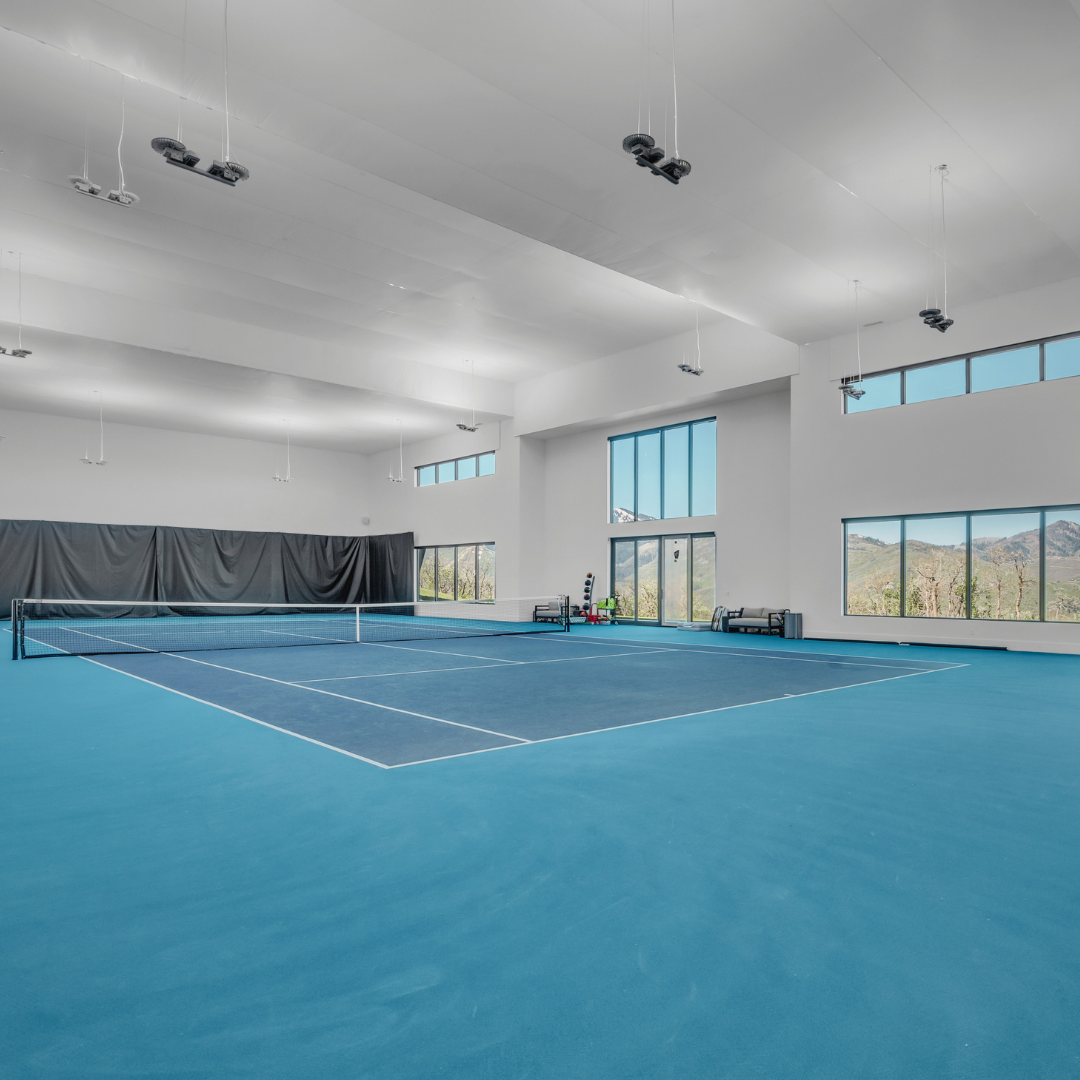
1- The Ranches Tennis Estate
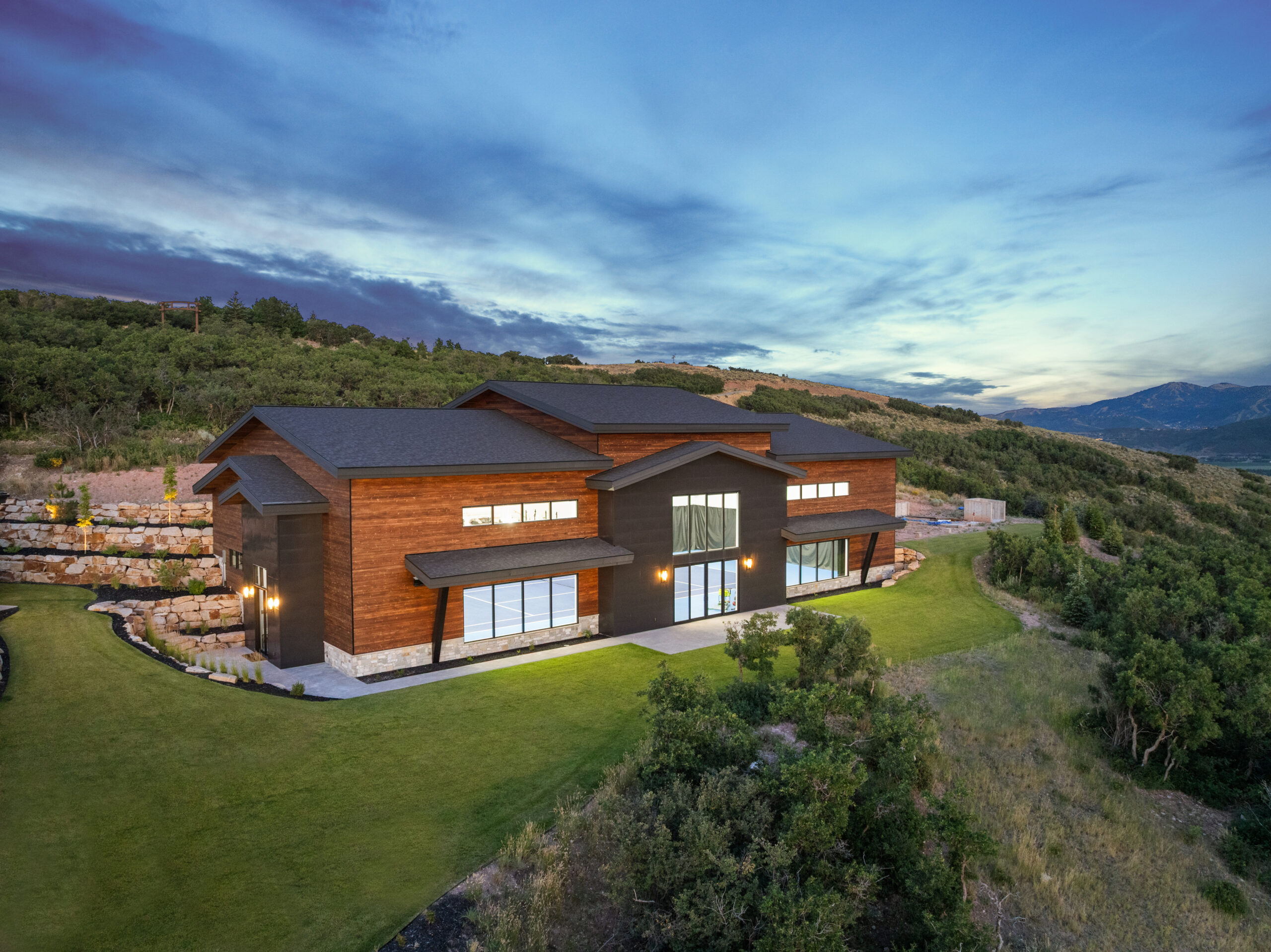
Currently built to USTA tennis specifications, but it is designed for adaptation. As family priorities shift—kids age into different sports, new activities emerge—the structure can convert to four pickleball courts, one full basketball court, or even an automotive gallery without rebuilding the main structure. The possibilities are endless (even though our preference would be to stay tennis). Multi-purpose by design, even if currently single-sport.
Represented by Paul Benson and Marcus Wood with Engel & Volkers Park City
2- Merry Go Ranch
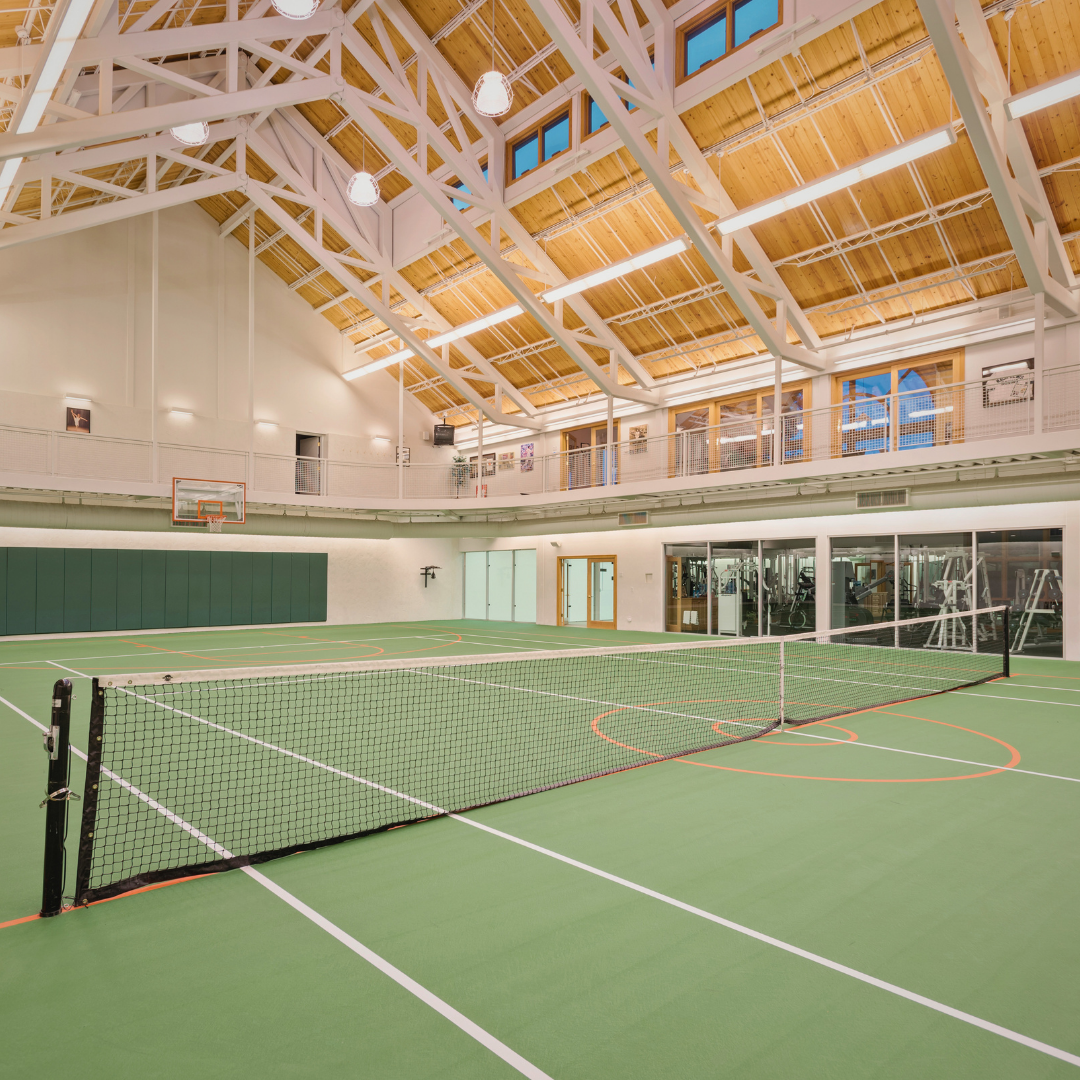
A multi-level facility featuring featuring a tennis court, basketball court, squash court, gym, and running track above. This isn't just an indoor tennis, it's a private athletic club under one roof. In a climate where outdoor options disappear November through April, one structure solves multiple athletic needs across all seasons.
Represented by Soffia Wardy, Aspen Snowmass Sotheby's International Realty
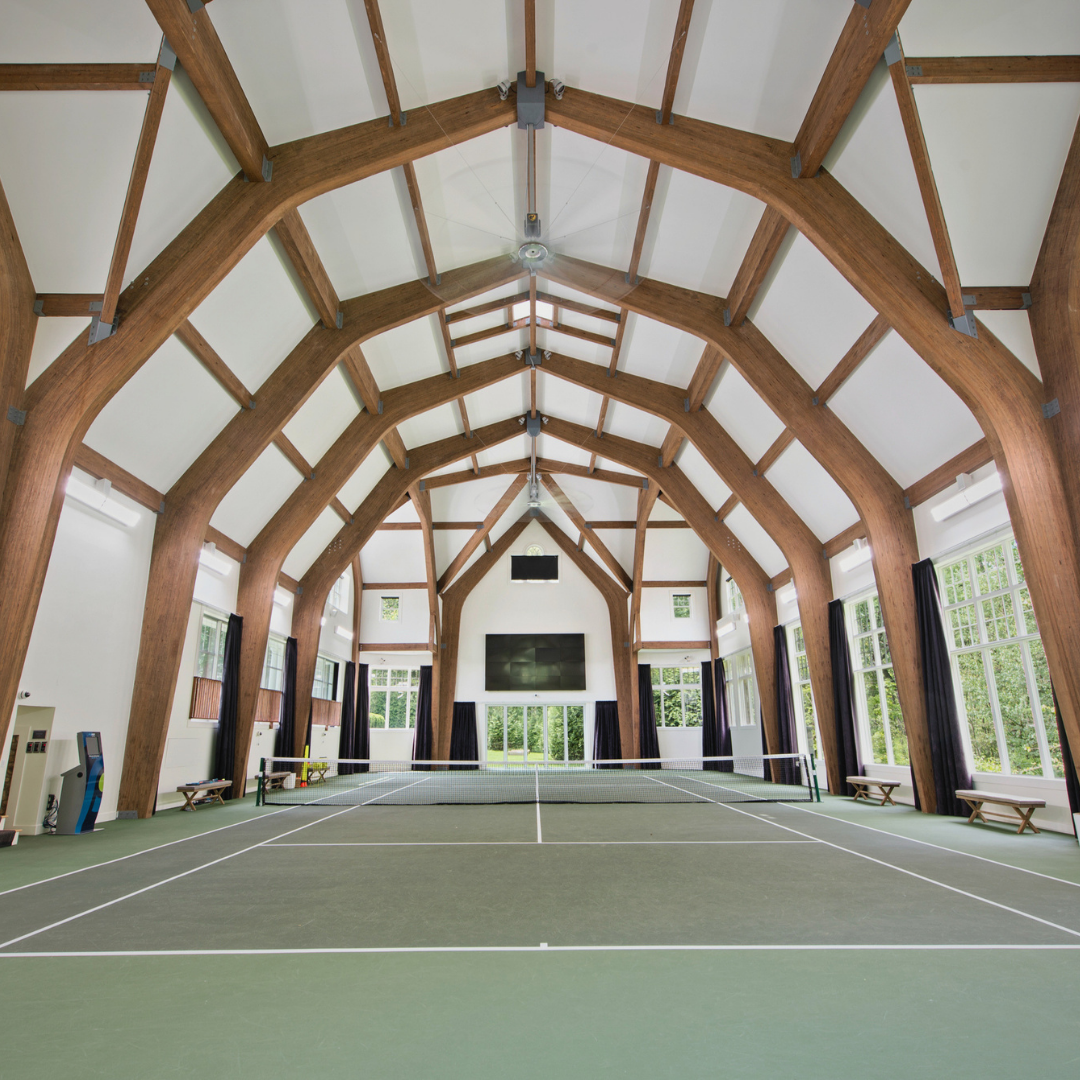
3- Cowdray Park
A regulation tennis court housed in a barn-style structure. Tennis is the primary function, but the space serves beyond athletics. The large enclosed, climate-controlled venue hosts private events, gatherings, and parties year-round. What outdoor courts can only accommodate with tents and favorable weather, this facility provides year-round.
Represented by Brian Milton, Compass
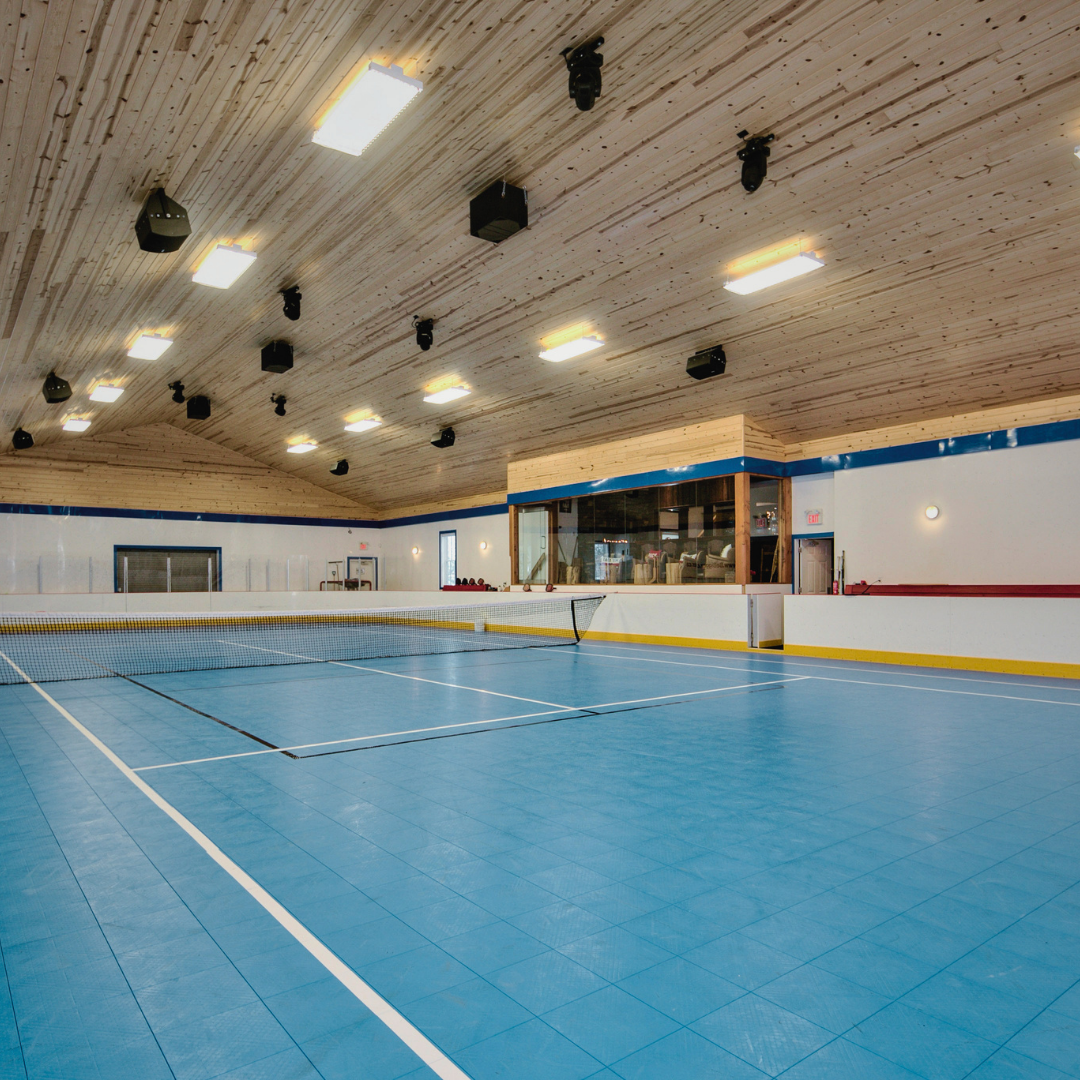
4- Blue Mountains Estate
Originally built as a hockey rink, it converts to tennis when needed. It demonstrates how these structures can transcend their original sporting purpose. The building serves whatever athletic purpose the owner prioritizes at any given time.
Represented by Matthew Lidbetter, Sotheby's International Realty
The common thread: none are locked into a single function. Whether through multiple sports, event hosting, or conversion potential, they offer purpose flexibility outdoor courts fundamentally lack.
Why They Remain Scarce
Multi-purpose capability doesn’t make indoor facilities common. The scarcity reflects practical constraints most buyers can’t or won’t accommodate.
Space requirements: These structures demand massive footprints. Merry Go Ranch facility isn’t just a court—it’s a multi-level complex. Most estates can’t accommodate this scale without compromising other priorities.
Architectural impact: A 40-foot structure dominates a property’s visual landscape. Integration with the main residence requires careful design to avoid overwhelming the estate.
Investment scale: We’re discussing full athletic facilities, not simple court installations. The capital commitment eliminates most buyers regardless of interest.
Usage commitment: Multi-purpose capability only adds value if the owner actually utilizes multiple functions. Many buyers conclude an outdoor court plus club memberships serve their needs without the complexity of maintaining a private facility.
Property use patterns: Seasonal estates occupied primarily in summer months don’t benefit from year-round climate-controlled space.
Indoor facilities require buyers who need year-round athletic access in severe climates, value private event space, want flexible facilities serving changing needs, and occupy the property enough to justify multi-purpose capabilities.
Outdoor Courts Dominate for A Good Reason
Eighty-six properties feature outdoor-only facilities. This reflects considered priorities, not missed opportunities.
For most luxury buyers, tennis is seasonal recreation. The outdoor tennis lifestyle—sun, fresh air, social atmosphere—is part of the appeal. Club memberships solve winter needs in cold climates. Property space allocation favors other amenities over massive indoor structures. The architectural footprint doesn’t align with estate vision.
Even in severe winter markets like the Hamptons, outdoor courts dominate. Buyers accept seasonal functionality rather than commit to indoor facilities that may sit underutilized most of the year.
The pattern holds internationally. Properties in the South of France, Mallorca, coastal Mediterranean zones—regions where outdoor tennis functions 10 to 12 months annually—make indoor facilities redundant. When climate supports year-round outdoor play, the flexibility of indoor space doesn’t justify the investment.
The Flexibility Premium
The scarcity reflects what these spaces actually require and who they’re built for.
For buyers in severe climates who value year-round athletic access and purpose flexibility, indoor facilities aren’t optional—they’re the only solution that works.
Until the next match,
Tennis Homes