June 12, 2025
It started with a noise. A pop, to be exact. Lighter than a tennis ball’s thud, faster than you’d expect. And just like that, pickleball carved out a lane of its own on the courts of the US. The conversation around pickleball vs tennis in luxury homes has become part of a much broader shift in how we think about play and property.
If you’ve spent a lifetime immersed in tennis, you’ve likely heard the debates. For many tennis lovers, the rise of pickleball hasn’t just felt sudden. It’s felt like an intrusion. Part of that frustration comes from watching beloved tennis courts repurposed for a sport that feels, to some, like a shortcut. Fewer steps. Less finesse. Lower stakes.
But the story of pickleball is more layered than the court markings it sometimes shares with tennis. Born in the 1960s on Bainbridge Island, Washington, the sport was created by families looking for a new way to play together. It blended elements of tennis, ping pong, and badminton. Accessible, social, and easy to pick up. Fast forward to today, and pickleball is one of the fastest growing sports in the United States.
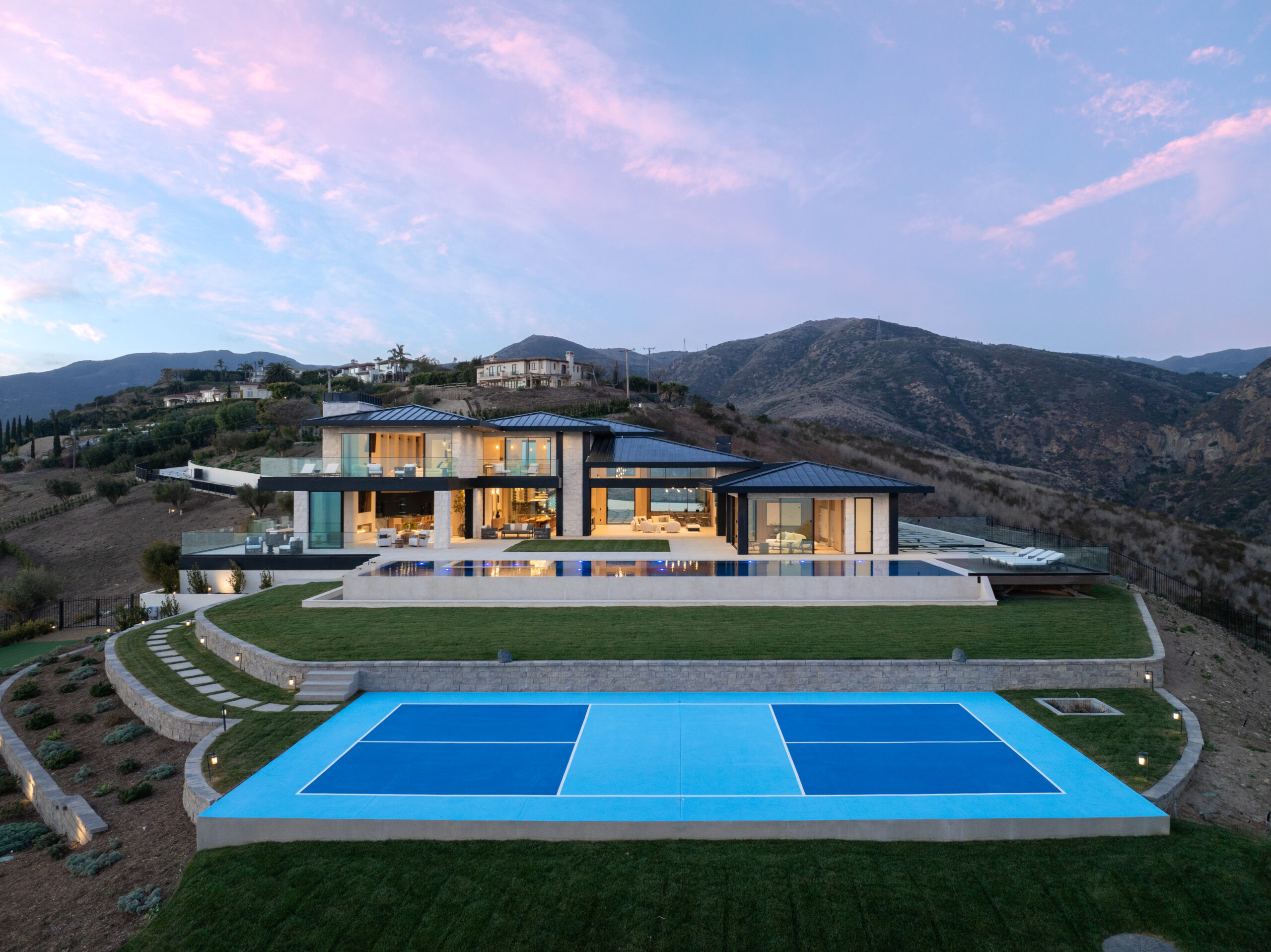
Credit: Chris Cortazzo – Compass Sports & Entertainment | Paradise Crest
At Tennis Homes, we’re interested in the ways the racquet sports world is evolving: the rise of Padel courts to homes that now feature both tennis and pickleball setups, we’re seeing how some properties are choosing to embrace multiple styles of play.
In fact, this week we have featured our first listing that includes a pickleball court instead of a tennis one. It’s a spectacular home, designed with care, surrounded by nature, and built with lifestyle in mind. For those who are interested, it’s worth a look: View the Listing
We’re not here to choose sides. We’re here to explore what it means to love the game in all its forms, even the ones that surprise us.
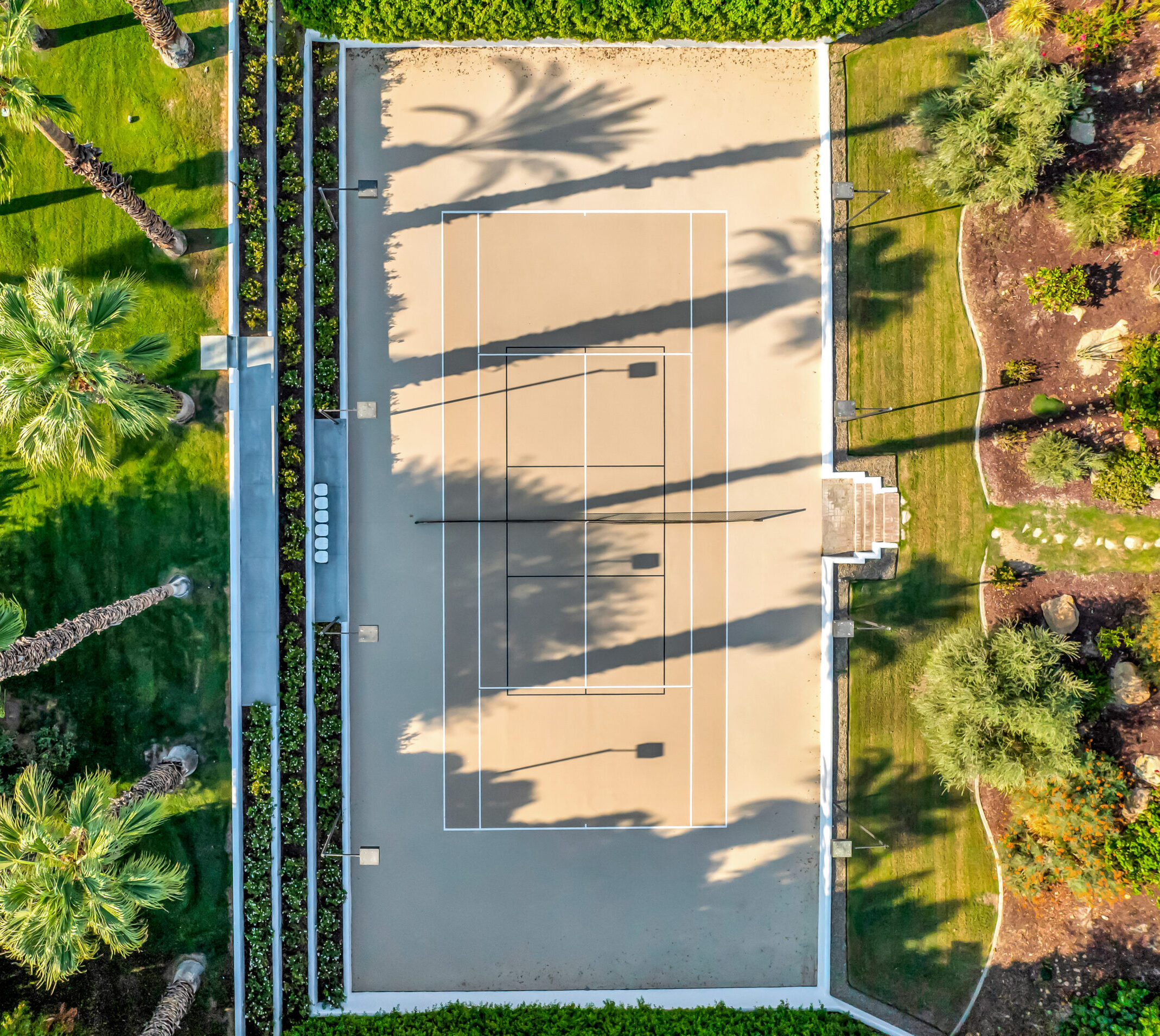
Credit: Sheri Davis, Scott R.S. Palermo, James Sanak – Harcourts Real Estate | Domus Atticus Estate
Tennis vs. Pickleball in Luxury HomesA Tale of Two Tempos
The dynamic between pickleball vs tennis in luxury homes is shaping what buyers expect from recreational spaces.
While both involve a net and racquet, the similarities end there.
Court Size and Movement
Pickleball courts are smaller, about one quarter the size of a tennis court. This changes everything. Less running, tighter angles, and shorter points. For some, it feels dynamic and social. For others, it lacks the athletic rigor of tennis.
The Ball and Paddle
Pickleball uses a plastic perforated ball and a solid paddle instead of strings. The result is a poppy, less spin-oriented style of play with a completely different feel at contact.
Accessibility
Pickleball’s lower learning curve has helped it grow quickly among a broader demographic. It’s easier on the joints and easier to rally, which makes it attractive to new players and retirees alike.
Noise
One of the biggest friction points between the two sports has been sound. That signature pickleball pop carries farther than a tennis shot, especially in residential communities.
Expanding the boundaries of play
A New Kind of Court
Change is never easy in sports we love. But it’s happening. At Tennis Homes, we’ll keep bringing you stories, homes, and perspectives from across the court, whatever shape it takes.
Until the next match,
Tennis Homes Team