March 4, 2026
The luxury property market is evolving.
For years, tennis dominated the racquet sport conversation in high-end real estate. Today, pickleball is establishing itself as a serious consideration – not replacing tennis, but expanding what championship-level racquet sport facilities can mean.
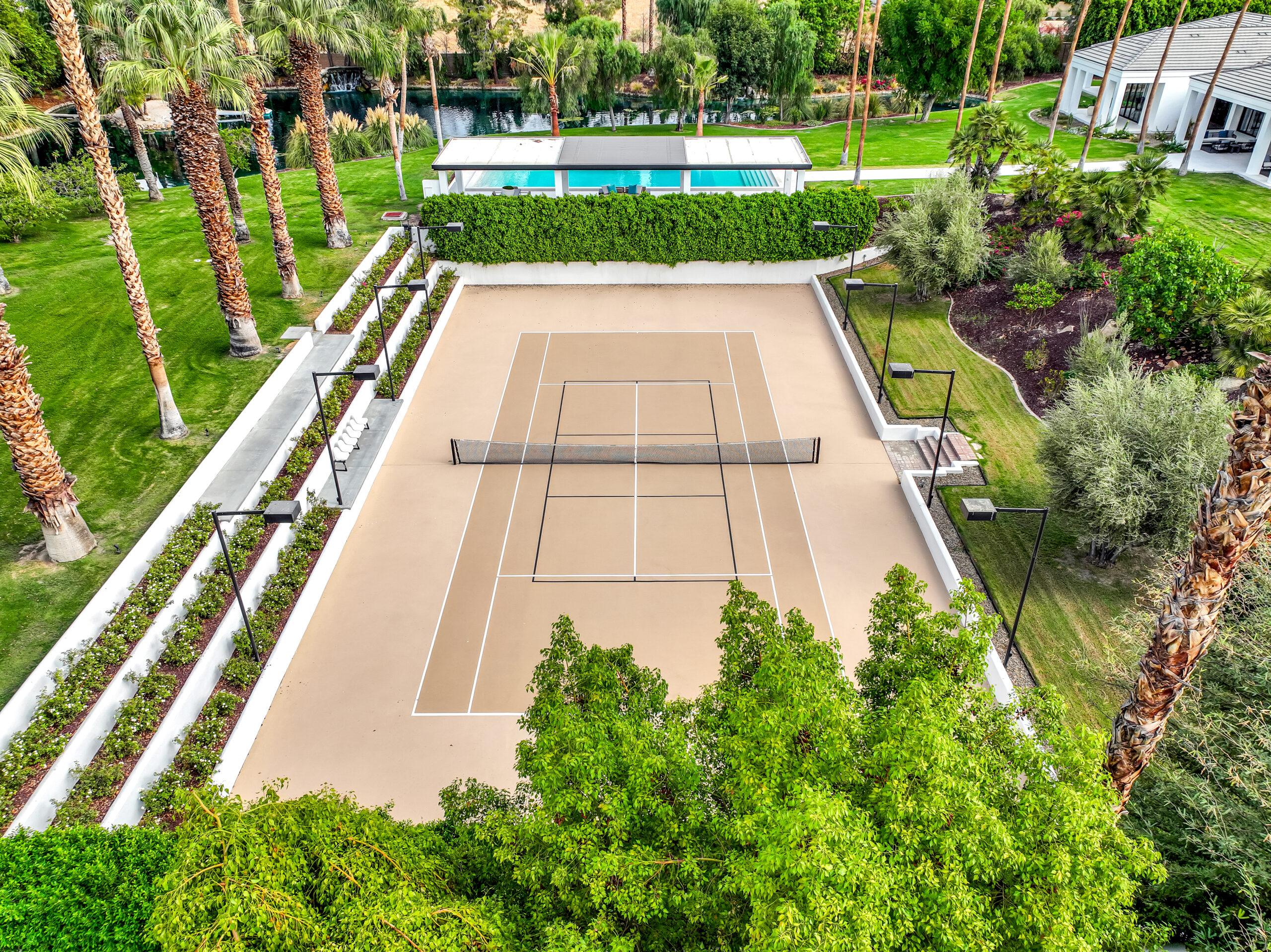
Tennis Homes was built to showcase properties with exceptional racquet sport amenities. As the market shifts, we’re opening our network to include pickleball properties that meet our standards for quality, design, and execution.
Here’s what we’re observing.
The Numbers Behind the Shift
Both tennis and pickleball are experiencing remarkable growth.
According to the 2025 U.S. Tennis Participation Report, tennis reached its highest participation level on record, with 8.3% of Americans aged six and older playing at least once in 2024. Youth and young adults under 35 drove nearly two-thirds of this growth, and the sport maintained a 79% year-over-year player retention rate.
Simultaneously, the Sports & Fitness Industry Association reports that pickleball continued as America’s fastest-growing sport for the fourth consecutive year. Participation increased 311% over three years to nearly 20 million players. The average player age dropped to 34.8 years, with the 25-34 age group now representing the largest participant segment at 2.3 million players.
What this data suggests: Both sports are thriving. This isn’t a zero-sum dynamic where pickleball growth comes at tennis’s expense. Instead, we’re seeing expansion—different sports serving different preferences, often within the same demographics.
The infrastructure follows the participation. There are now over 70,000 pickleball courts nationwide, with dedicated facilities growing 55% year-over-year. Tennis court construction and renovation also remain robust, particularly in high-wealth markets.
For luxury real estate: The question is no longer “tennis or pickleball” but rather “which racquet sport facilities best serve this property’s purpose and market.”
What We're Seeing in Our Network
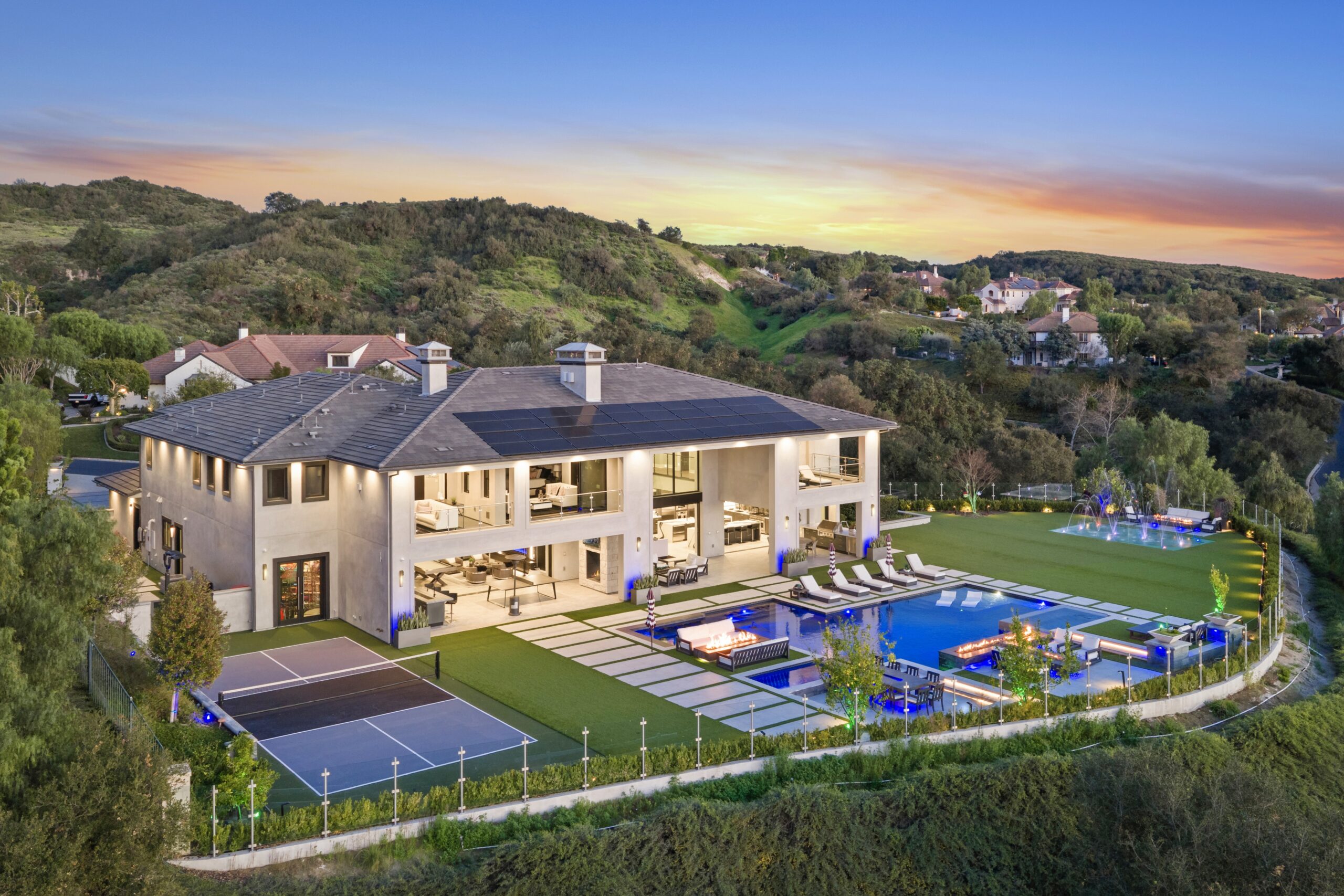
Tennis Homes currently tracks 123 properties with serious racquet sport facilities.
The breakdown:
- 106 properties feature tennis courts exclusively (86%)
- 7 properties feature pickleball courts exclusively (6%)
- 6 properties feature both sports (5%)
- 4 with pickleball lines added to tennis courts
- 2 with separate dedicated courts for each sport
Geographic patterns:
- California represents approximately half of our pickleball-equipped properties
- International pickleball presence concentrated in Turks & Caicos
- Tennis-only properties span our full geographic range across 18+ countries
What this tells us: Tennis remains the dominant racquet sport amenity in luxury real estate by a significant margin. But pickleball is establishing presence in specific markets, particularly where space efficiency matters or where American tourism influences property amenities.
Three Models: How Properties Are Adapting
Multi-Sport Estates
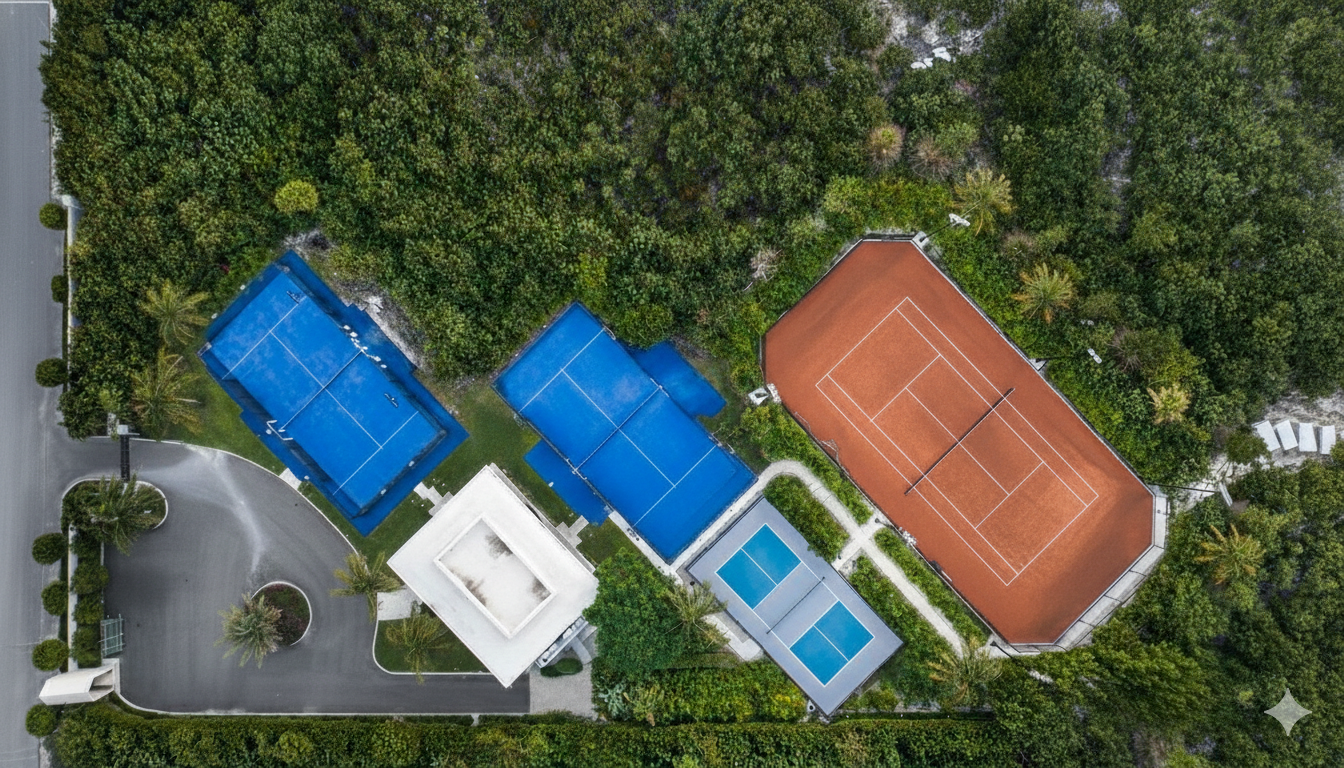
Some properties add dedicated pickleball courts alongside existing tennis facilities. These are expansions, not conversions—the estate retains its championship tennis court and builds separate pickleball infrastructure.
The rationale: Maximum versatility, particularly valuable for rental properties or multi-generational family use.
Shared Courts
Other properties overlay pickleball lines onto existing tennis courts, allowing the same surface to serve both sports with portable pickleball nets.
The trade-off: This approach accommodates both sports on existing infrastructure but creates compromises. Tennis nets sit at 36 inches versus pickleball’s 34 inches, and additional lines can be visually distracting for dedicated players of either sport.
Pickleball-Dedicated Properties
We’re also seeing properties with pickleball courts but no tennis facilities.
Why this works: Space efficiency is significant. A regulation pickleball court requires approximately 1,800 square feet versus a tennis court’s 7,200 square feet—a four-to-one ratio that matters considerably on properties with spatial constraints.
The Economics: What It Actually Costs
The construction cost differential between tennis and pickleball facilities is substantial.
Construction Investment
According to industry data from 2024-2025:
Tennis Court:
- Space required: 60′ x 120′ (7,200 sq ft minimum)
- Basic construction: $40,000-$100,000+
- Championship-level with lighting and amenities: $75,000-$500,000+
Pickleball Court:
- Space required: 30′ x 60′ (1,800 sq ft recommended)
- Basic construction: $15,000-$40,000
- Professional-grade with lighting and amenities: $20,000-$80,000
Four pickleball courts fit in the footprint of one tennis court—a space efficiency advantage that influences property planning decisions.
Ongoing Maintenance
Annual maintenance costs:
- Tennis court: ~$1,800/year (hard surface)
- Pickleball court: ~$1,000/year
Resurfacing (every 5-15 years):
- Tennis court: ~$7,500
- Pickleball court: ~$4,200
Important context: These figures reflect U.S. construction costs. International markets, premium installations, site-specific challenges, and currency variations can significantly alter these ranges. Always verify costs locally.
Property Value and Market Performance
Market Signals
Real estate platform data from 2024 shows measurable interest:
- Listings mentioning pickleball increased 64% year-over-year (Zillow)
- New York City listings highlighting proximity to pickleball courts increased 100% (StreetEasy)
- Properties with pickleball court access in select Florida and Arizona markets sold for premiums up to 10% versus comparable properties
The Vacation Rental Premium
Short-term rental data provides clearer performance metrics. Analysis found that vacation homes with pickleball courts earned an average of $58,970 more annually than comparable properties without courts.
Critical context: This data comes primarily from markets like Phoenix and Scottsdale with particularly high pickleball participation. Results vary significantly by market.
The Proximity Factor
Distance from the court matters substantially. Pickleball’s acoustic signature—high-frequency sounds exceeding 70 decibels—has created valuation challenges for properties immediately adjacent to courts. Documented cases show homes very close to facilities experiencing extended market time or requiring price adjustments.
Luxury estate advantage: Properties with sufficient acreage (typically 3+ acres) can position courts at distances that eliminate noise impact. Smaller properties may require acoustic barriers or sound-dampening surfaces.
Geographic Patterns
United States
Strongest pickleball concentration in luxury real estate:
- California (approximately 50% of pickleball properties in our network)
- Florida (Palm Beach, Naples, Southwest Florida)
- Arizona (Scottsdale, Phoenix)
- Select markets in Carolinas and Texas
The South Atlantic region reported 2.8 million pickleball players, creating particularly dense demand for racquet sport facilities.
International Markets
American tourism and buyer preferences are influencing international luxury developments:
Turks & Caicos:
- Triton Luxury Villa features private tennis, padel, and pickleball courts
- Andaz Turks & Caicos (opening late 2025) includes dedicated pickleball courts
- Sandals and Beaches Resorts installed 71 pickleball courts across eight Caribbean islands
Dominican Republic: Similar luxury villa additions
Mexico: Growing installations in Los Cabos and Riviera Maya, where U.S. and Canadian buyers represent over 42% of luxury transactions
Europe: Dominated by padel (especially Spain and Italy), with selective pickleball adoption in London and Paris luxury developments
The Decision Framework
Tennis Facilities Make Sense When:
- Serious, competitive play is priority
- Championship-level standards matter
- Sufficient space available (7,200+ sq ft)
- Investment budget supports construction ($75K-$500K+)
- Traditional luxury estate positioning desired
- Local market shows strong tennis engagement
Pickleball Facilities Make Sense When:
- Available space more limited (under 3,000 sq ft)
- Construction budget ranges $20K-$80K
- Multi-generational family use is priority
- Social and recreational play preferences
- Market demonstrates strong pickleball adoption
- Space efficiency valuable
Both Sports Make Sense When:
- Property has adequate space (10,000+ sq ft available)
- Rental income optimization is a goal
- Serving diverse preferences matters
- Combined investment budget feasible ($100K-$600K+)
- Maximum recreational versatility desired
Adding Pickleball Lines to Existing Tennis Court:
- Minimal investment ($500-$2,000)
- Accommodates casual play
- Trade-off: Neither sport fully optimized
Why Tennis Homes Features Pickleball Properties, And What We're Looking For
We’re selective about what enters our network.
Our focus has always been championship-level racquet sport facilities in exceptional properties. For most of our history, that meant tennis courts exclusively. As the market evolved, we recognized that championship-level facilities now encompass more than tennis.
Some properties feature pickleball courts built to exacting standards—professional surfaces, proper lighting, thoughtful integration with architecture and landscape. When a pickleball property meets our quality threshold, we feature it.
Our standard hasn’t changed: We showcase properties where racquet sport facilities are exceptional, professionally maintained, and integral to the property’s value. Whether that’s tennis exclusively, pickleball exclusively, or both together, what matters is execution quality.
The Questions We Ask
Is pickleball affecting tennis property values?
The evidence-based answer: context determines impact.
Properties where pickleball enhances versatility—particularly rental properties and multi-generational estates—in markets with strong participation appear to benefit. Properties targeting dedicated tennis players or in markets with limited pickleball adoption see less impact. Properties with poorly executed conversions or noise proximity issues face challenges.
What seems universal across both sports: Quality drives value more than the specific sport. Professionally constructed facilities, properly positioned, thoughtfully integrated—these factors matter regardless of whether the court serves tennis, pickleball, or both.
The data supports this. Tennis participation at record highs. Pickleball growing 311% over three years. Both sports showing sustained engagement rather than temporary trends.
For luxury properties: The racquet sport estate is evolving from single-sport to potentially multi-sport infrastructure. Properties adapting thoughtfully—with quality construction, proper placement, market-appropriate amenities—appear positioned to serve broader preferences.
We’ll continue tracking both. Our commitment remains: featuring exceptional properties with championship-level racquet sport facilities.
Until the next match,
Tennis Homes